What score cut dies do on press
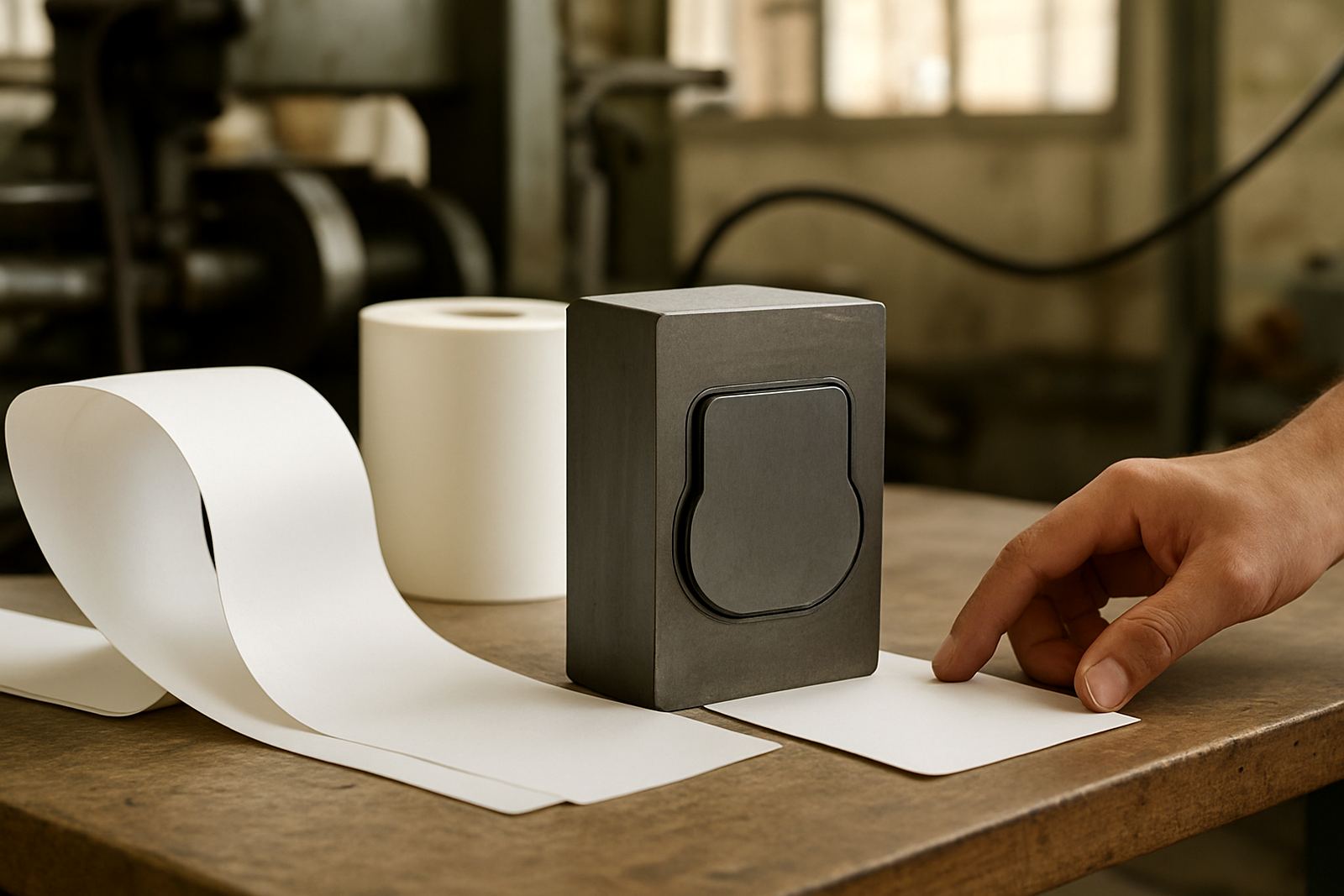
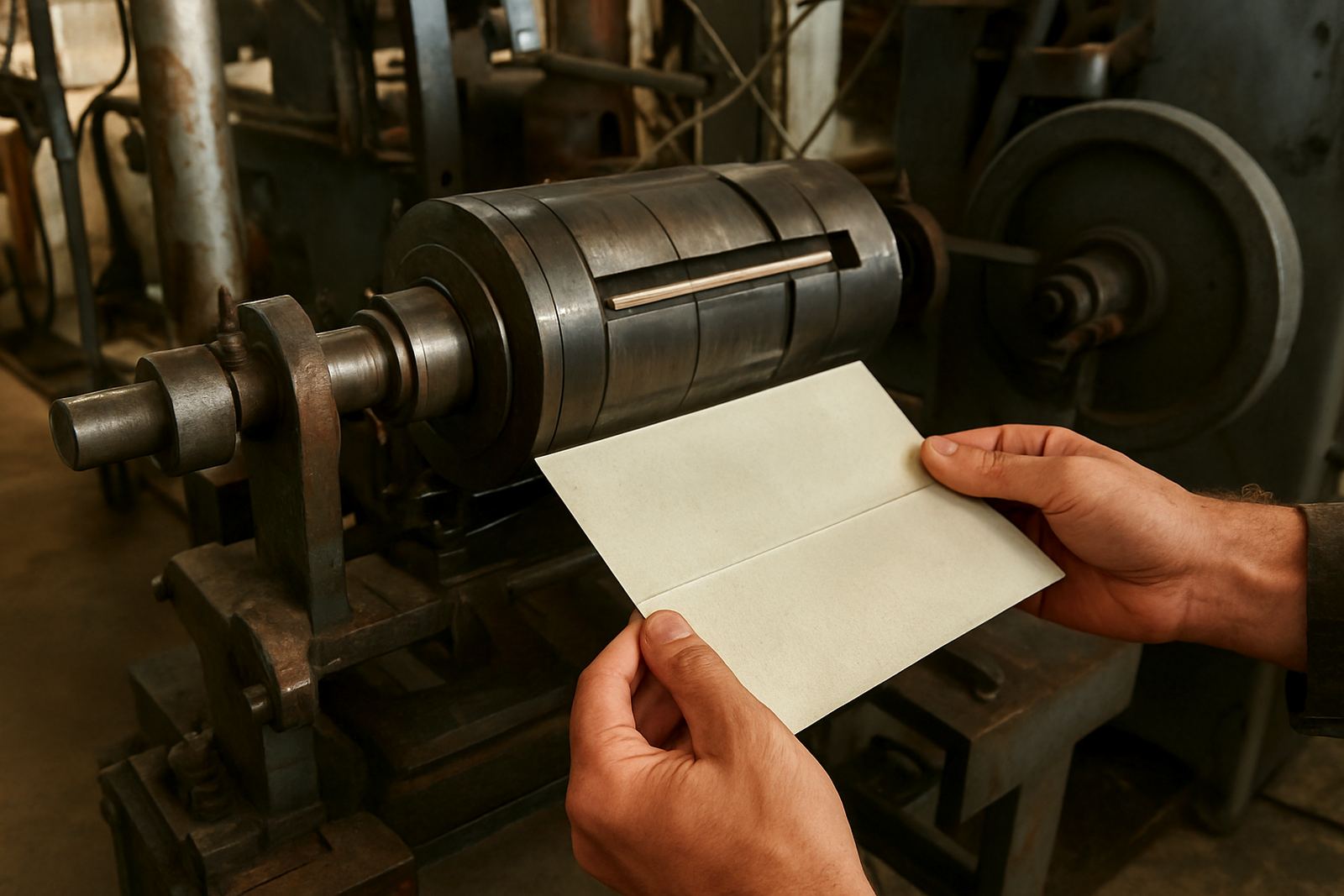
Score cut tooling creates a controlled indentation in the material so it folds predictably after converting, packing or application. On label work, that can mean helping a carton label sit flat, making a peel or fold line more accurate, or assisting with a secondary fold where the substrate is heavier than standard facestock. The aim is not to slice the web, but to guide it with a measured crease that holds its shape.
We make score cut dies to suit rotary and magnetic systems used by South African label printers and converters. That includes short runs, repeat orders and tighter tolerance jobs where the same crease depth must be held from one batch to the next. On many packaging jobs, a few tenths of a millimetre can change how the fold behaves so the die must be set up properly from the start.
- Controlled crease for fold assists and pack-out work
- Suitable for labels, sleeves, light cartons and packaging labels
- Made to order to match your press and substrate
- Useful where a clean fold is needed without full cut-through
Sizes, profiles and tooling options we supply
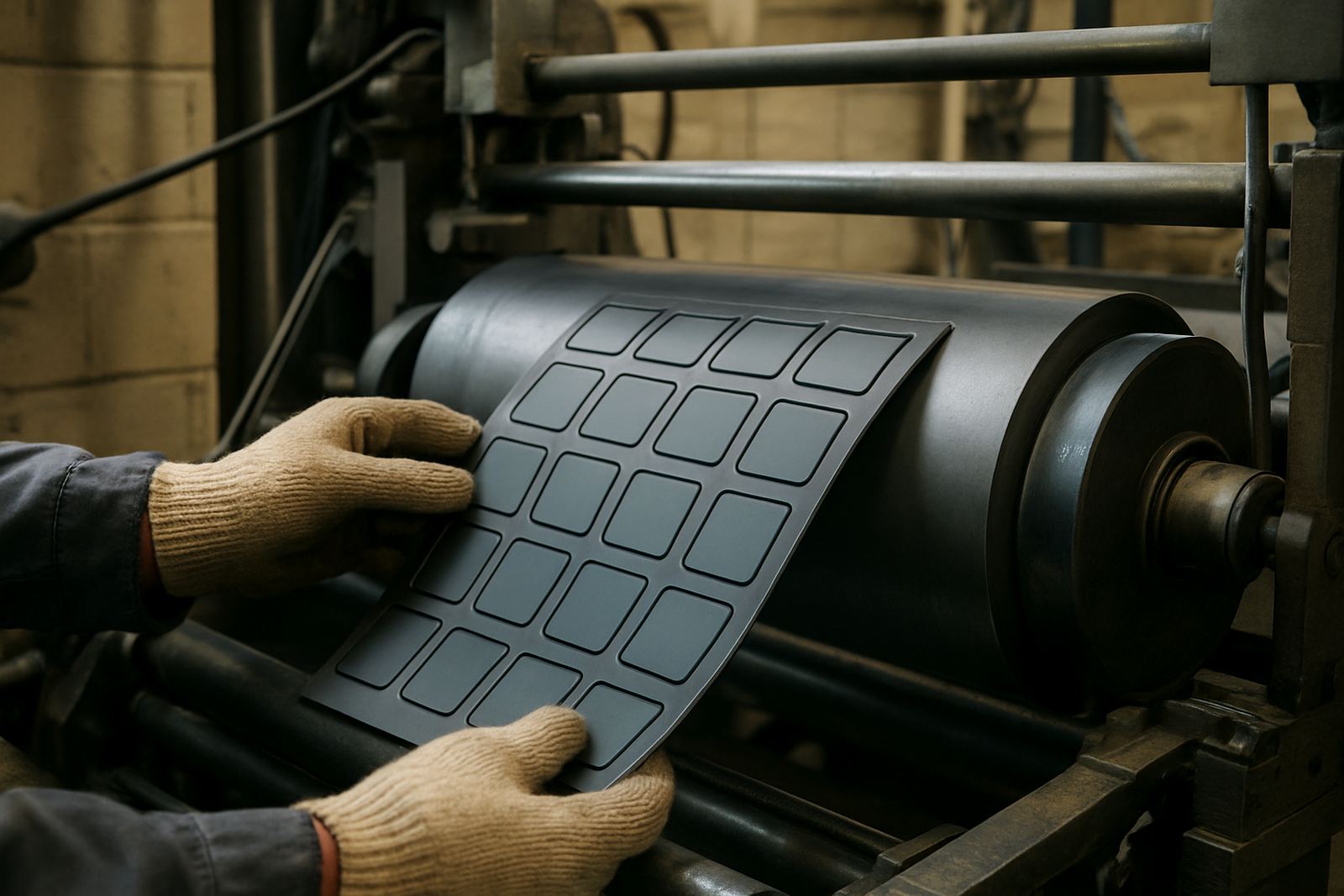
Score cut dies are not one-size-fits-all. The profile, depth and length of the score need to suit the material weight, coating and the final fold angle. We can supply score tooling as part of a rotary solid die, flexible magnetic die or matched insert setup, depending on your machine and the way you run the job. The right choice depends on whether you need a light fold assist or a firmer crease for thicker stock.
Typical options include narrow scores for light facestock, wider or deeper scores for heavier label board, and matched positions for repeated panels. If the job runs on a press with limited tolerance control, we can also advise on bearer setting, cylinder condition and repeat matching before the die is made. That saves time on press and avoids waste during setup.
- Score widths and depths matched to stock thickness
- Single score or multiple score positions
- Rotary solid die format for higher volume work
- Flexible magnetic die format for quicker changeovers
- Magnetic cylinder compatibility where required
Where score cut dies suit local label and packaging work
Score cut dies are often used where a label or pack needs to fold back on itself, sit neatly around an edge or open in a controlled way after filling. In Johannesburg and Germiston, we often see them specified for industrial labels, chemical pack labels and folded instruction labels. In Durban and Cape Town, moisture, humidity and warehouse handling can make a controlled crease more useful than a plain cut, because the substrate may move a bit after printing and slitting.
These dies also suit folding carton labels, tamper evident label applications and some insert style packaging jobs. If the job includes glue, laminate or a thicker synthetic face stock, the score needs to be set carefully so the crease supports folding without cracking the print layer. For coastal deliveries, we pack and dispatch with care so tooling arrives clean and ready, because humidity can effect surface condition if stock is left open too long.
- Fold assists for wrap labels and multi-panel labels
- Packaging labels that need a neat hinge or crease
- Applications where cracking must be reduced on thicker stock
- Jobs that need repeatable fold alignment across a run
Press setup and utility requirements
Score cut dies themselves do not need power or gas. They are mechanical tooling fitted to the press, so the important part is correct mounting, pressure setting and repeat registration. If the score is too light the fold will not hold properly; if it is too heavy the material can crush, mark or split. On a rotary line, the die and cylinder condition matter just as much as the tooling profile.
We can support press trials and setup guidance so your team can get the score line where it belongs. For some presses, minor adjustments to bearer setting, web tension or anvil condition are enough. On others, especially older machines or urgent remakes, we may recommend checking cylinder wear and magnet pull before the job goes back into production. It is usually quicker to fix the base setup then chase faults later.
- No direct power or gas requirement for the die itself
- Needs correct press mounting and registration
- Pressure must suit the stock to avoid crushing or under-scoring
- Press trial support available for new or repeat jobs
Care, storage and servicing between repeat jobs
Score cut dies last longer when they are cleaned after use and stored flat in a dry area. Adhesive dust, paper lint and ink build-up can affect the finish of the score over time. In coastal areas such as Durban, Pinetown and Gqeberha, it is worth keeping tooling away from damp floors and open doors, especially during summer humidity. A little surface care goes a long way.
For repeat jobs, we can check an existing die against the original artwork or sample and advise if a regrind, refit or remake is the better option. If the score has become inconsistent, the issue may be in the die, the cylinder, or the press setting rather than the design itself. Our team handles die regrind, cylinder refurb and magnet checks, so we can trace the fault before more stock is wasted.
- Wipe clean after run completion
- Store flat, dry and protected from dust
- Keep away from moisture and stacked weight
- Ask for repeat matching if the old sample has changed
What to check before you order score cut tooling
Before ordering, it helps to have the substrate details, finished fold direction and the press information ready. We need to know whether the job is running on a solid rotary die, a magnetic setup or a cylinder-based system, plus the repeat size and any existing tooling reference if you are matching a previous job. Even a small change in material or laminate can mean the score needs to be adjusted.
If you are working to a tight turnaround, send the sample or artwork early and let us know whether you need a fresh die, a repeat match or an urgent remake. We also check packing and dispatch details for deliveries into Johannesburg, Pretoria, Cape Town, Durban and Gqeberha, so the job can move without delays. For clean quoting, please include the following:
- Material type, thickness and any coating or laminate
- Finished fold direction and where the score must sit
- Press type and tooling format already in use
- Required quantity, repeat size and delivery area
- Any sample, old die reference or previous job number
Key facts
| Product type | Score cut dies for fold assists and controlled creases |
|---|---|
| Tooling formats | Rotary solid die, flexible magnetic die, magnetic cylinder compatible |
| Typical use | Labels, packaging labels, light cartons and fold-over applications |
| Material range | Paper, board and selected synthetic label stocks |
| Tolerance focus | Consistent score depth and repeatable crease position |
| Service areas | Germiston, Johannesburg, Pretoria, Durban, Cape Town, Pinetown, Bellville, Gqeberha |