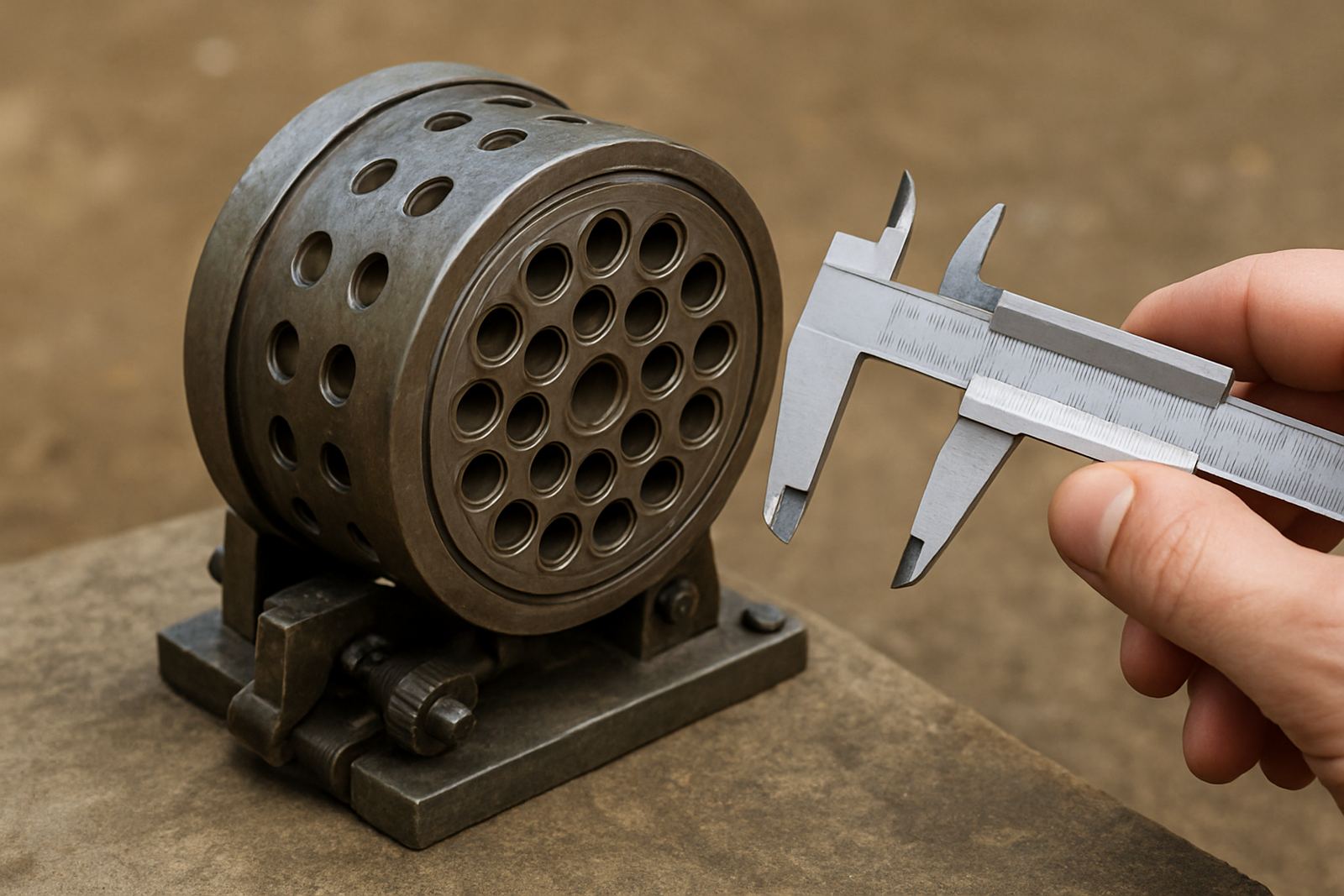
What a small repeat die does on press
A small repeat die is set up for label work with a short repeat length, so the cutter matches compact artwork and tight nesting on the web. It is commonly used where the label size is small, the count per impression is high and the press must hold registration without wasting substrate.
For converters in Germiston, Johannesburg, Pretoria and Durban, this is often the right choice for product labels, barcode labels, pharmaceutical labels and small logistics formats. The die can be supplied as a rotary solid die, a flexible magnetic die or matched to a magnetic cylinder, depending on the press and the run length.
Small repeat work needs accurate mounting and a clean cutting edge. If the repeat is off by even a fraction, you start seeing crushed corners, incomplete cuts or a poor kiss cut that slows the line down.
Sizes, repeat limits and common options
We make small repeat dies to the size your press and artwork need. The exact repeat depends on the cylinder or anvil arrangement, the label shape and the press width. In practice, small repeat jobs often sit in the short to medium repeat range, with compact formats packed closely across the web.
- Repeat lengths matched to the artwork and press cylinder
- Small labels for sachets, containers, bottles and cartons
- Multiple-up layouts for higher counts per revolution
- Fine cut lines for kiss cutting or through cutting
- Options for solid rotary dies, flexible magnetic dies and cylinders
We can also work from an existing sample, drawing or previous tool if you need repeat matching. If you are changing from one substrate to another, we will check whether the cut depth and bearer setting should change too.
Where small repeat dies suit best
These dies suit label printers and converters running compact products where the web has to stay efficient. They are useful when the customer wants more labels per metre, faster make-ready and less material waste.
Typical applications include health and beauty labels, food labels, small bottle labels, pharmacy packs, tamper evidence labels and narrow-format industrial labels. They are also used when a job needs neat stacking after rewind, especially on lighter papers and films that can track badly if the cut is too heavy.
Across South Africa, many sites work with heat, dust and load-shedding. In those conditions, a well-made die helps keep output stable because the press operator is not fighting the tooling as well as the power interruptions. On coastal sites in Cape Town, Durban and Gqeberha, we also factor in moisture and storage conditions that can affect magnetic components and backing materials.
Installation, setup and press requirements
Small repeat dies are mechanical tools, so they do not need power or gas on their own. What they do need is correct press setup, proper mounting and a suitable anvil or magnetic cylinder arrangement. On press, the operator should check repeat alignment, bearer contact and cut pressure before the run starts.
- Clean mounting surfaces before fitting the die
- Check the repeat and registration marks against the web
- Set cut pressure gradually to avoid overcutting
- Confirm anvil condition and cylinder runout
- Test at line speed and at a slower setup speed
If you are using flexible magnetic dies, make sure the cylinder is clean and free from damage. For solid rotary dies, the mounting and machine condition matter just as much as the tool itself. A worn cylinder, bad bearing or loose bearer can give you problems that look like a bad die but are actually a press issue.
Care, servicing and working life
Good care extends the working life of any small repeat die. After use, the die should be cleaned, checked for nicks and stored flat or in the correct sleeve so the cutting edge is not damaged. In humid areas, especially near the coast, it is worth keeping tools dry and away from corrosive dust.
We offer die regrind, cylinder refurb, bearer setting and magnet checks where needed. If a job starts showing fuzzy edges, incomplete cuts or uneven pressure across the width, it may be time for servicing rather than forcing another run. That saves stock and avoids unnecessary downtime.
For repeat jobs, keeping a record of what substrate was used, what pressure worked and what speed the press held helps with the next order. A small note from the pressroom can save a lot of time when the same format returns months later.
What to check when you order a small repeat die
When ordering, give the press model, repeat length and material so we can match the die. If the sample is available, send it with the artwork dimensions and the press details so we can check repeat, shape and cut path.
- Finished label size and repeat length
- Material type, thickness and adhesive if relevant
- Whether the cut is kiss cut, through cut or scored
- Press make-up, cylinder size and die type required
- Run length and whether you need a spare for urgent remakes
- Any issue from the last run, such as overcutting or registration drift
For converters in Pretoria, Germiston, Johannesburg, Durban, Pinetown, Bellville, Cape Town and Gqeberha, we also help with packing and dispatch so the tooling reaches the line in good order. If the job is urgent, tell us upfront and we will advise the fastest practical path.
How our team supports repeat jobs from quote to delivery
Our Wadeville, Germiston team handles die design, CAD proofing, technical advice and dispatch coordination under one roof. Marius Jacobus van der Merwe oversees the operation, with Thandiwe Nkosi managing production, Nirasha Ramdass on CAD, Ruhan de Beer on technical sales, Siyanda Letsoalo in the machine shop and Anele Mthembu coordinating dispatch.
That matters on repeat work because small format jobs often come back with slight changes. A changed carton size, a new substrate or a press adjustment can affect the die more than people expect. We look at the full job, not only the cutter, so the next run matches what your line actually needs.
For most customers, the process is straightforward: send the artwork details through the enquiry form on our contact page, we check the requirements, then we confirm the die type, delivery area and any setup notes before production starts.
Key facts
| Product type | Small repeat rotary die for compact label formats |
|---|---|
| Die options | Solid rotary die, flexible magnetic die, magnetic cylinder |
| Typical use | High-count label layouts, small bottles, sachets and cartons |
| Repeat control | Made to match the press repeat and artwork dimensions |
| Servicing options | Die regrind, cylinder refurb, bearer setting and magnet checks |
| Supply areas | Germiston, Johannesburg, Pretoria, Durban, Pinetown, Cape Town, Bellville and Gqeberha |