What the Benoni client needed from the tooling
The client was a tyre label printer and converter in Benoni supplying product labels for industrial stock, warehouse packs and outbound tyres. Their labels had to hold up in warm stores, dusty handling areas and fast application on the packing line. They needed tooling that could keep edge finish clean on a heavier face stock, while still working with an adhesive system meant for longer wear and rougher handling.
The request came in with a simple target: produce labels that stay neat through print, converting and dispatch without lifting corners or showing rough edges. The stock was thicker than the usual label material, so the tooling had to be set with care from the start. In this kind of job, a small burr or a slightly off bearer setting can show up straight away on the press, so we treated the first setup as critical.
- Town: Benoni, Gauteng
- Label type: tyre labels for industrial supply use
- Stock: thicker face material with durable adhesive
- Need: accurate repeat cutting and dependable release
- Press concern: clean edges with limited waste and less stoppage
Production limits we had to work within
The main constraint was the material build. Thicker stock puts more load on the die, and once the adhesive is strong the waste matrix can pull harder at the edges. That means the die must be matched properly to the press, the cylinder condition and the converting speed. On this job we also had to allow for quick turn-around because the client had a committed dispatch date, and the labels were part of a larger production schedule.
We also had to think about local conditions. In Gauteng, a press room can go from dry to humid in one week and that affects adhesive behaviour and static on some jobs. We allowed for a setting that would stay consistent across the run, even when the line slowed during load-shedding shifts or re-starts. The client needed fewer starts and stops, not more fiddling at the machine. That meant less risk of spoilt stock and less time lost on press, which mattered more than fancy talk.
- Load-shedding allowance was built into the support plan
- Tooling had to tolerate stronger matrix pull
- Repeat jobs needed the same cut depth and bearer contact
- Press trial time had to be kept short
What we supplied and set up
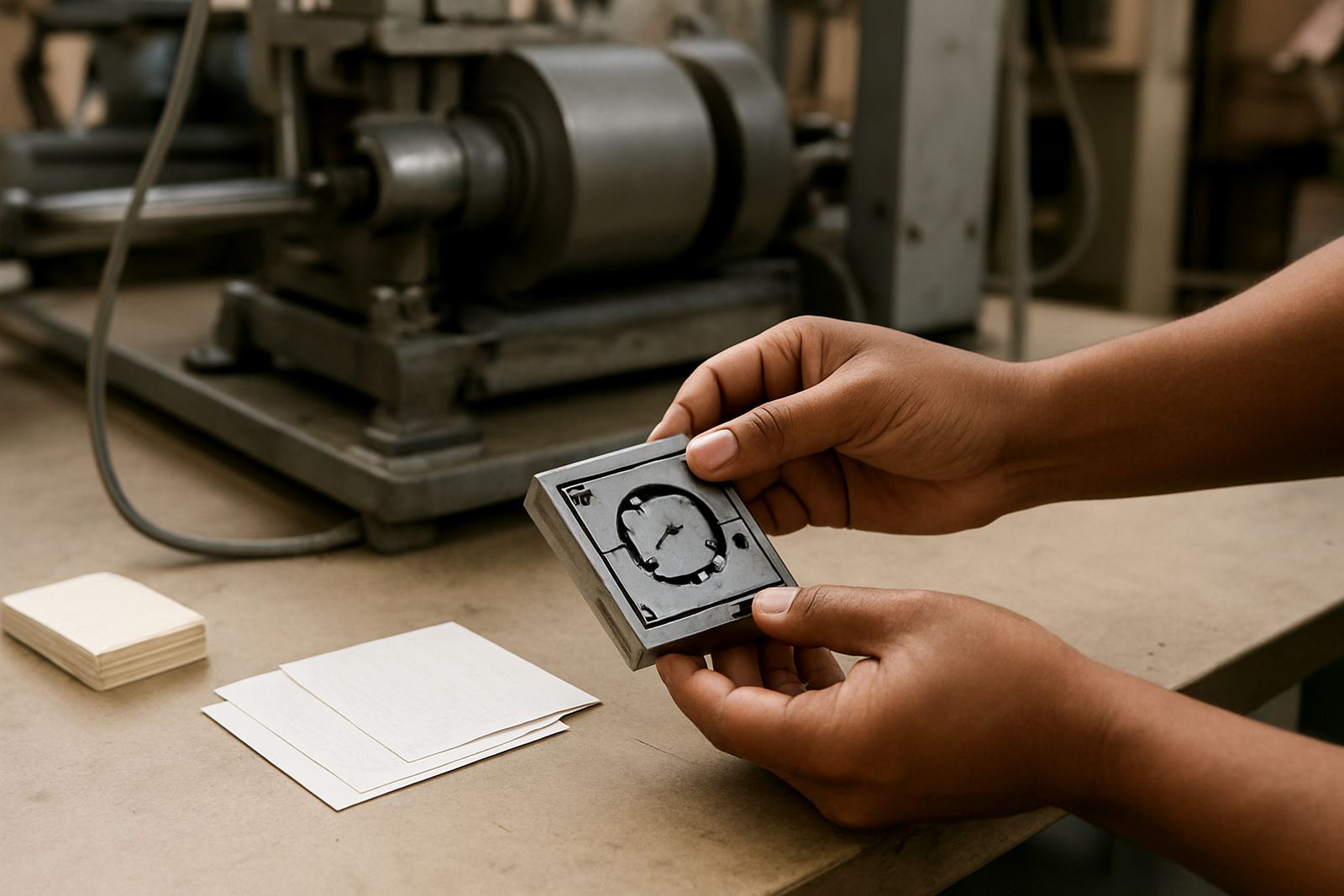
We supplied a matched die set for the tyre label format, with design checking, CAD proofing and final tool preparation carried out before release. The job called for a rotary solid die for clean, stable cutting on the press side, plus a flexible magnetic die option for repeat work and quicker changeover where needed. We also checked the magnet condition and cylinder fit so the tool sat correctly in the press.
Our production team prepared the job to the stated dimensions and confirmed the repeat length against the press specification. We kept the tolerances tight, because on labels like these even a small variation can show as a slur or a poor kiss cut. The final setup was packed carefully and dispatched with the usual handling notes, so the converter could get straight into setup without guessing. Small thing, but it saves a lot of time later.
- CAD proofing and repeat matching completed before manufacture
- Bearer setting checked for stable cut pressure
- Die edges prepared for thicker stock and adhesive drag
- Dispatch arranged for Benoni with clear packing identification
Timeline from brief to ready-to-run tooling
The full project took 2 weeks from the approved brief to ready dispatch. Week one covered measurements, proofing and tool preparation. Week two covered final finishing, magnet checks and packing. Because the client had a known label spec and a defined repeat, we did not need to go back and forth on dimensions. That kept the job moving without wasting time.
Once the tooling was ready, we supported the first press run with practical setup advice. The goal was to get the cut clean on the first go and avoid unnecessary rework. The client did not need a long trial, just a few sensible adjustments to get the pressure right. For a tyre label run, that is usually the difference between a smooth day and a headache.
- Week 1: brief review, CAD proofing, measurement confirmation
- Week 2: machining, finishing, magnet checks, packing
- First run support: press start-up and cut-depth guidance
Results on the press and in dispatch
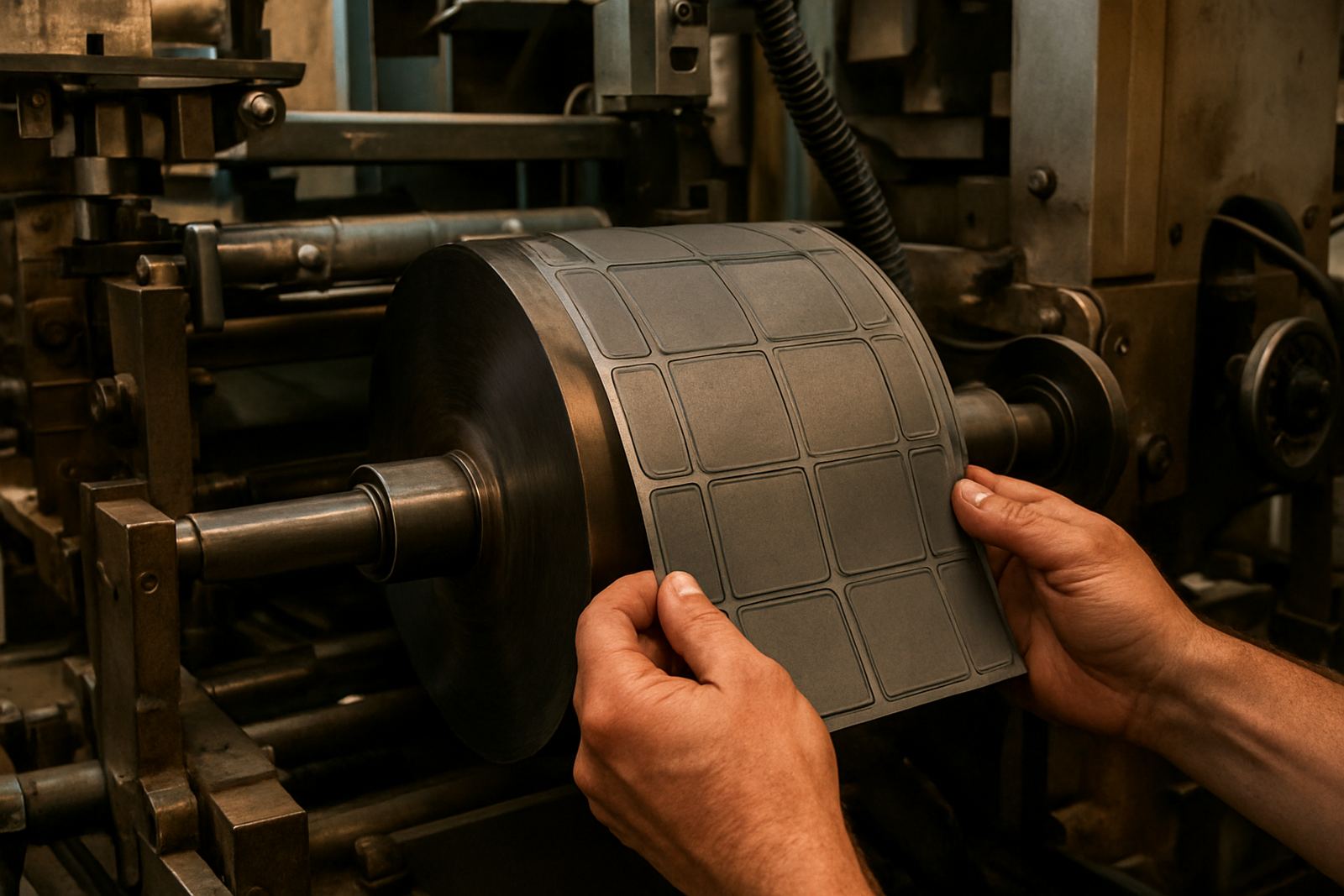
The tooling gave the converter cleaner edges, steadier release and more predictable waste removal on the thicker tyre labels. The operator reported less pull on the matrix and better consistency from the first production sheets through the rest of the run. That meant less stoppage and fewer adjustments during changeover. The client also noted that the labels kept their shape better during packing, which helped on the outbound side.
From our side, the useful result was repeatability. Once the first set was approved, we could match the same spec again for future orders without starting from scratch. That matters for a tyre label programme because the customer often comes back for the same format, sometimes with a small text or size change. With the base tool record in place, repeat work becomes quicker and less risky.
- Cleaner cut edges on thicker stock
- Better matrix release during converting
- Shorter setup time on repeat runs
- Simple path to remake or refine the tool if the spec changes
What we would do again for a similar Benoni job
For this kind of Benoni tyre label project, we would again start with a careful material check, then lock in the repeat and bearer settings before production. That is the safest way to handle thicker stock and adhesive systems that bite a bit harder than normal. We would also keep the first run support practical and short, with clear notes for the press team rather than a pile of paperwork.
If the same client comes back with a larger batch or a seasonal rush, we would keep a spare record of the die spec, cylinder details and regrind history. That makes urgent remakes much easier, especially when production is tight and dispatch windows are narrow. In South African converting, that kind of record keeping saves real time and keeps the line moving. No nonsense, just a set of tools that does its job.
- Keep repeat specs on file for future tyre label orders
- Check stock, adhesive and press conditions before cutting
- Use press trial support only where it adds value
- Plan dispatch around local production times and delivery routes
Key facts
| Client type | Tyre label printer and converter |
|---|---|
| Town | Benoni, Gauteng |
| Tooling supplied | Rotary solid die and flexible magnetic die |
| Stock thickness | Heavier label stock for industrial use |
| Timeline | 2 weeks from brief to dispatch |
| Support included | CAD proofing, bearer setting and press trial support |