What the Newton Park pressroom needed from the retrofit
The client was a label converter working from an industrial site in Newton Park, with jobs ranging from short promotional runs to repeat production for daily consumables. Their existing setup was slowing them down because each changeover took too long, and the cutter was not giving the same finish across repeat jobs. They needed a practical retrofit that could slot into the current press line without forcing major changes to the machine or the workflow.
The brief was clear: reduce downtime between jobs, improve repeat accuracy, and make the tooling easier to manage during busy production windows. They also wanted a setup that could cope with coastal humidity in Gqeberha, where storage and handling matter just as much as the cutting edge itself. We were asked to keep the solution simple, serviceable and suited to South African production conditions, not just ideal lab settings.
- Site: Newton Park, Gqeberha
- Client type: label converter
- Objective: faster changeovers and steadier repeat output
- Operating context: mixed short runs and repeat label jobs
Measurements, tolerances and the changeover constraint
We started with CAD proofing against the press measurements and checked the existing cylinder and die interface. The job needed a flexible die and a magnetic cylinder that would register properly without excessive packing, because the client did not want their operators fighting the setup on every run. We also checked bearer setting and repeat length so the tooling would sit right on the press first time, with less trial-and-error.
Because the site runs in a busy production area, the retrofit had to fit around live work and stock already in the room. That meant we planned the work in stages, measured twice, then confirmed the final geometry before cutting. The client also asked for advice on storage and handling, since magnetic tooling can pick up dust and small metallic particles if it is left open in the wrong place.
- Repeat accuracy checked against the existing press layout
- Bearer setting confirmed before manufacture
- Tolerance control kept tight for repeat runs
- Handling advice included for storage in humid conditions
What we supplied for the retrofit
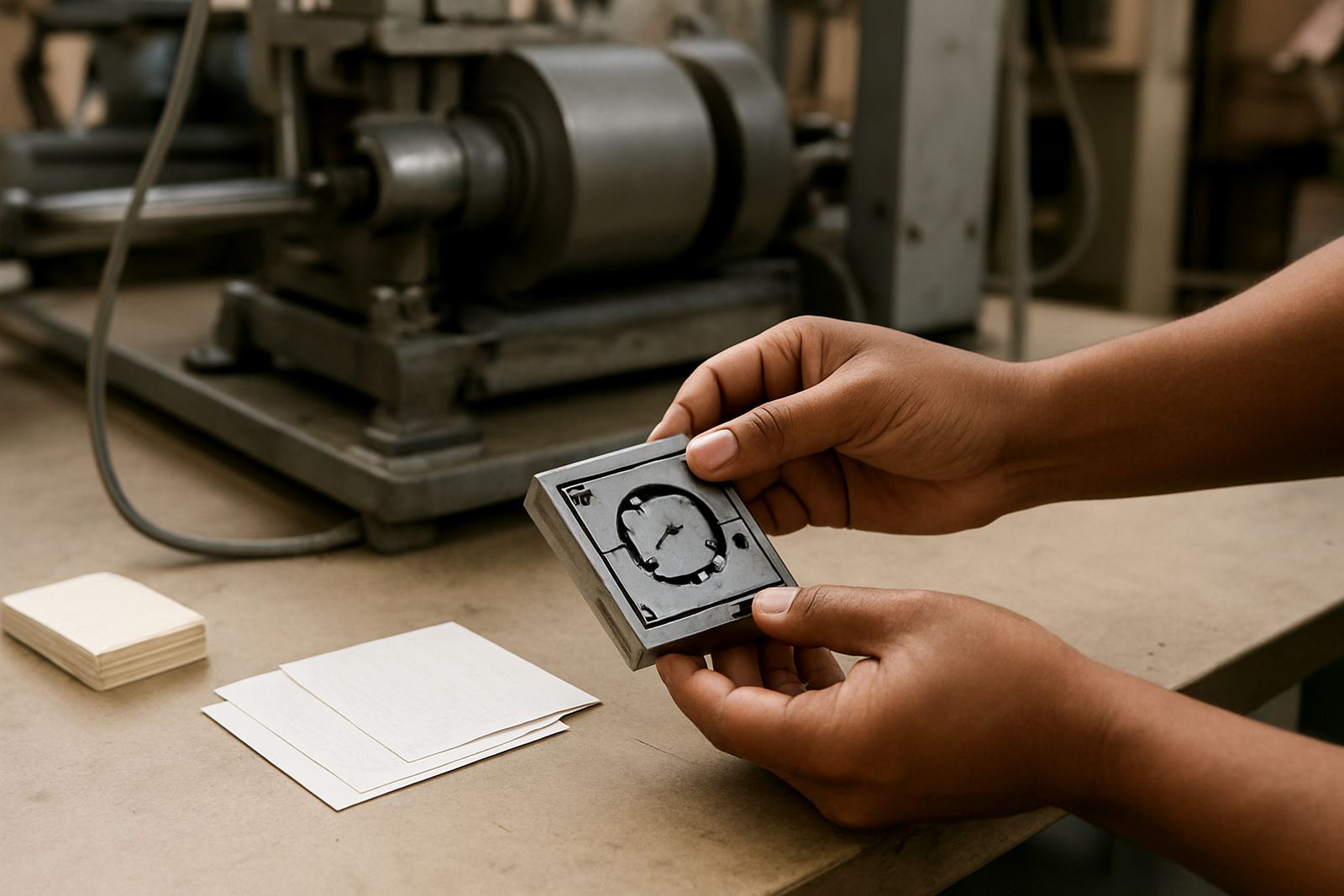
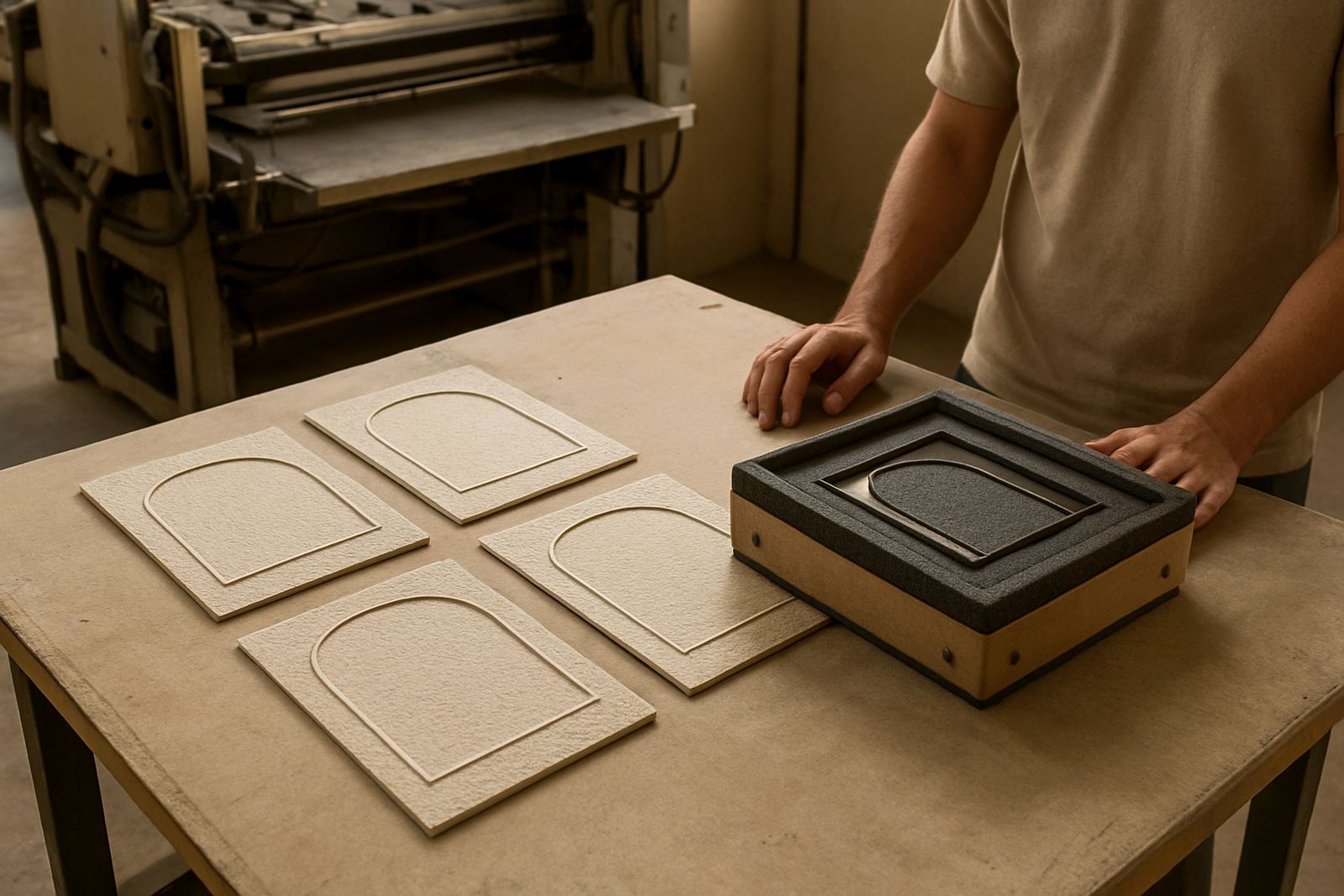
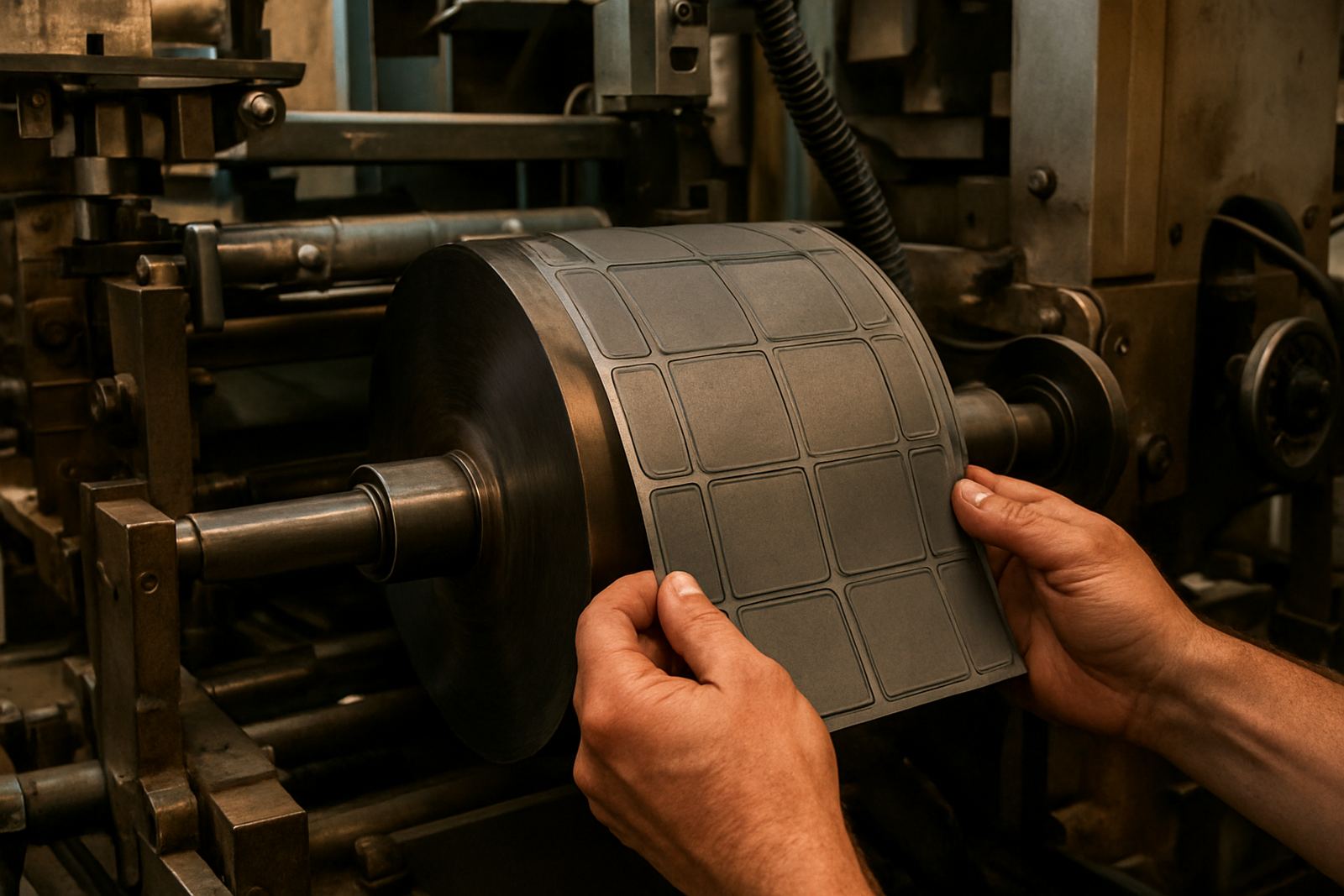
We supplied a made-to-order flexible die matched to the job format, together with a magnetic cylinder prepared for the same press sequence. The die was produced to support a cleaner cut and better repeatability across multiple runs, while the cylinder was set up to hold the die securely and reduce setup time between jobs. The combination was intended to give the press team a quicker path from one order to the next without losing cut quality.
Our production team completed the work in Wadeville, Germiston, then checked the finished parts before dispatch. The package included die design, CAD proofing, magnet checks, and packing for delivery to Gqeberha. We also prepared a short set of press-side notes so the operators could identify the correct setup order and avoid unnecessary wear. The parts arrived ready for fitment, with no need for extra machining on site.
- Flexible die made to order for the required label format
- Magnetic cylinder matched to the press arrangement
- CAD proofing completed before production
- Magnet checks and dispatch preparation included
Weeks from brief to delivery
The retrofit moved from brief to dispatch in three weeks. Week one was measurement, proofing and confirmation of the press details. Week two covered manufacture, finishing and internal checks. Week three was final inspection, packing and delivery coordination to Newton Park. That timeline worked because the customer gave us the key measurements early and we were able to keep the drawing approval moving without delay.
During the process, our technical sales team stayed in touch with the production manager and the pressroom contact so any questions were resolved before the parts left Germiston. This helped avoid the sort of last-minute change that can push a job out by days. The client needed the new tooling in place before a scheduled production block, and we kept to that window.
- Week 1: measurements and CAD proofing
- Week 2: manufacture and internal quality checks
- Week 3: packing, dispatch and delivery coordination
Results on press after fitment
Once fitted, the client saw faster changeovers because the die and cylinder combination matched the press more closely. That reduced the amount of setup time needed between repeat jobs and cut down the back-and-forth that usually happens when a tooling set is not quite right. The operators also reported a cleaner, more even cut across the run, which helped with finished label consistency.
The other gain was practical: the production team could keep moving through short and repeat orders with less interruption. In a label environment, those minutes saved add up quickly across a shift. The retrofit did not change the press itself, but it gave the customer a better tool path and less downtime, which was the real aim from the start. It also made maintenance simpler because the setup was more predictable, so less force was needed during changeover.
- Shorter make-ready time between jobs
- More consistent cut quality on repeat work
- Less operator time spent adjusting the setup
- Better day-to-day control in busy production periods
What we would carry forward on another run
If we were doing the same retrofit again, we would follow the same process: measure carefully, proof the geometry, confirm the bearer setting, then manufacture to the agreed repeat length. That order matters, especially when the client is trying to improve line speed without changing the full press setup. It also helps when the site runs mixed work and needs tooling that can shift from one order to the next without fuss.
For a pressroom in Newton Park or anywhere else in South Africa, we would also keep the same advice on storage and handling. Coastal humidity, dust and poor stacking can shorten tooling life if the dies and cylinders are left exposed. A little care after each shift goes a long way, and it is far cheaper than replacing a worn set early. The best result comes from the full loop: design, production, dispatch, fitment and follow-up.
- Confirm repeat length before manufacture
- Check bearer setting and magnet condition
- Protect tooling from dust and humidity
- Keep the packing and storage routine consistent
Key facts
| Project location | Newton Park, Gqeberha |
|---|---|
| Client type | Label converter operating a multi-job pressroom |
| Supplied items | Flexible die and magnetic cylinder |
| Timeline | 3 weeks from brief to delivery |
| Services used | Die Design, CAD Proofing, Magnet Checks, Packing And Dispatch |
| Outcome | Faster changeovers and steadier repeat cut quality |