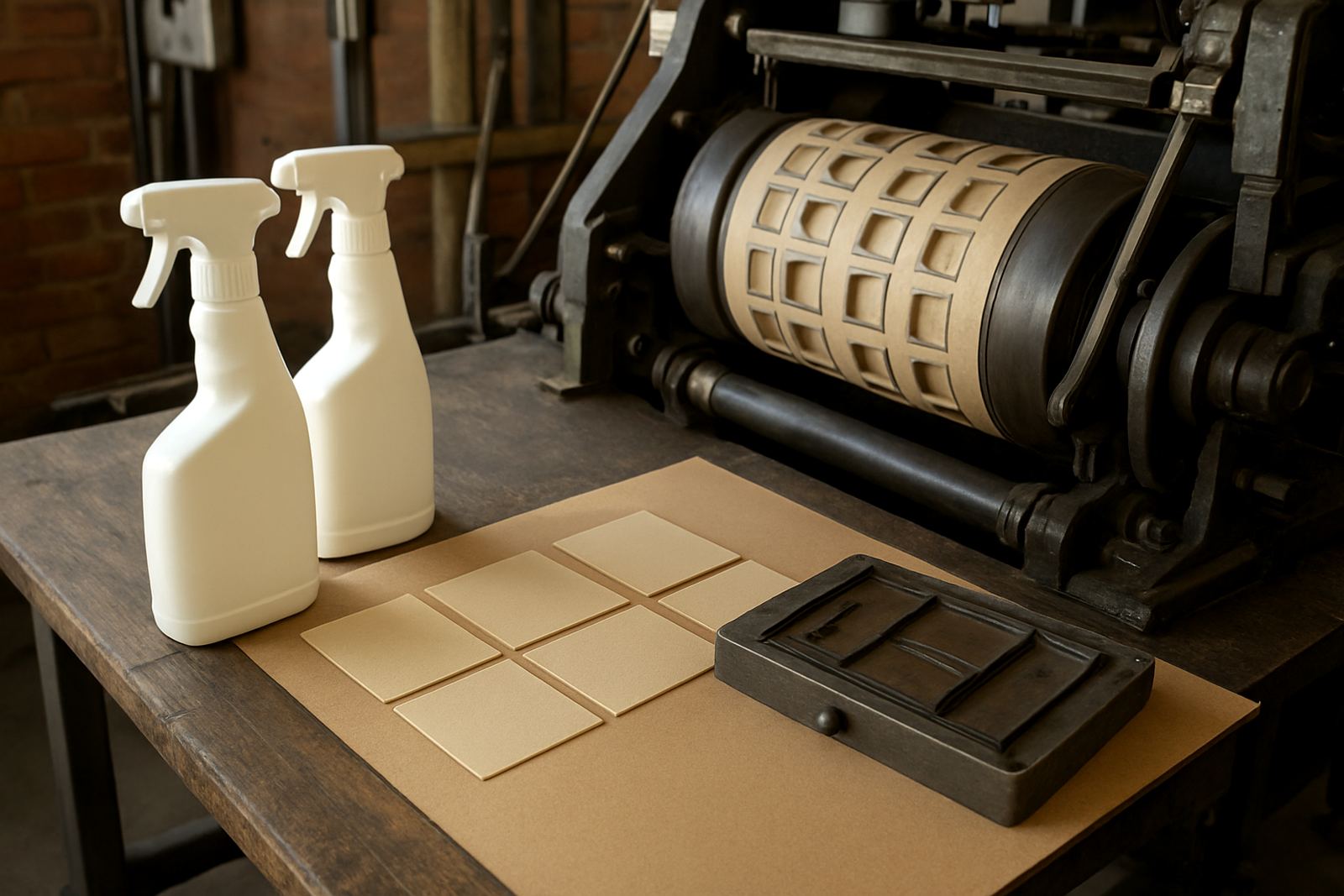
A closure label brief with no room for variation
The client was a label converter in Pinetown supplying closure labels for a product line that needed a clear seal indicator and a clean, predictable tear. The main ask was simple to say but harder to hold in production: each label had to separate in the same way, with no ragged break points, no over-cutting, and no wasted runs on press.
Because the job was for a repeat closure application, the converter needed tamper-evident die patterns that could run at speed without drifting from sheet to sheet or roll to roll. The print side was already locked in, so the cutting behaviour had to suit the label stock, adhesive, liner and rewind tension as they were. On these jobs, a small change in cut depth can make the difference between a neat seal and a reject pile.
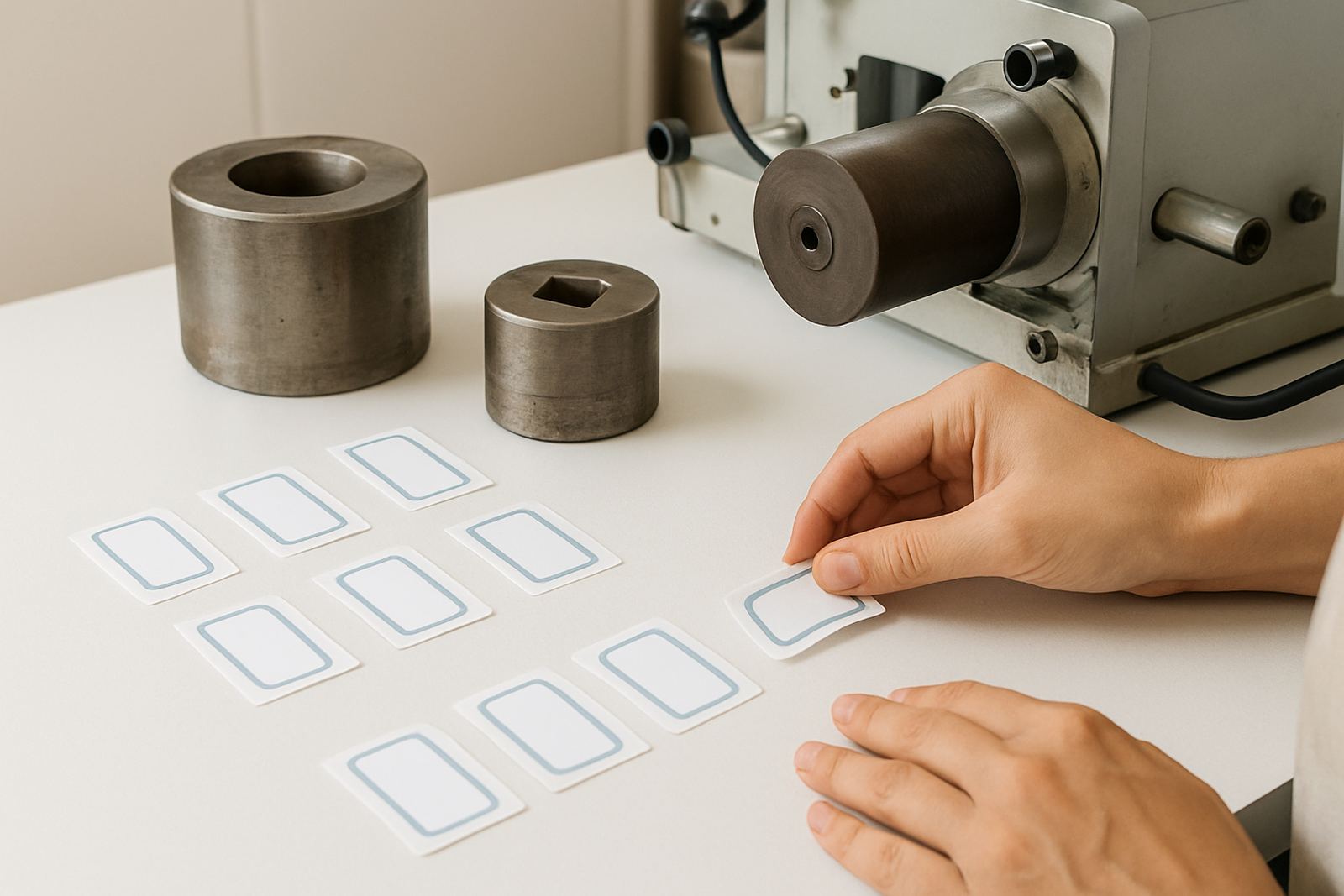
We worked from the sample pack and the existing artwork layout, then checked where the tear bridge had to sit so the first opening would be firm but not too stiff. The requirement was not just to make the cut, but to make the release feel consistent for the end user. That is often the part people notice first, even if they never see the die itself.
What made this Pinetown run technically tricky
The biggest constraint was repeatability. The customer needed the seal line to hold through transport, stacking and storage, then open cleanly when the pack was used. Coastal humidity in Durban and Pinetown can change how some label stocks behave during a run, so we had to allow for small movement in the material without letting the tear line wander.
There was also pressure on lead time. The converter wanted a fast turnaround because the order was tied to a scheduled filling window and it was not practical to lose a week waiting for a second revision. We planned the job around one main proof cycle, then kept the process tight so there was no unnecessary back-and-forth. When a seal job is late, the whole line can sit idle and that gets expensive very quickly.
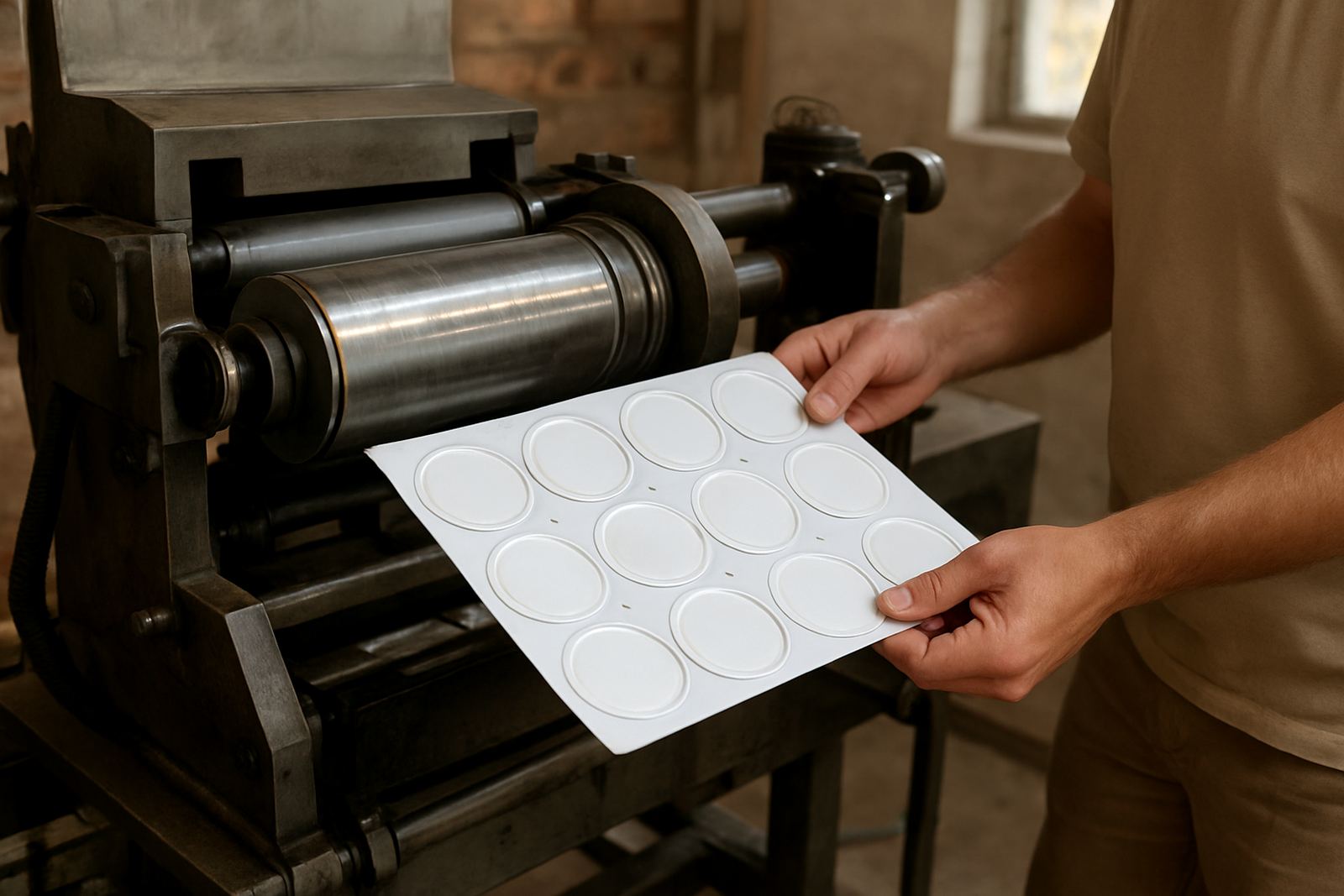
We also had to make sure the die would suit the converter's existing set-up. That meant checking bearer setting, ensuring the magnetic mount would seat properly, and confirming that the cutter profile matched the press conditions they were using. On a closure label, the cut must be precise but not over-aggressive, otherwise the release edge starts to fray and the sealing effect gets lost.
What we supplied and adjusted
We produced the die pattern to order, matched to the supplied artwork and the required tear behaviour. The build included careful CAD proofing, repeat matching against the customer's earlier references, and final checks before dispatch. For this kind of work, the small details matter: corner flow, bridge length, cut depth and the way the magnetic base tracks on press.
Before release, the production team checked the cutting face, the magnetic seating and the general fit for the intended press. Our technical sales side worked with the customer on the practical questions, while dispatch lined up packing so the die could travel safely to Pinetown without edge damage. The seal pattern was supplied as part of a controlled run, not as a loose cut and hope job.
- Made to order for a tamper-evident closure label application
- Set up for consistent tear behaviour across repeat runs
- Checked for correct bearer setting and magnet contact
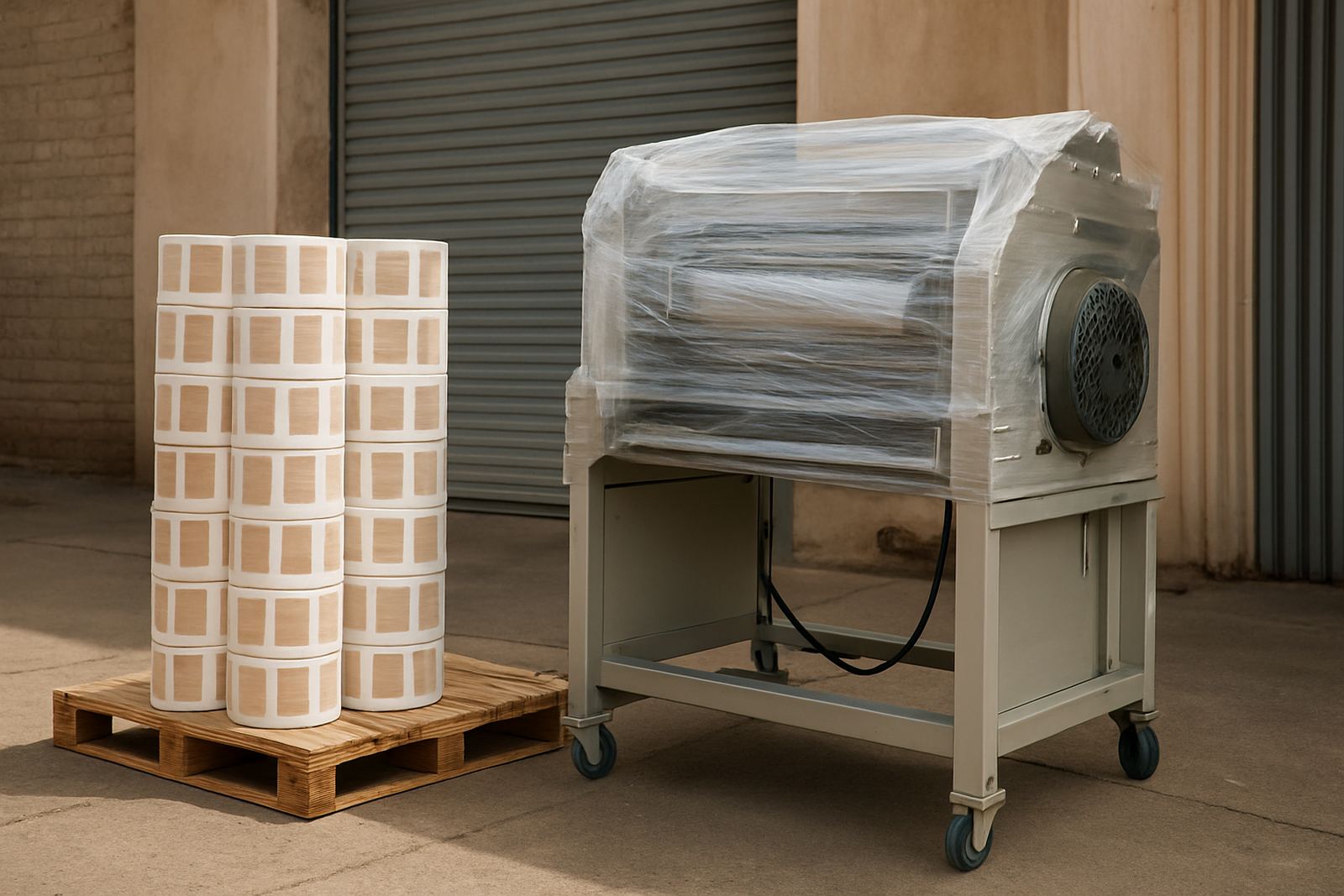
- Packed for safe road transport to KwaZulu-Natal
- Prepared for use on the customer’s existing converting equipment
Timeline, handover and on-press support
The job ran over about two weeks from brief to dispatch. The first few days were used to confirm the artwork, tear requirement and press format. After that we moved into die preparation, proofing and final sign-off. The turnaround was kept short because the customer was working to a production slot and needed the cutter in place before the next filling date.
We also stayed available during the first press start-up in case anything had to be adjusted on site. That sort of support is useful on a seal job because even a well-made die can need a small process tweak if the stock, adhesive or speed differs from the last order. A quick check on bearer pressure or tension can save a full afternoon of trial waste.
The result was a clean handover with no last-minute changes. The converter could load the die, test the tear line and move into production with confidence. For a job like this, the real outcome is not just that the die arrives, but that the line starts making acceptable labels straight away.
Results the converter could measure
After commissioning, the customer had a consistent tear line that opened in the right place and did not chew the face stock. That made the closure label easier to apply and easier for the end user to open in a controlled way. It also reduced the amount of scrap during set-up, which matters on any high-volume label run.
The converter also reported better repeatability on follow-on production. That is often the strongest sign that the tooling is right. If the first run sets the standard and the next run behaves the same, the job has been specified well and the cutting geometry is doing its work. In this case the seal pattern stayed true across the run and held up through dispatch and storage.
- Cleaner opening behaviour on the closure label
- Less waste during set-up and initial test pulls
- Stable cut quality across the repeat order
- No need for a full rework on the first production cycle
What we would do again for a similar seal job
If we were repeating this work for another Pinetown converter or a Durban-based label house, we would follow the same approach: confirm the tear requirement early, check the press format before cutting, and keep a close eye on the stock behaviour before sign-off. That is the safest way to avoid surprises once the die is on press.
For tamper-evident closure labels, we would again recommend a proof cycle against the actual substrate and a final check on bearer setting and magnet contact before the run begins. If the job is urgent, it also helps to pack and dispatch with the delivery route already planned, especially when trucks are moving between Germiston, Durban and the upper Highway area. Getting the cutter there on time is part of the job too.
In short, seal work rewards discipline. The brief must be clear, the cut must be accurate, and the handover must be ready for the real press conditions, not just the drawing on paper. That is how you get a tear line that does its job every time, not only on the first sample. And if the customer needs another match later, repeat matching makes the next order quicker to approve.
Key facts
| Project | Pinetown tamper-evident closure label die pattern |
|---|---|
| Client type | Label converter serving a closure pack line |
| Town | Pinetown, KwaZulu-Natal |
| Supply type | Rotary and flexible magnetic die tooling |
| Turnaround | About 2 weeks from brief to dispatch |
| Outcome | Consistent tear behaviour with reduced set-up waste |