A Springs brief built around warranty control
The client was a label converter in Springs supplying warranty seals for appliance and electrical goods going through local distribution and service channels. Their issue was simple to state but tricky in production: the label had to look neat on the roll, print clearly, then break apart properly when removed from a product or carton. They needed tooling that gave a clean destructive pattern without forcing the press crew to slow down too much.
The brief called for a security seal format with slit geometry, precise repeat length and controlled adhesive release behaviour. The labels had to suit a small to medium roll format, run on standard converting equipment, and hold registration on each station so the print stayed in line. The client also wanted a design that could be repeated later with minimal adjustment because the same seal was likely to be reordered in batches, not one-off lots.
We looked at the application first, then the press conditions and handling points. Springs jobs often move through busy warehouses and service depots, so the seal also needed to survive packing, stacking and basic temperature swings without curling at the edges. That meant getting the geometry right before any steel was cut, not just making the blade profile pretty on paper.
Tooling specs and the slit geometry we used
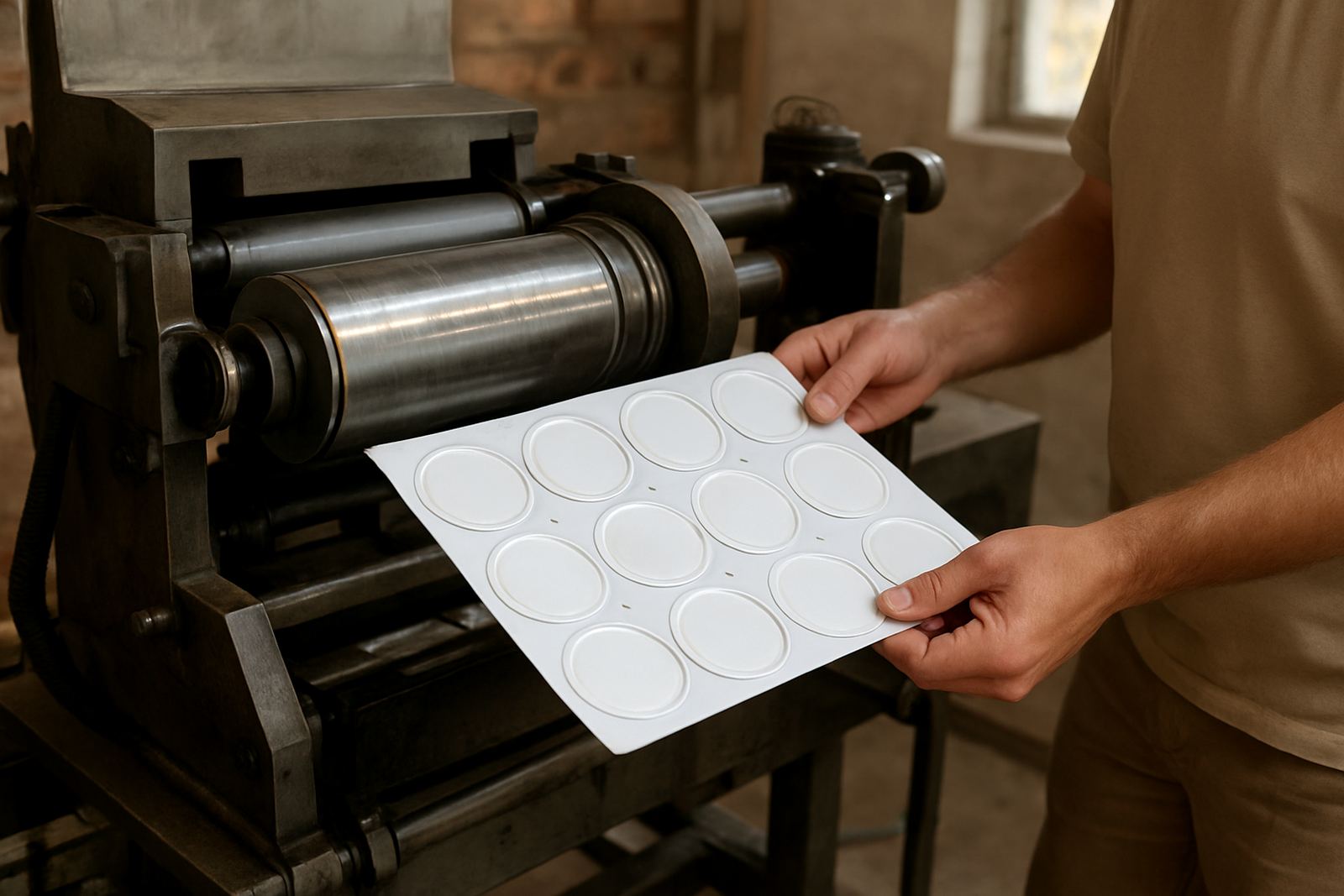
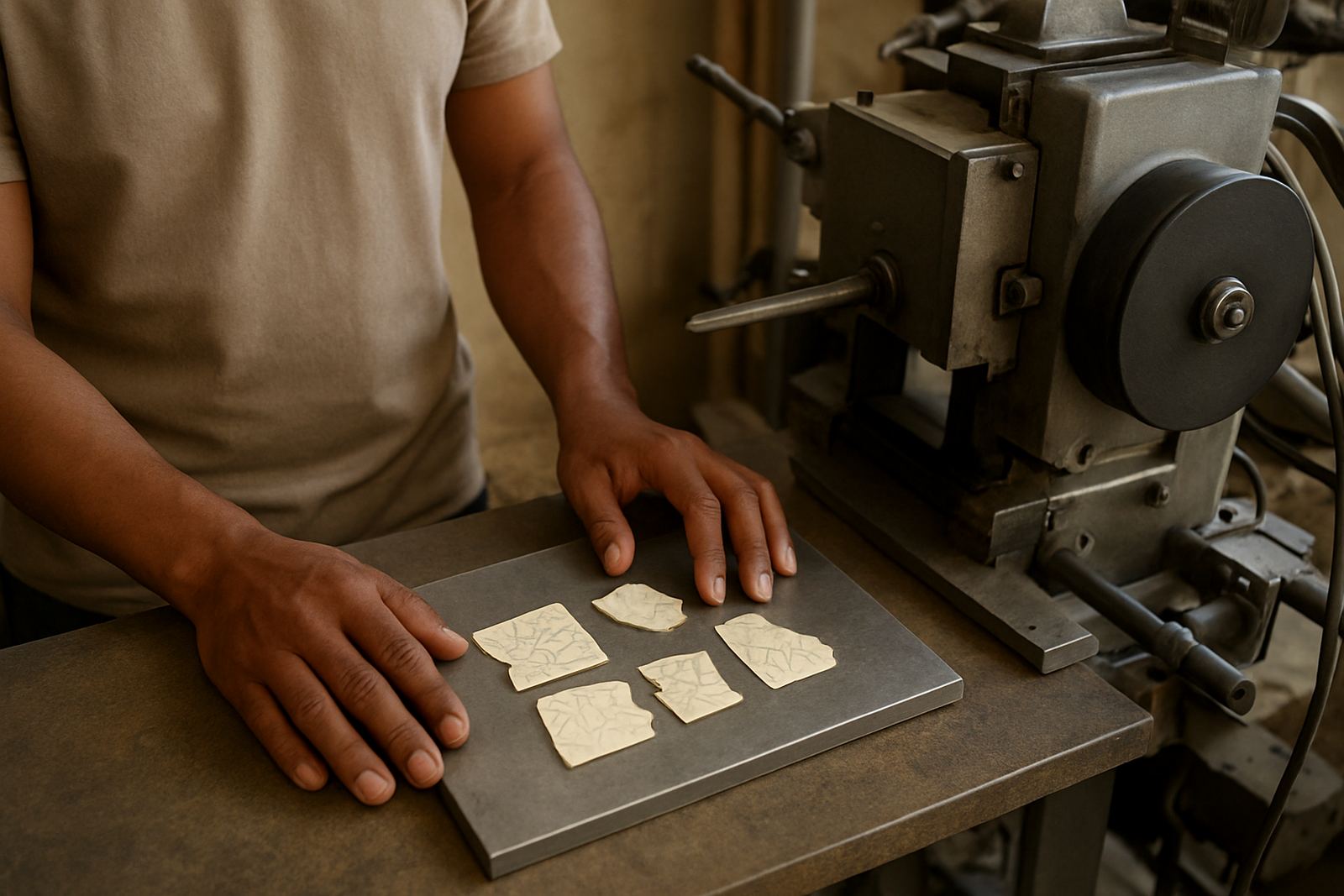
For this project we produced a custom security label tool with destructible slit geometry suited to warranty applications. The main aim was controlled fragmentation, so the seal would show tamper evidence the moment it was peeled or lifted. We set the slit pattern to break the face material in a predictable way and kept the cutting depth consistent across the full circumference.
- Label type: destructible security seal for warranty use
- Tool format: made-to-order rotary and flexible cutting set
- Repeat control: matched to the approved print repeat
- Cut behaviour: slit geometry for clean tear and visible tamper evidence
- Tolerance target: tight enough to keep repeats steady on press
- Application: label converting for roll production and reorders
The geometry had to work with the labelstock rather than against it. Too light and the seal would not break properly. Too heavy and the sheet would shed scraps, slow the press and make stripping messy. We balanced the cut so the face split where it should, while the liner stayed stable enough for reliable stripping and rewind. That balance matters more than people think, especially on small security labels where every fraction of a millimetre counts.
We also checked whether the artwork and cut line left enough room for serials and variable print. In security work, the printed information often sits close to the cut path, so any drift can cause a bad batch. We allowed for that in the proof stage and kept the final cut path aligned to the print position with no unnecessary movement.
Proofing, repeat matching and production checks
Before cutting anything we prepared CAD proofing for approval. The proof showed the slit layout, repeat length and cut placement so the client could compare it against their artwork and production method. That step saved time later because there was no guessing on press and no need to trim or improvise after the tooling arrived.
Once the proof was signed off, we moved into machine setup and repeat matching. The job needed a repeat that would register properly from one label to the next, so we measured the cut path against the layout and checked the spacing through the full circumference. We also reviewed bearer setting and magnet checks to keep the tool running true on the converting line.
- CAD proof issued for approval before manufacture
- Repeat matching confirmed against the print layout
- Magnet checks completed for proper seating
- Bearer setting adjusted for even pressure across the tool
- Press trial support prepared in case the first run needed tuning
The client asked for a practical setup, not a complicated one, so we kept the finishing straightforward. The tool was prepared for clean mounting and quick changeover, which helped the team in Springs get onto the run without burning time. In a busy converter shop, that can make the differnce between a smooth shift and a rushed one.
From order to dispatch in under two weeks
The full project ran over two weeks from brief to dispatch. The first stage was the technical review and proof, followed by manufacturing and edge checks. After that we completed final inspection, packed the tooling securely and coordinated delivery out of Wadeville, Germiston to Springs.
The timing mattered because the client had a warranty label order tied to a customer release date. We kept the process tight but did not cut corners. The production manager and machine shop lead checked the critical dimensions, while dispatch coordinated the handover so the tool could reach the press team without delay. No one needed to chase updates through three departments, which is often where these jobs lose time.
Because the client was running a repeatable product, we also recorded the key settings for future reorders. That included the slit geometry notes, repeat size and the practical points from the proof stage. If the same seal comes back later, we can match it quickly rather than starting from scratch. That kind of record keeping is especially useful when a printer has multiple product lines moving at once.
What the Springs run achieved on press
On press, the security seals separated the way they were meant to. The labels printed cleanly, the slit pattern gave the required tamper evidence, and the release from the liner stayed controllable during stripping and rewind. The client was mainly looking for consistency, and that was what the tooling delivered.
The result was a cleaner production run with less waste and less manual sorting after conversion. The printer did not need constant line stops to correct the cut, and the finished rolls were suitable for packing into service kits and warranty packs. That matters when labels are going out to branches, repair teams and stockrooms across Gauteng and beyond.
- Cleaner tear on removal
- Consistent repeat from first roll to last
- Less scrap from mis-cut labels
- Quicker approval of the final production run
- Better handling in packing and dispatch
For the client, the main benefit was confidence. When a security label does its job, no one notices it unless it has been tampered with. That is exactly how it should work. The seal looked neat in print, performed properly on press and held up in normal use across the supply chain.
What we would repeat for the next security seal job
If we were doing the same job again, we would follow the same method: start with the application, prove the slit pattern carefully and keep the repeat under control before manufacture. For destructible labels, that sequence saves material and avoids drama later. It also gives the printer a better chance of getting to a clean first run.
We would also keep the same practical checks in place for any follow-up order. Security work benefits from consistency, especially when the label has to match a previous batch exactly. If the customer needs a re-run for Springs, Johannesburg, Pretoria or Durban, having the first settings on file makes the next job quicker and safer to approve.
At LabelCutter Dies, this is the sort of tooling we handle every week: rotary solid dies, flexible magnetic dies and magnetic cylinders made to order for South African label printers and converters. For warranty seals, asset labels and tamper-evident formats, the important thing is not hype. It is a sharp cut, a reliable repeat and a tool that does what the press team expects.
Key facts
| Project | Springs security seals |
|---|---|
| Client type | Label converter |
| Town | Springs |
| Tooling supplied | Destructible security label die with slit geometry |
| Timeline | 2 weeks from brief to dispatch |
| Use case | Warranty labels and tamper-evident sealing |