Start with the label spec, not the pretty picture
Before anyone marks up artwork, the printer and converter need one clear spec sheet. That means finished size, repeat length, number of labels across the web, matrix width, corner radius, cutter gap and any varnish or foil areas that affect tooling. If the brief is vague, the die is usually the part that pays for it later.
In Wadeville we see the same issue across Johannesburg and Pretoria orders. A job comes in as a PDF looking neat, but the actual label size is missing 0,5 mm on the key dimension or the web direction was assumed wrong. That is enough to throw off bearer setting, cylinder fit and registration on press.
- Confirm finished label size in millimetres
- State web direction and unwind direction
- List all cut lines, kiss cuts and any perfing
- Show bleed, safe area and artwork to edge rules
- Note whether the job is for paper, PP, PET or another stock
Proof for the die, not just for print quality
Artwork that prints well can still be a problem for tooling. Fine text close to the edge, tiny radii and decorative shapes with sharp inside corners can all become weak points on a rotary solid die or flexible magnetic die. If the artwork does not respect the tool geometry, the press team will spend time compensating for a file that looked fine on screen.
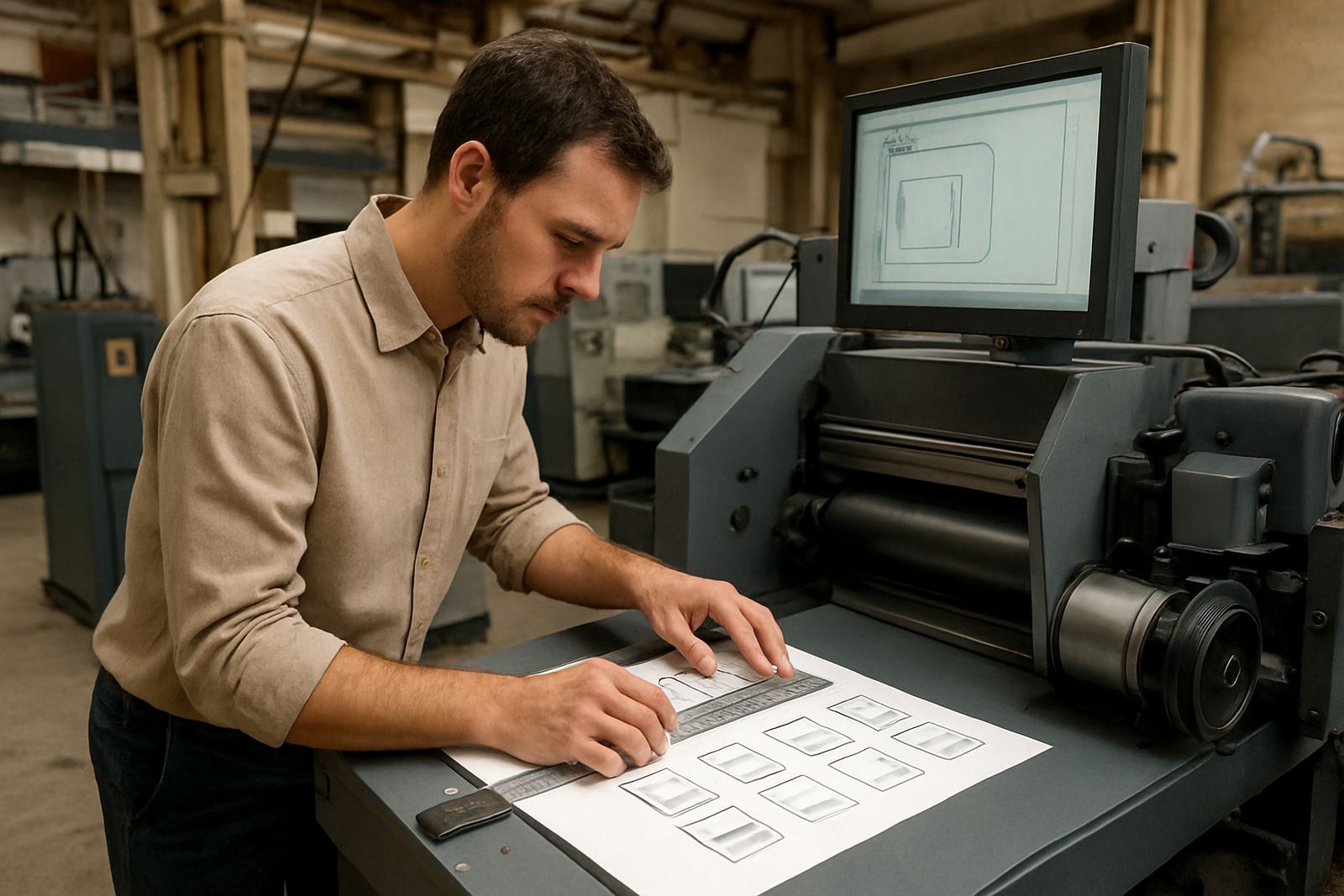
A proper proof checks whether the image can be cut cleanly at the required tolerance. It also checks if the layout allows for realistic stripping, good waste release and stable rotation. This matters especially on short runs where there is little time for trial and error.
- Keep text and graphics back from the cut line where possible
- Avoid hairline rules that disappear once plated or sharpened
- Check for islands that can lift during stripping
- Flag any shape that needs a special bearer or repeat adjustment
- Make sure die board, cylinder and press setup all match the same repeat
Watch the geometry that causes repeat problems
Many delays come from small geometry mistakes that nobody spotted at artwork stage. A label may look square, but if the corners are not truly equal or the repeat includes a hidden rounding error, the tool will not sit right on the press. The result can be a drift in cut position, uneven pressure or a customer rejecting the roll before it even gets to packing.
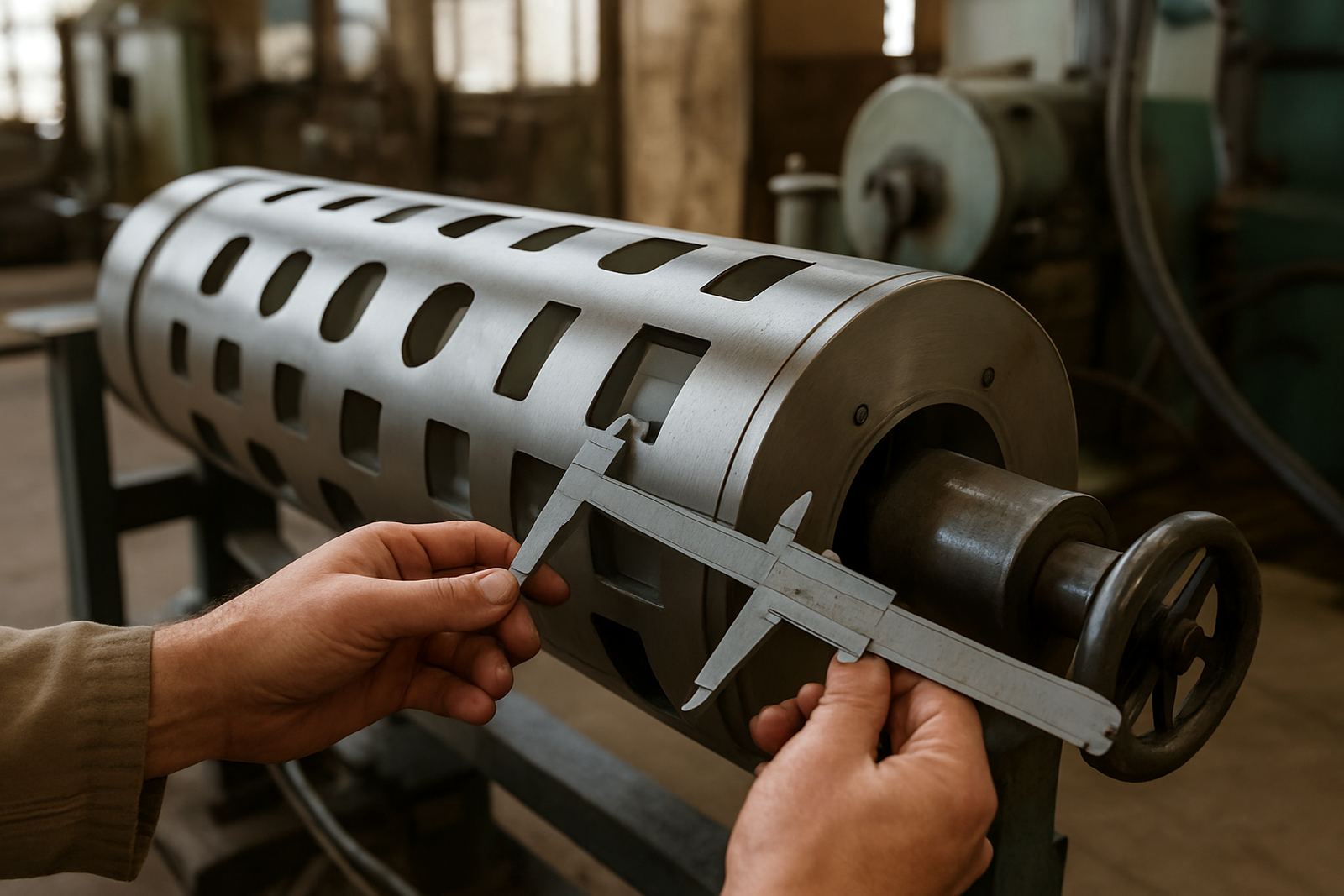
For repeat matching, accuracy matters more than appearance. A simple proof should show the exact outer profile, internal cut-outs, and any variation between faces. If there is a step-and-repeat arrangement, the spacing must be checked against the actual print repeat not just the theoretical layout.
- Check corner radii on all four sides, not only one corner
- Confirm cut-out positions from a fixed datum
- Measure repeat length on the supplied artwork and the final imposed sheet
- Highlight any symmetry that is only visual and not dimensional
Use a clean approval process before the machine shop starts
Once artwork is approved, the clock starts on the tooling side. If the proof is unsigned or the comments are spread across messages and WhatsApp messages, someone will eventually cut the wrong version. A clean approval process protects both the printer and the die maker.
At LabelCutter Dies the proof should carry one clear revision status, one named approver and one set of instructions. That is the safest route for urgent remakes and repeat orders too. It also helps our team in Germiston keep production moving when a customer in Durban or Cape Town needs a fast turnaround.
- Approve one final revision only
- Mark changes clearly on the proof
- Use one reference number for the job from start to finish
- Record whether the approval includes design changes or tooling only
- Keep the approved file and the proof together for repeat work
Local production realities change what a proof should check
South African label production is rarely ideal. Load-shedding, humidity near the coast and fast turnaround demands all affect how a job behaves once it leaves artwork. A proof should note whether the substrate is likely to move, whether adhesive bleed could affect cut cleanliness and whether the die has enough strength for a long run or a short urgent job.
For example, a converter in Bellville may need a flexible magnetic die for a food label run on a humid day, while a customer in Pinetown needs a solid rotary die for a heavier stock with tighter pull tolerance. The artwork might be the same, but the proofing notes should not be. Small differences in stock and press conditions can change the final cut behaviour quite a bit.
If a job is going to sit in dispatch for a day or two, it is also worth checking how the packed rolls will be handled. Edge protection, storage temperature and moisture exposure all matter. A well proven artwork file helps, but the full workflow has to be considered too.
Ask for press support where the proof still leaves risk
Some jobs need more than a file check. If the label has unusual geometry, tight register or a repeat that pushes the tooling limits, press trial support is the sensible step. That is where bearer setting, magnet checks and cylinder inspection can stop a small issue from becoming a full stoppage.
The best time to ask is before steel is cut or a cylinder is refurbished. Once the job is on press, every correction costs more. A practical proof process gives the production team enough information to decide whether the job needs a remake, a regrind or simply a better setup note.
- Ask for trial support on new shapes and tight repeats
- Include stock details and press type when submitting artwork
- Note if the job must run fast, quietly or with minimal waste
- Use the enquiry form early if the deadline is tight
In this trade, a careful proof is not paperwork. It is part of making sure the tooling fits the job first time, with less scrap and fewer late-night corrections.