
Why slit patterns matter on South African packs
Security slits are cut into a label so the material splits, tears or distorts when someone tries to lift it off. That makes them useful on warranty seals, service labels, compliance packs and product closures where a clean peel could hide interference. In practice, the goal is not to make removal impossible, but to make any attempt obvious enough for a picker, auditor or customer to spot at a glance.
For South African label printers and converters, the right pattern also has to work through the real conditions we see every week. A label that performs well in a cool warehouse in Germiston may behave differently in Durban humidity, on a dusty spray bottle, or on a carton that sits in a delivery truck all morning during load-shedding delays. A good pattern takes those conditions into account from the start.
It is also important to match the slit to the adhesive and face material. A high tack adhesive with a weak pattern can still be peeled off too neatly, while a very aggressive pattern on thin face stock can cause lifting at the edges before the label is even applied. That is why the pattern should be set with the pack, the press and the end use in mind.
The main security slit patterns and where they suit best
There is no single pattern for every job. The best choice depends on the shape of the pack, the substrate and how much visible evidence of tampering is needed. On many jobs, the pattern must also run cleanly through the converting line without excessive waste or knife wear.
- Short cross slits: Good for small seals and top tabs where the label only needs a clear break point.
- Full width release slits: Used when the label must tear across a wider area and leave a visible split line.
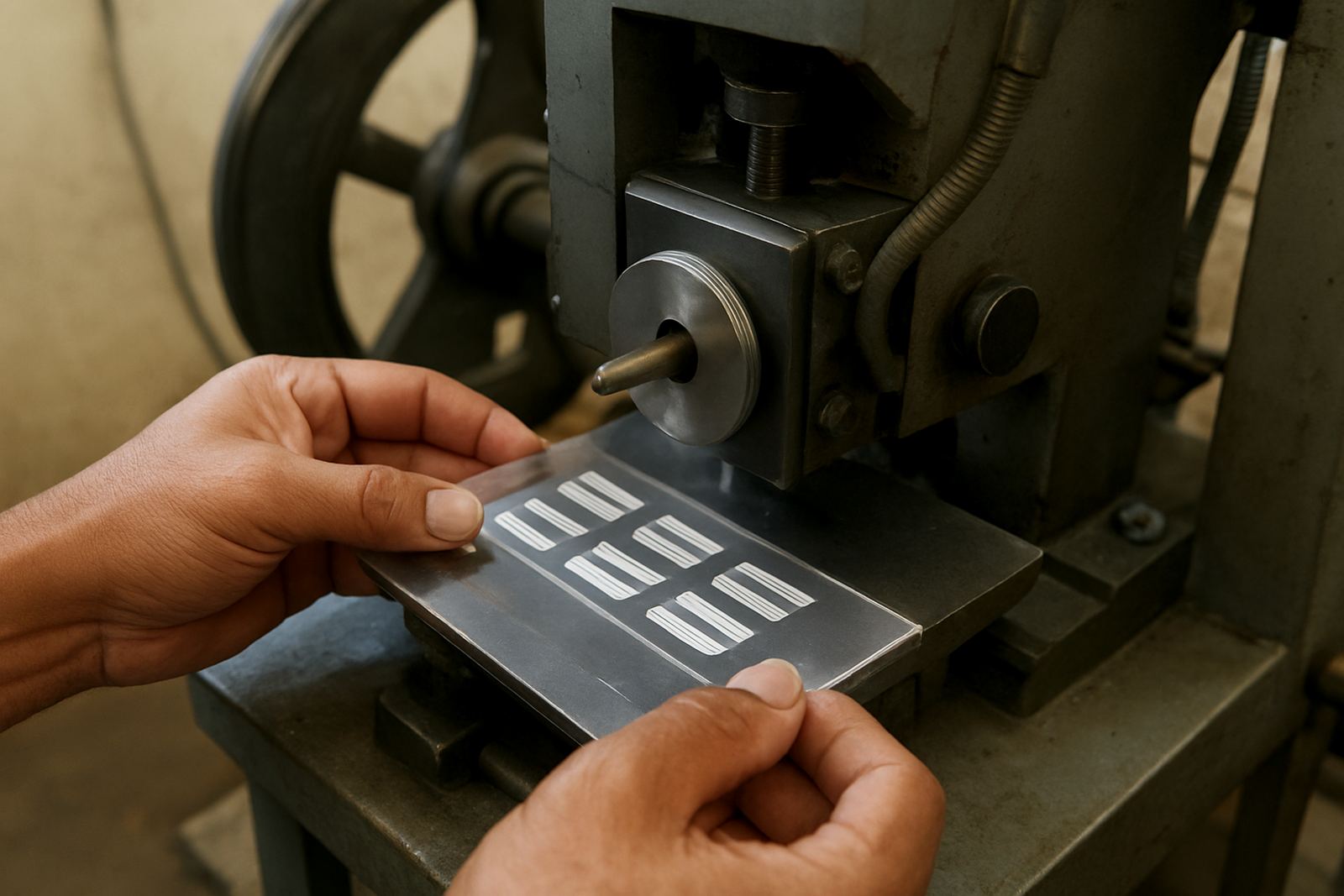
- Perforated security slits: Helpful where the label should stay on the pack but show multiple tear points if lifted.
- Angled or staggered slits: Often better on curved surfaces because they reduce edge lift and improve handling.
- Custom split zones: Useful for closure seals, pouch flaps and carton seals where a controlled tear path is needed.
A label printer in Johannesburg might need a different solution from a converter supplying wine or cleaning product labels to Cape Town, because the container shape and transport route are not the same. Even a small change in slit spacing can affect whether the tamper mark is neat, obvious and still readable after application.
How to choose a pattern for the label, not only the press
It is easy to think only about how the die will cut, but the label itself must carry the pattern through application and use. Face thickness, liner type, adhesive strength and release level all influence whether the slits behave as intended. If the stock is too soft, the pattern may close up or distort. If it is too stiff, it can lift at the corners and collect dust.
Start with the question: what must the user see if the seal is disturbed? On a medicine carton, that might be a split across the opening flap. On a beverage closure, it might be a tear line that cannot be restored neatly. On a service label, it might be a pattern that breaks when the housing is opened. The answer helps set the slit shape and placement.
When we work on repeat matching, we often check not only the die but the original pack behaviour. That includes adhesive grab, face stretch, carton coating, and whether the label is applied by hand or by machine. A hand applied seal can tolerate a slightly different pattern from a high speed line, because the handling and pressure are different.
- Test the label on the real substrate, not only on the art file.
- Check whether the pack is glossy, textured, coated or slightly dusty.
- Allow for heat, moisture and transport movement between application and use.
- Confirm whether the slit must be visible or hidden until tampered with.
Working tolerances that keep the slit doing its job
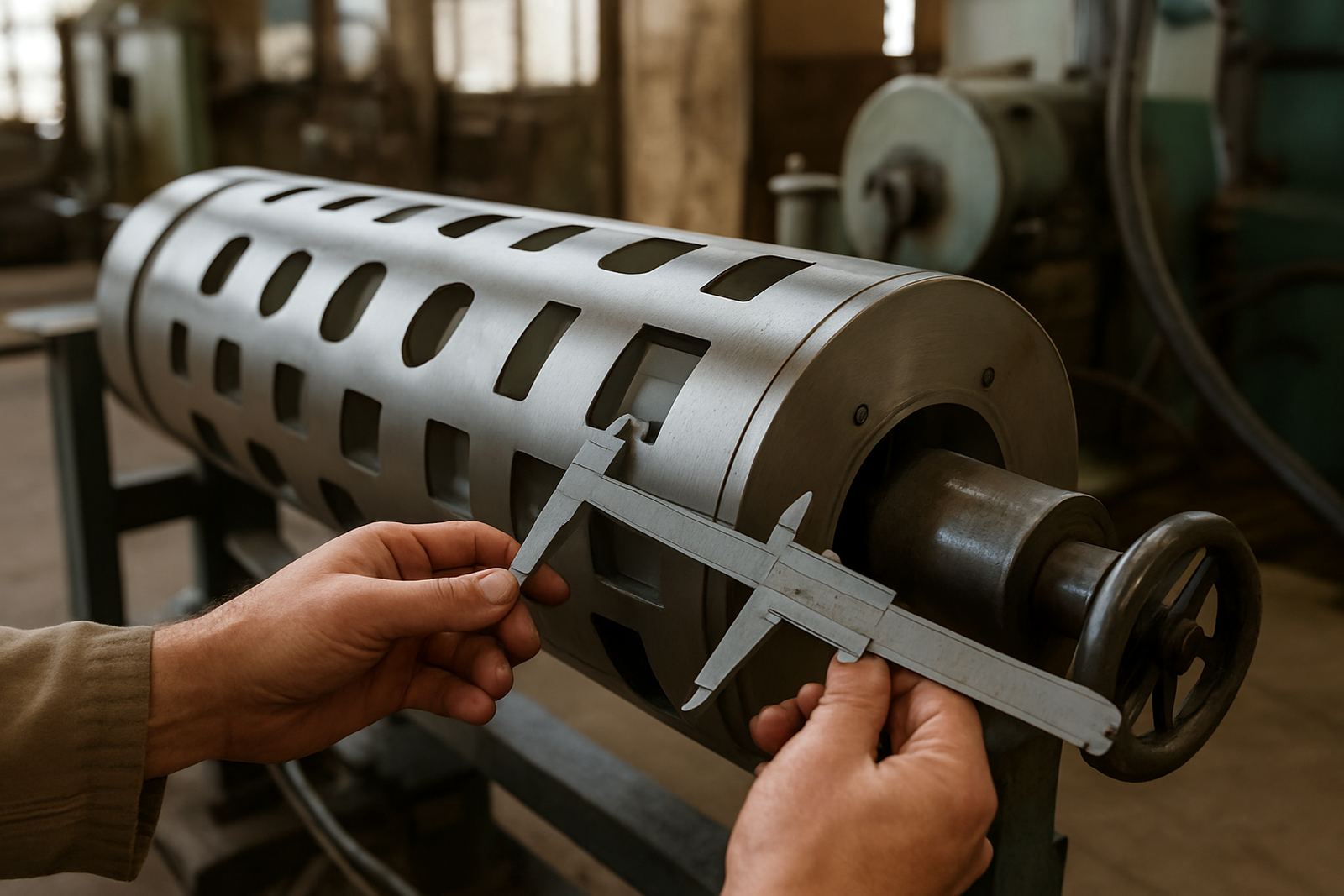
Security slit patterns depend on repeatable cutting. If the slit depth changes too much across the cylinder or magnetic tool, the result can be inconsistent. Some labels tear too early, while others come off too cleanly. For converters, that means more waste, more press stops and more complaints from packers who find the seal behaving differently from batch to batch.
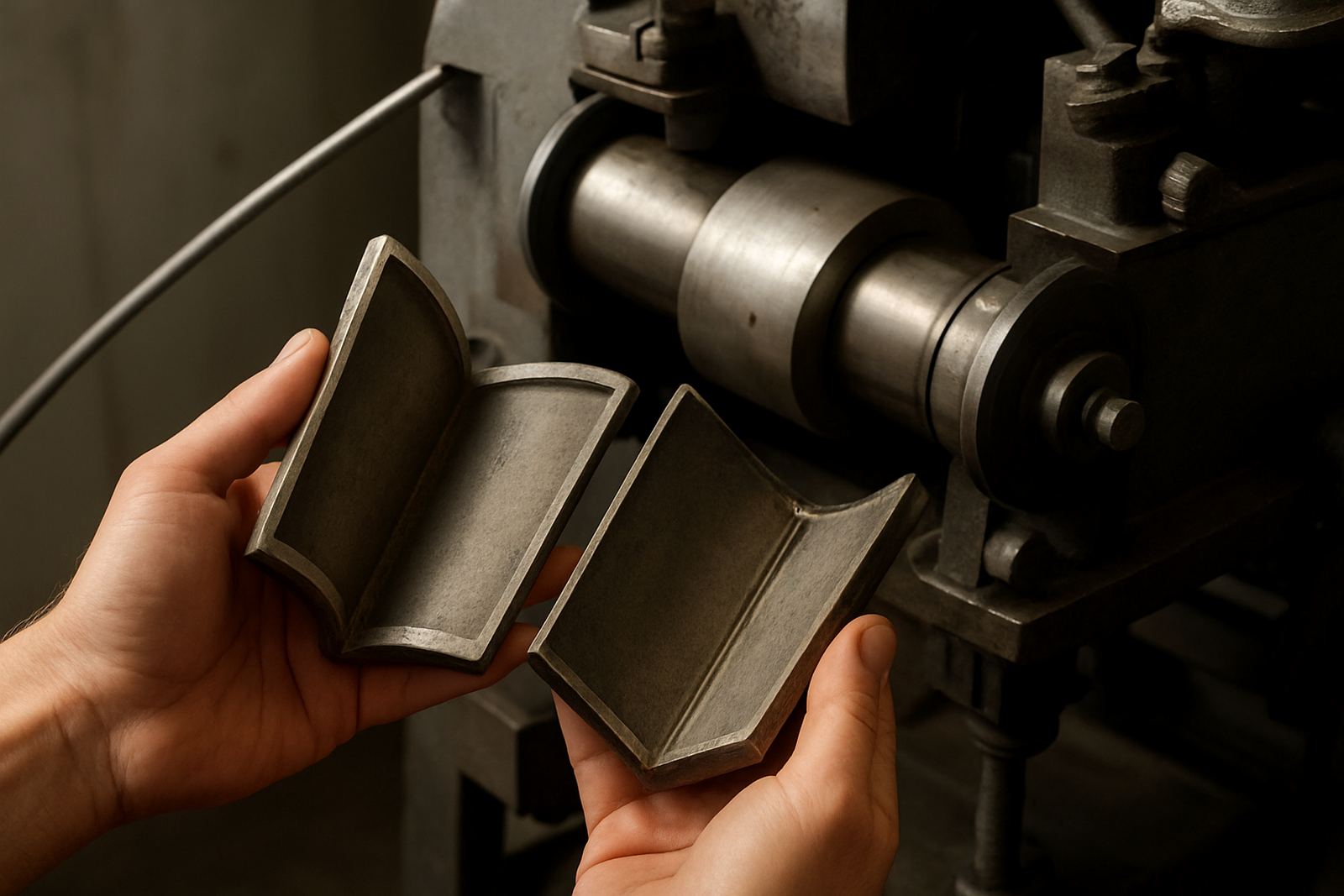
Precise tolerances matter because a slit is not just a cut, it is a control point. The knife profile, bearer setting and cylinder condition all affect the final result. If the tools are worn or the magnetic face is uneven, the cut can drift. That is why magnet checks, die regrind and cylinder refurb work often sit alongside security slit production.
For South African print runs, another practical point is turnaround. When a customer in Pretoria needs an urgent remake, the replacement has to match the original slit behaviour closely or the line will stop while the application team rechecks settings. Good dispatch coordination also matters because a delay of a day can be the difference between a finished job and an empty pallet on the dock.
Local example: a tamper visible seal for a Durban product line
A Durban converter once needed a label for a carton seal on a product that travels through warm stores and humid loading bays. The first version looked fine on press, but in handling the edge lifted slightly and the tamper mark was too subtle. The issue was not the artwork, it was the slit pattern and how it interacted with the adhesive on the coated carton.
We adjusted the pattern to create a more defined tear path and reduced the chance of corner lift. After a press trial, the seal tore cleanly when opened and stayed stable during packing, even with the humidity near the coast. That kind of adjustment saves time later, because the customer can trust the seal without adding extra material or a complicated application step.
This is why a local example matters. A pattern that works inland may need a different cut for coastal handling, and a label used on a pharmaceutical carton will need a more controlled tear than one on a simple outer case. The more clearly the tamper event has to show, the more important the slit design becomes.
- Coastal humidity can soften the behaviour of some face stocks and adhesives.
- Cartons with recycled content may give a less predictable tear line.
- Manual packing lines often need a more forgiving pattern than machine applied work.
What to brief before ordering a custom die
To get the right security slit pattern, share the pack sample, label size, application method and the kind of tamper evidence you want. It also helps to note whether the label must survive cold rooms, sun exposure, rough transport or repeated hand contact. The more practical detail you provide, the less back and forth there is during proofing.
Useful brief details include the substrate, the adhesive type, whether the label wraps around a flap or closure, and how obvious the tamper mark must be. If you are unsure, ask for CAD proofing and press trial support before the final run. That gives you a chance to check the slit path on the actual pack and adjust before full production.
For converters in Johannesburg, Durban, Cape Town, Gqeberha and Pretoria, the right slit pattern is usually the one that performs quietly in the background. It should hold during packing, show a clear fault if disturbed, and keep the line moving without extra handling. That is the practical test that matters most.