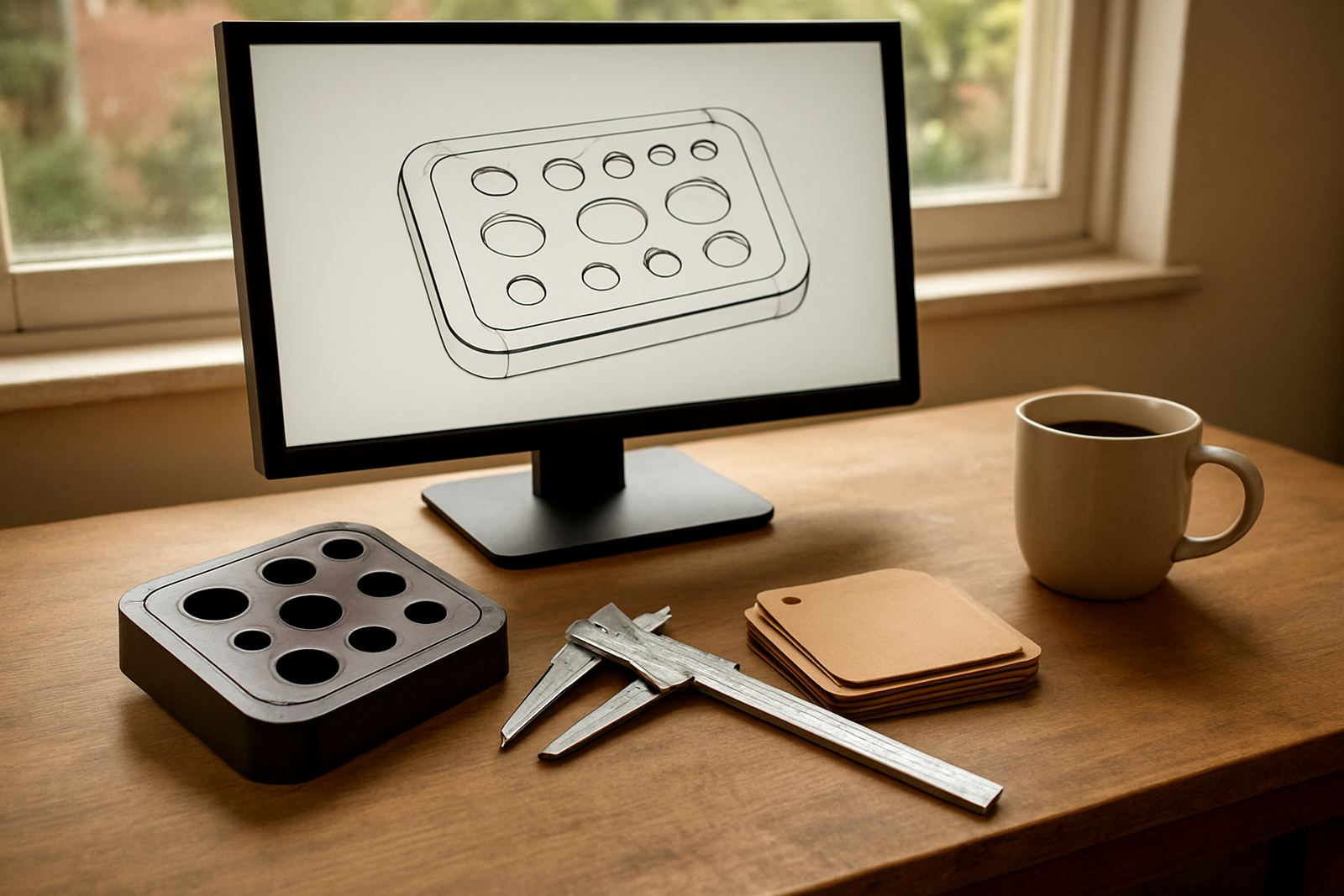
What our CAD proofing covers
CAD proofing is the stage where we check the supplied artwork, die layout or repeat details against the production requirements of the job. We confirm the cut line, matrix clearance, repeat length, liner direction and any special features that affect running on press. For label work, a small error in spacing can cause waste on the line, so we look closely at the practical side of the drawing, not just the shape. This is especially useful for runs that must fit narrow web widths, irregular label formats or tight press tolerances.
Our proofing is done for rotary solid dies, flexible magnetic dies and magnetic cylinder work. We also check for issues that can affect handling after delivery, such as tight corner radii, weak bridges, unsuitable cut depth assumptions and features that may be awkward to mount or strip. If there is a concern, we flag it early and give clear feedback before production starts.
- Dimension checks against the supplied specification
- Repeat and spacing review for press compatibility
- Cut profile confirmation for clean stripping
- Checks for mounting, bearer and cylinder fit
How the proofing process runs
The process is straightforward. You send the artwork, drawing, repeat details or sample reference through our enquiry form. We review the file, compare it to the intended die type and check the technical points that matter for manufacturing. If anything is unclear we come back with questions before we commit the job to the machine shop.
Once the layout has been checked, we issue proof feedback for approval. This can include notes on dimensions, spacing, cut direction, clearance or any adjustment needed to suit the press and substrate. After approval, the job moves into production planning and the die or cylinder is prepared to the agreed specification. Where needed, we can also align proofing with repeat matching or a cylinder refurb job so the whole order stays consistent.
- Step 1: Submit your enquiry and job details
- Step 2: We review the layout and technical requirements
- Step 3: We send proof feedback for approval
- Step 4: Production starts only after sign-off
Why proofing matters before production
Proofing protects both the job and the schedule. If a cut is too tight, the matrix may lift badly. If the repeat is out by even a small amount, the printer may lose register or need to slow the press. On label work, that can mean extra waste, missed delivery times and unnecessary pressure on the finishing team. CAD proofing helps avoid that by catching the issue while it is still simple to correct.
It also helps when a customer is changing to a new material, press or format. We often see jobs moving from short runs to longer production, or from standard label stock to a heavier face material or different liner. In those cases the original drawing may need a fresh look. Our team works with printers and converters in Germiston, Johannesburg, Pretoria, Durban, Pinetown, Cape Town, Bellville and Gqeberha, so we understand the practical conditions on local floors, including load-shedding interruptions and the need to keep turnaround tight. A clean proof today can save a second run tommorrow.
Turnaround, pricing and approval timing
Turnaround depends on the complexity of the file, the die type and whether the job is a new layout or a repeat. Simple proof checks can often be turned around quickly during the working day, while more involved jobs with multiple repeats, special cut features or cylinder work may need extra review time. If the job is urgent, tell us upfront and we will plan the proofing around the production queue where possible.
Our pricing approach is practical and job-specific. We do not quote a flat guess for every file because a single label proof is not the same as a multi-up repeat with special settings. Instead, we base pricing on the amount of checking required, the complexity of the layout and whether the proof forms part of a larger order such as die design, regrind or cylinder refurb. That keeps the cost aligned to the actual work, and it avoids paying for checks you do not need.
- Simple repeat checks are usually the quickest to confirm
- Complex layouts or urgent remakes may need priority handling
- Pricing is based on file complexity and production effort
- Approval is required before the job moves forward
Useful specifications to send with your file
Good proofing starts with the right information. Complete job details let us confirm the drawing and avoid back-and-forth. If you are sending a repeat order, include the previous job reference if available. If it is a new product, include the intended press width, stock details and any special finishing notes. We work with printers who need practical answers, not vague assumptions.
For best results, send clear specifications with the enquiry form. If certain details are missing, we can still assist but the proof may take longer while we confirm the missing points. That is normal on custom die work and better than rushing a drawing that is not ready. Our CAD designer and technical sales team work closely together so the proof reflects both the drawing and the real production conditions.
- Artwork or layout file in the best available format
- Die type required: rotary solid, flexible magnetic or magnetic cylinder
- Finished label size, repeat length and web width
- Substrate type, liner type and any special stripping concerns
- Press direction, mounting notes and delivery location
Keeping the proofed job in good condition
Once a die or cylinder is approved and in use, maintenance keeps the next run closer to the original proof. We recommend regular checks after longer production cycles, especially where the material is abrasive, the run count is high or the press has been handling heavier stock. On busy label lines, checking bearer setting, magnet condition and cut wear at sensible intervals helps prevent gradual drift in quality.
As a guide, review flexible magnetic dies and magnetic cylinders after repeated use or whenever stripping starts to change. Rotary solid dies should be checked when cut edges begin to show wear, when the substrate changes, or after a press issue that may have altered the setting. If a job has been sitting in storage, we can also advise on how to bring it back into service before the next run. In coastal areas like Cape Town and Durban, storage conditions matter because humidity can affect handling and surface condition. A quick check before the job goes on press can prevent a frustrating stop mid-run.
Key facts
| Service type | CAD proofing for label dies and cylinders |
|---|---|
| Typical inputs | Artwork, repeat length, web width, material and press notes |
| Die formats | Rotary solid dies, flexible magnetic dies, magnetic cylinders |
| Proof focus | Dimensions, spacing, cut profile, repeat and mounting checks |
| Turnaround | Job dependent, with urgent options where schedule allows |
| Coverage | Germiston, Johannesburg, Pretoria, Durban, Pinetown, Cape Town, Bellville and Gqeberha |