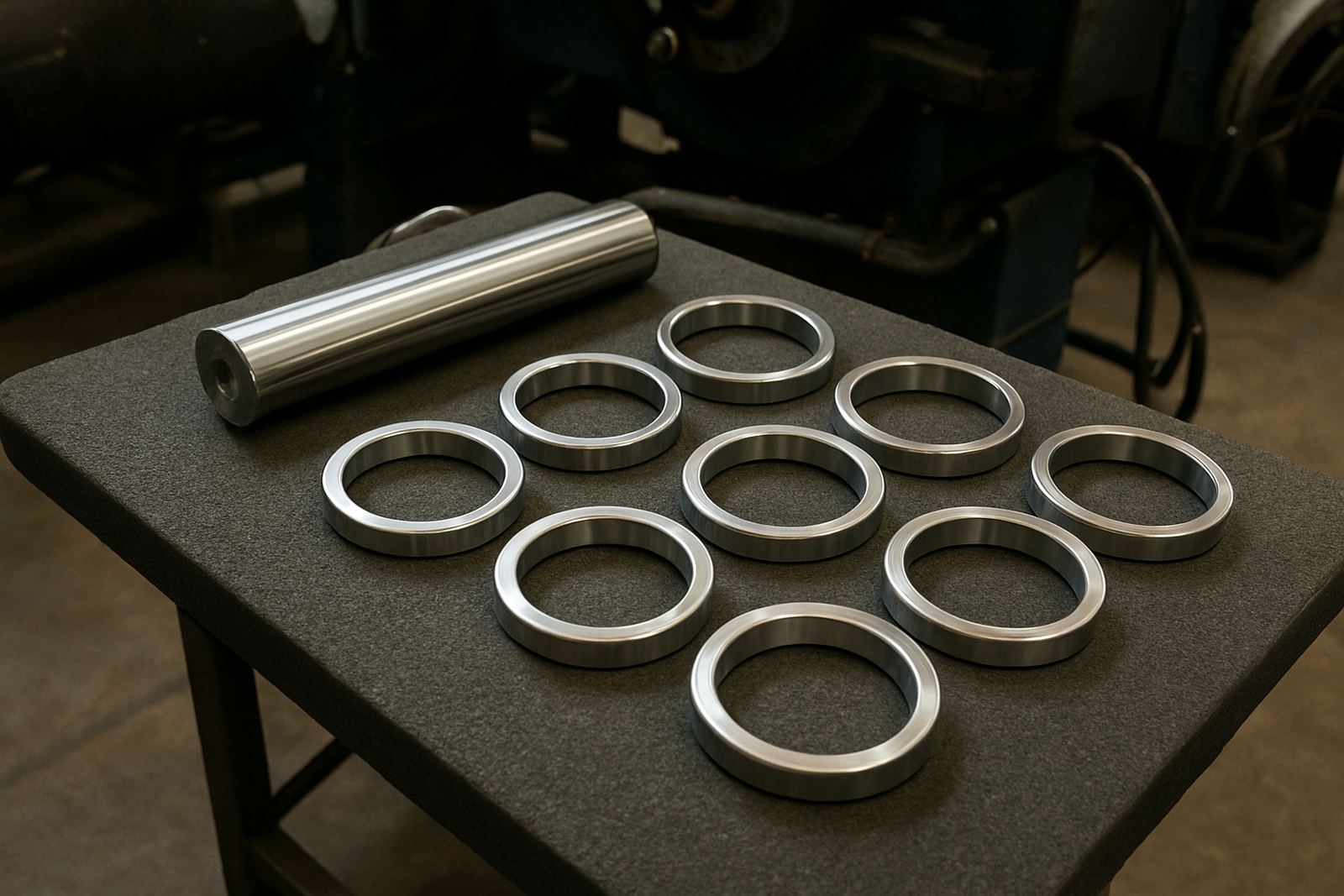
What bearer rings do on a label press
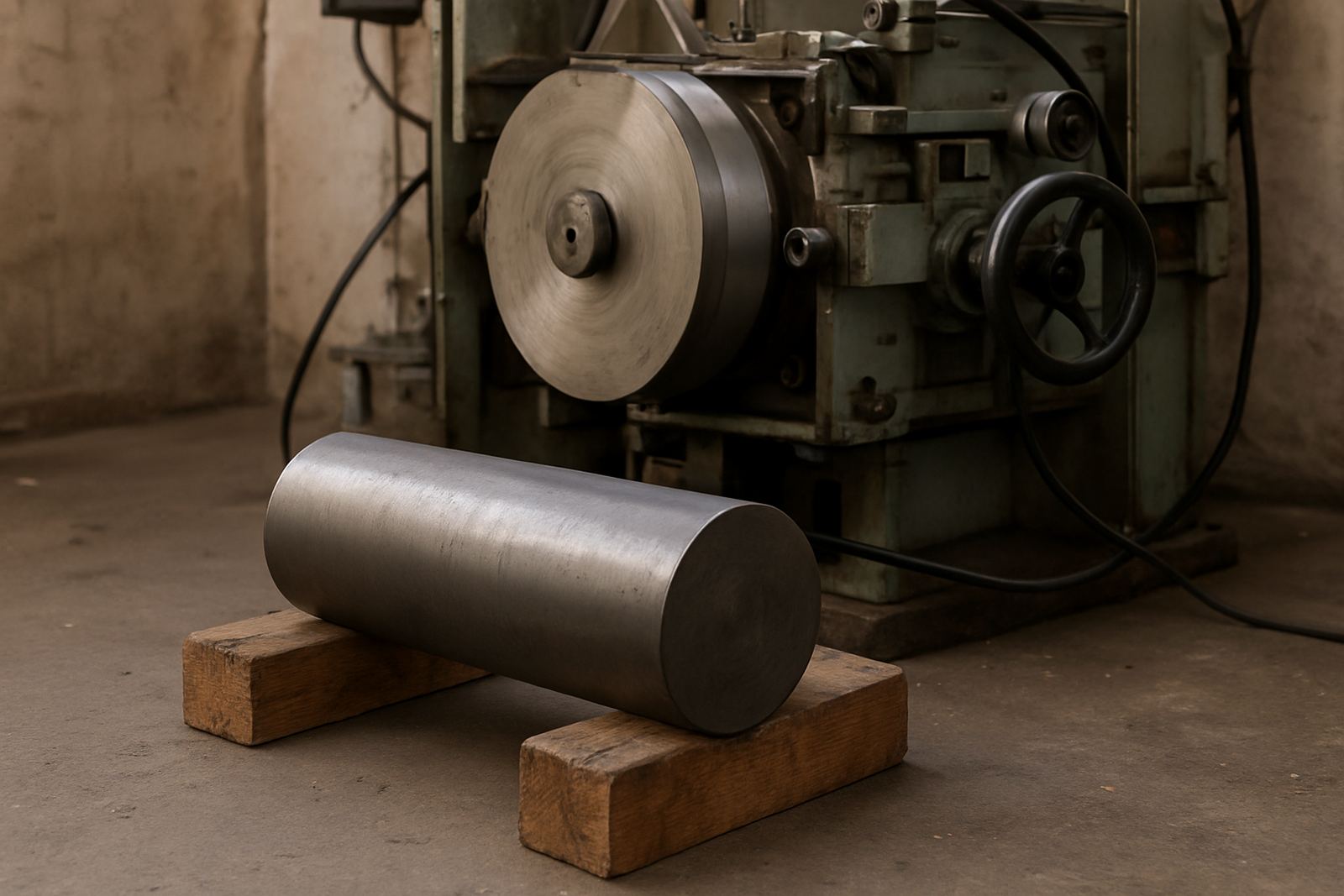
Bearer rings sit on the cylinder or at the bearer surface and help control the contact point between moving parts during the run. In plain terms, they support pressure stability, reduce unwanted bounce and help keep the cut or print line more consistent from the first metre to the last. That matters on narrow web work where a small pressure change can show up as poor cut quality, uneven wear, or a slow drift in registration.
For South African label converters, the practical benefit is steadier output on repeat work. If you run short batches in Johannesburg one day and a longer coastal job in Durban the next, you need parts that hold their size and finish. Bearer rings are used as part of the mechanical setup, so they need to match the cylinder, die and press condition properly rather than being treated as a loose fit item.
We supply bearer ring components made to order for rotary solid dies, flexible magnetic dies and related cylinder setups. The right ring helps the press run smoother, and it can also reduce the need for constant fine adjustment during a shift, which is useful when a team is working through load-shedding windows or trying to finish a run before the courier cut-off.
Sizes, material options and bearing tolerances
Bearer rings are normally specified by outside diameter, inside diameter, width and the required running height. The exact size depends on the press, the cylinder arrangement and whether the ring is being fitted to an existing unit or made with a new component. We work to precise tolerances because small variation can change pressure, kiss-cut depth and wear patterns.
Typical options include rings for light duty label work, heavier long-run production and replacement sets for refurb jobs. We can also help with repeat matching when you need a ring to behave like an older set that has already proven itself on your press. In many cases, the most important part is not just the dimension, but the finish and the run concentricity, because both affect stability at speed.
- Outside diameter matched to the cylinder or bearer surface
- Inside diameter and bore sizing for proper seating
- Width to suit press layout and side clearance
- Running height set for pressure consistency
- Surface finish selected for wear and contact control
- Material choice based on duty cycle and upkeep needs
If you are not sure of the exact specification, our CAD proofing process can work from an existing sample, a drawing, or a measured set of dimensions. That helps avoid guesswork, especially where the machine has had past repairs and the original dimensions are no longer clean or uniform.
Where bearer rings suit best
Bearer rings suit label converters that need repeatable pressure on rotary work, especially where a small shift can affect the final finish. They are commonly used on production lines running self-adhesive labels, variable artwork, short-run seasonal jobs and higher volume repeat orders. If your team handles mixed substrates, from standard paper labels to film based stock, the steadier the bearer contact, the easier it is to keep output consistent.
They are also useful on presses that see frequent changeovers. A stable bearer setup can save time when switching between jobs for Cape Town, Pretoria or Gqeberha deliveries, because the press is less likely to need repeated touch ups after restart. For converters in humid coastal areas, a properly matched ring can also help keep running behaviour more predictable as conditions change through the day.
Bearer rings are usually part of a wider set up, not a stand alone fix. If the press has worn bearings, poor alignment or inconsistent cylinder condition, those issues should be checked too. A new ring will not solve everything, but it often makes the rest of the system easier to control.
- Rotary label die cutting lines
- Flexible magnetic die setups
- Repeat production on narrow web presses
- Plants with frequent job changes
- Refurbishment of older cylinder assemblies
Installation, press setup and power requirements
Bearer rings are fitted as part of the mechanical setup and should be installed with proper measurement, clean seating surfaces and correct alignment. The ring must sit evenly and the pressure path should be checked before the job goes live. If the ring is off by even a little, the press can mark, chatter or cut unevenly across the web.
There is no power or gas requirement for the bearer ring itself, since it is a mechanical component. What matters is the machine condition around it, including the press frame, cylinder, bearings and any adjustment points used to set bearer contact. On a live machine, fitting should be done with standard workshop care, proper locking out of the equipment and a clean work area. Safety comes first, especially when the press room is busy and the team is trying to keep up with dispatch deadlines.
We can advise on bearer setting as part of the order, and where needed we can support a press trial. That is useful if the ring will be used on a machine that has had repairs, a regrind, or a recent change in production speed. A short test run can show if the pressure is landing correctly before you commit to a full batch.
Care, servicing and signs of wear
Bearer rings last longer when they are kept clean and checked regularly. Dust, adhesive build up, old ink residue and fine metal swarf can all affect contact. In a busy label shop, the simplest maintenance step is regular inspection after changeovers, then a proper clean before the next run. If the press works near humid sea air or in a warm production floor, cleaning becomes even more important.
Watch for flat spots, scoring, glazing, cracking or uneven wear. These are signs that the ring may no longer be supporting the system properly. If you start seeing cut depth drift, paper dust changes, or a new noise at speed, the bearer setup should be checked straight away. Leaving it too long can put extra strain on the cylinder and affect the job across the full roll.
- Clean after each run where possible
- Check for scoring or flat spots
- Inspect after any collision or jam
- Keep seating faces free of build up
- Log wear patterns for repeat jobs
We also handle related support services such as die regrind, cylinder refurb, magnet checks and press trial support, so if the bearer issue is part of a bigger setup problem, it can be looked at as one job rather than a series of separate fixes.
What to check before you order
Before placing an order, it helps to have the press model, the cylinder size, the current bearer dimensions and the type of job you are running. If you are replacing an existing set, send the old measurement and tell us where the wear is showing. If you are starting from scratch, a sample, drawing or clear photos can help us confirm the right fit. Even better if you can give the required running height and any known clearance limits.
Useful details include the width of the contact area, the material preference, whether you need a single ring or a matched pair, and whether the unit must suit a new die or an older setup. If the machine has had past modifications, mention that too. Small changes to the press can affect how the ring performs, so it is better to flag them early than to find out during install, which is always the worse time.
Our Wadeville team supplies bearer rings to customers in Germiston, Johannesburg, Pretoria, Durban, Pinetown, Cape Town, Bellville and Gqeberha. Orders are packed carefully for dispatch, and where needed we can coordinate delivery to suit your production schedule. For urgent remakes or repeat matching, send the cylinder size and ring dimensions at the start.
Key facts
| Product type | Bearer ring components for label press pressure support |
|---|---|
| Use | Rotary die cutting and press stability applications |
| Custom sizes | Made to order by diameter, width and running height |
| Tolerance focus | Precise fit for pressure consistency and repeatability |
| Installation | Mechanical fitment only, no power or gas required |
| Supply area | South Africa wide, including Johannesburg, Durban, Cape Town, Gqeberha and Pretoria |