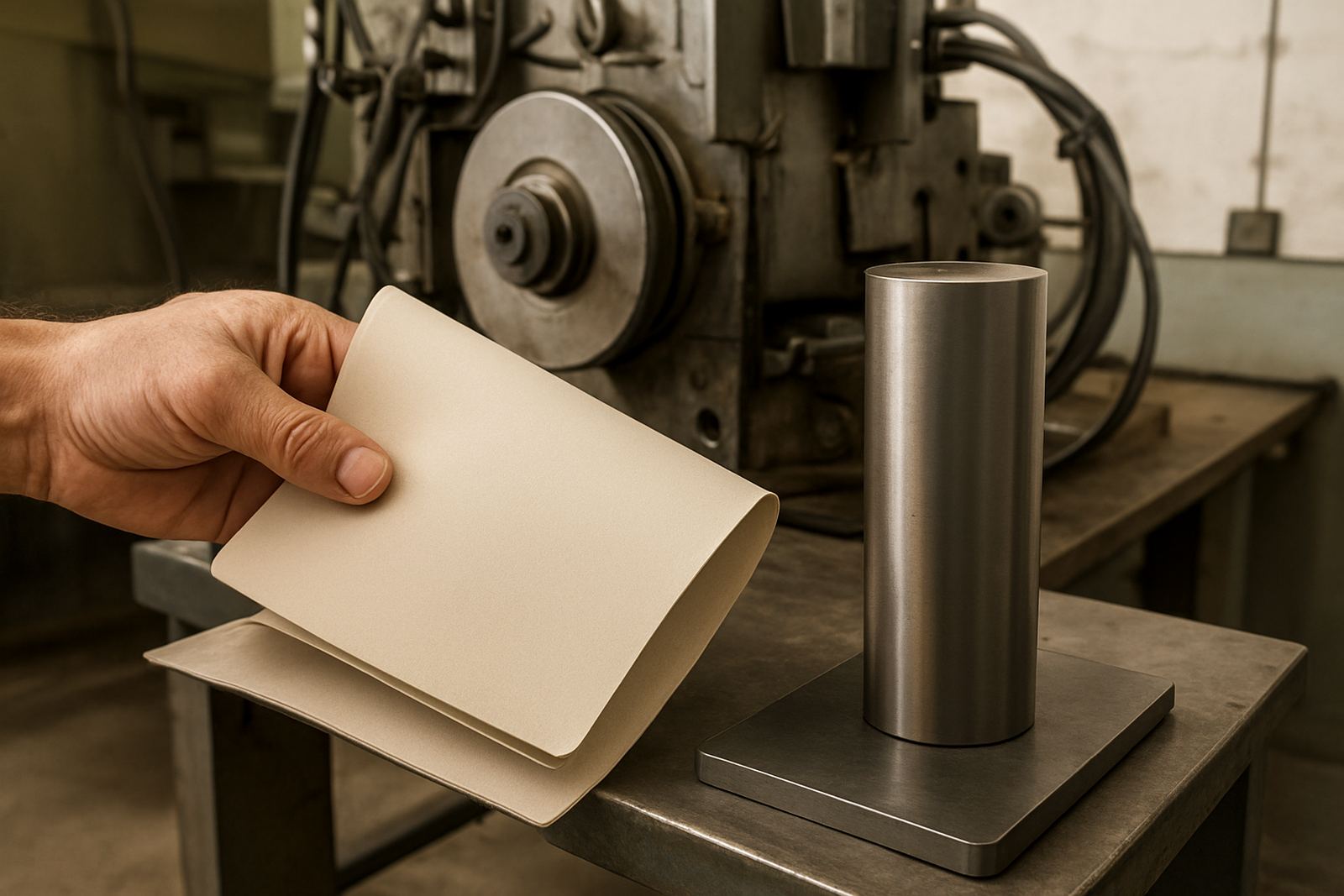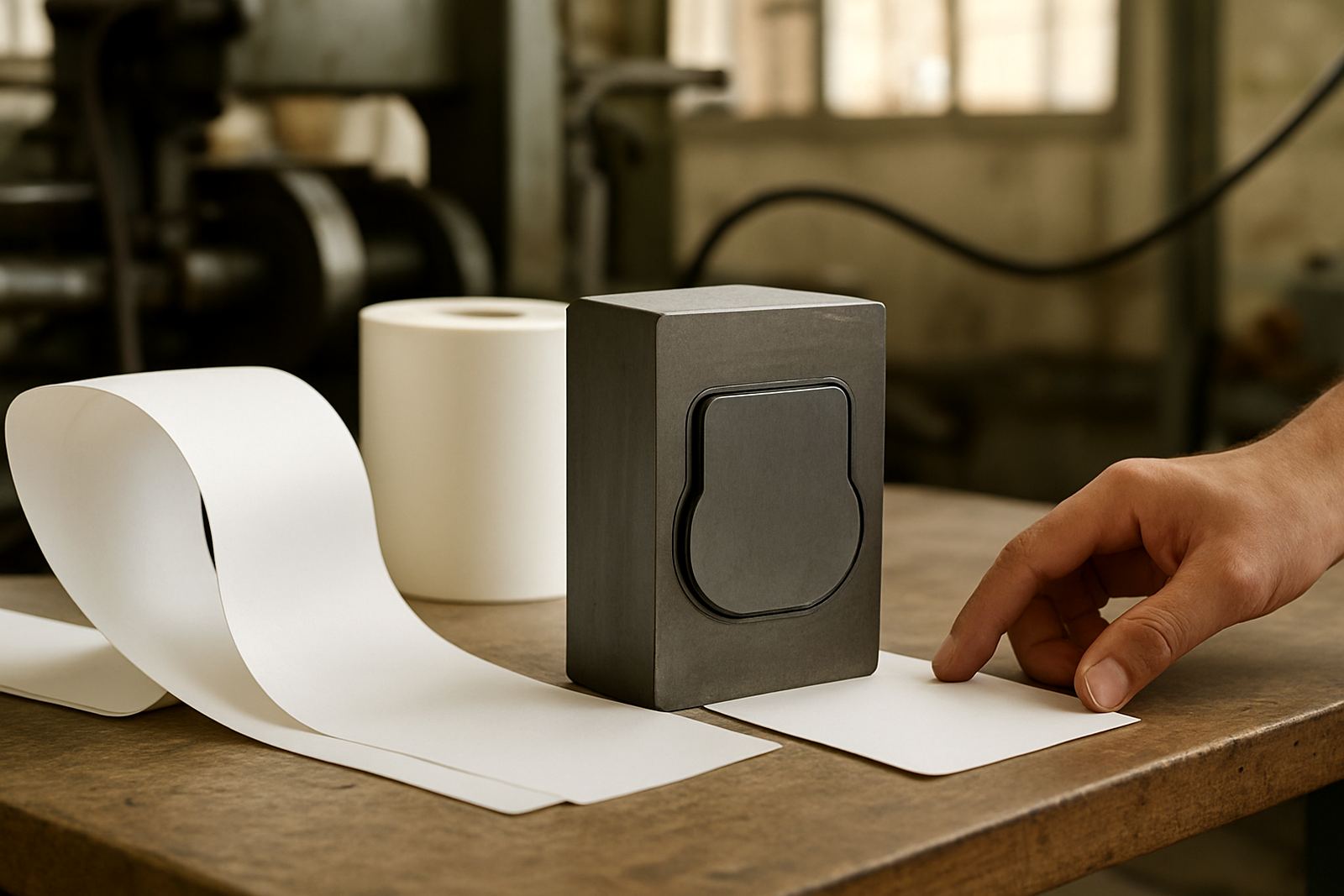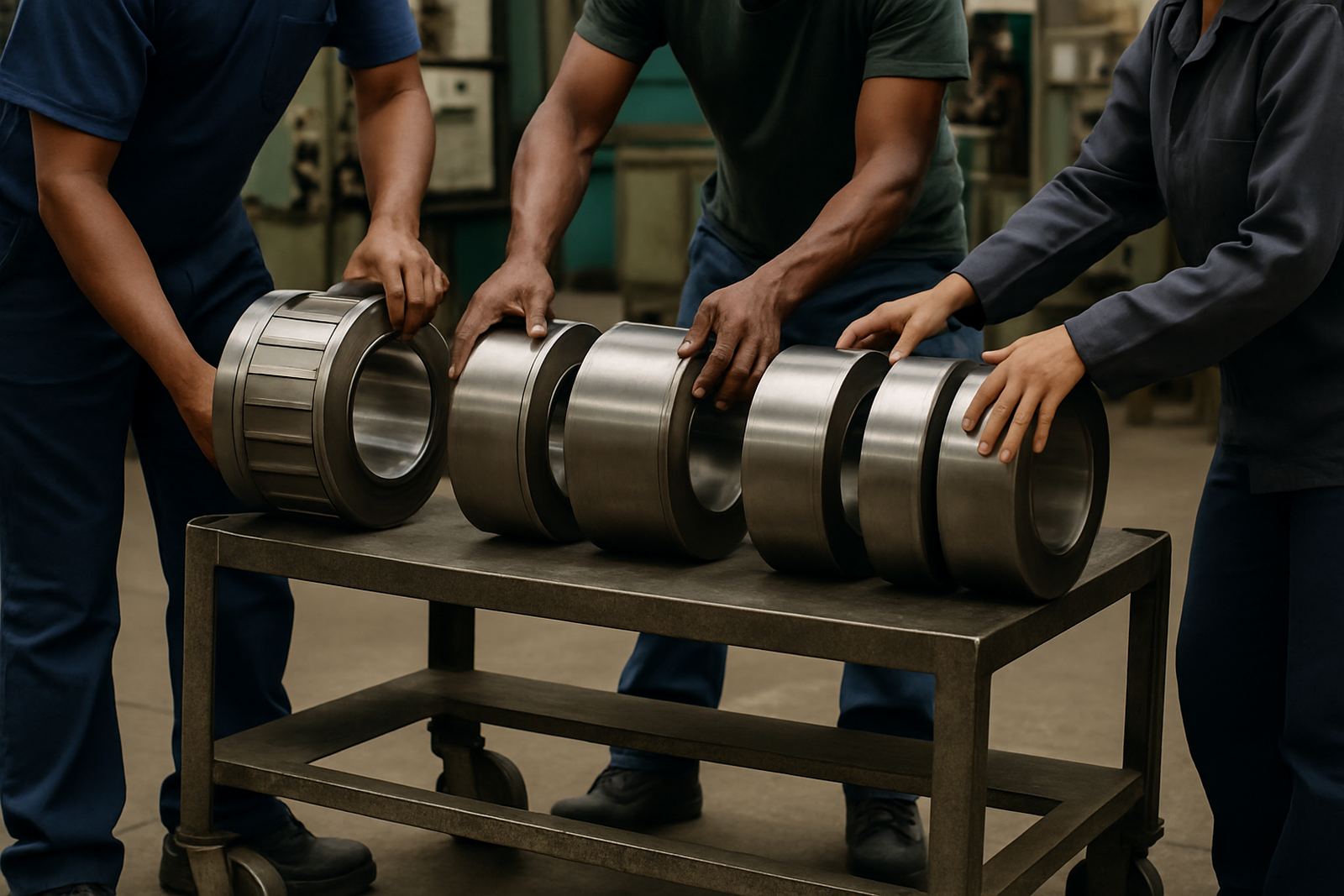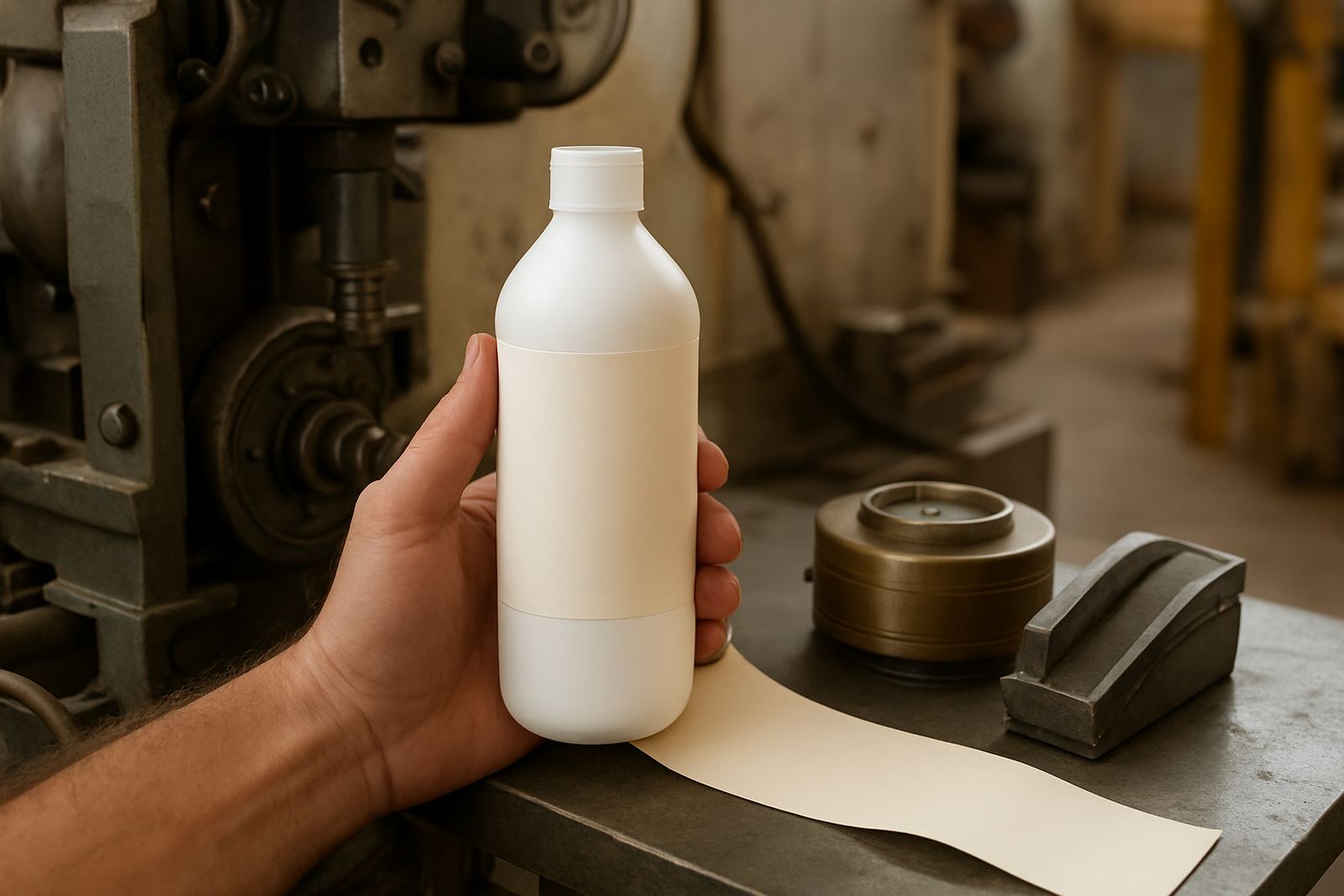
What wraparound label dies do on press
Wraparound labels are often used where the label must carry around a bottle, can, jar or container and still line up cleanly at the join. The die has to give a crisp cut, stable register and a clean edge so the wrap does not snag during application. On fast lines, even a small error in the die profile can show up as poor pick up, edge lift or a visible step at the overlap.
Our wraparound label dies are made to order for converters and label printers working with paper, film and laminated stocks. We focus on cut quality, repeat accuracy and the detail that matters on press, including bearer setting, magnet checks and the right cylinder fit. That matters just as much in a Johannesburg plant as it does in coastal production where humidity can affect stock behaviour and adhesive response.
Formats, materials and cutting options
We supply three main options for wraparound work, depending on press type, run length and material thickness:
- Rotary solid dies for high volume runs and tighter tolerance control on long production schedules.
- Flexible magnetic dies for faster changeovers and a practical option on many label converting lines.
- Magnetic cylinders matched to the die and press for stable cutting and repeat use.
Typical wraparound jobs may use paper face stock, PP, PE, PET, unsupported film or laminated constructions. If you are working with narrow labels for beverages or wider labels for food and household containers, we can set the die to suit the exact repeat and lay flat requirement. Standard formats can be made in smaller trial quantities or in repeat production sets, depending on your schedule and budget.
For most wraparound applications the die edge must stay sharp without crushing the liner or creating drag. If the label stock is thin, delicate or prone to stretch, we can adjust the tooling spec and advise on cut depth, clearance and pressure balance.
Sizes and tolerances for South African production lines
We manufacture wraparound label dies to the size and repeat required by your artwork and press set up. Common sizing is driven by label width, repeat length, core fit and cylinder spec, not by a one size fits all standard. Our work is suited to printers and converters in Germiston, Johannesburg, Pretoria, Durban, Cape Town, Pinetown, Bellville and Gqeberha who need dependable fit and accurate repeat matching.
Typical tolerances are kept tight because wraparound labels show errors quickly on the pack. A slight drift at the cut line can affect the seam and make application messy. We therefore check CAD proofing, registration points and the overall die geometry before production. If you need a repeat match to an existing die, bring the sample or drawing and we will compare it against the current tooling detail.
- Working width: made to order for narrow and wide label formats
- Repeat length: matched to your press and artwork
- Core and cylinder fit: set to the machine spec supplied
- Cut style: solid rotary or flexible magnetic
- Finish: for paper, film and laminated label stock
Where wraparound dies suit best
These dies suit labels that must wrap fully or partially around the pack and hold a neat seam. They are used in beverage, food, chemical, personal care and general product labelling where the final pack appearance matters and the label must feed consistently at speed. They also suit short and medium runs where different SKU sizes are changed over often and the printer needs repeatable tooling.
Wraparound work can be especially demanding in plants that run long shifts or face load-shedding interruptions. After a stop, the next start should still give the same cut and register. That is why stable tooling matters on presses handling multiple label sizes, especially where production teams need to recover quickly and keep waste low.
- Bottle labels and container wrap labels
- Jar and tub labels with full or partial wrap
- Household and chemical product labels
- Short run promotional and multi-SKU packs
Installation, power and press requirements
Wraparound label dies do not need power or gas on their own, but they must be installed correctly on the relevant rotary or magnetic system. The press should be set up with the correct cylinder, bearer adjustment and pressure settings before the die goes into service. For flexible magnetic dies, the magnetic backing must be clean and checked for even contact across the width. On solid rotary dies, alignment and balance are critical.
We can support press trial work and check the machine notes if you are changing over to a new size or switching stock. If your line is running with limited power during municipal load-shedding, it helps to plan changeovers and trial runs so you are not wasting material during stop start conditions. We can also advise on packing and dispatch if a deadline is tight and the tooling needs urgent delivery.
Care, servicing and repeat order support
Good care keeps wraparound dies working longer and helps maintain edge quality from job to job. After use, the die should be cleaned, stored dry and protected from knocks. In humid areas, especially along the coast, moisture control matters because corrosion and contamination can shorten service life. We also recommend periodic checks on bearer setting, magnet condition and cylinder wear if the die is in regular use.
Our servicing options include die regrind, cylinder refurb, magnet checks and repeat matching. If the label has changed slightly since the last run, we can compare the old tooling with the new artwork and confirm what needs adjustment. For recurring work, keeping a good sample and job record makes the next order faster and reduces the risk of mismatch. That small habit saves time and sometimes a full rerun.
- Wipe down after each run and store in a dry sleeve or tray
- Check for burrs, nicks or buildup before the next job
- Keep sample labels and the last approved artwork together
- Book servicing if the cut starts to feather or drag
What to send when you order
To quote and make the right wraparound label die, we need the label size, repeat, stock description and the press or cylinder details. If you have a sample label, send that too, because it helps us confirm the leading edge, trailing edge and the exact wrap behaviour. If you are replacing an older die, a photo of the tooling and any job notes can speed things up.
Please also tell us whether the job is for a new product, a repeat order or a remade issue that needs urgent attention. The more detail you send, the better we can match the die to the press and reduce trial waste. Our team in Wadeville, Germiston handles die design, CAD proofing, technical sales, production, dispatch and delivery coordination for clients across South Africa.
- Label width and repeat length
- Material type and thickness
- Press model or cylinder details
- Quantity required and turnaround needed
- Sample label or approved artwork
Key facts
| Product type | Wraparound label dies for rotary and magnetic systems |
|---|---|
| Build options | Solid rotary dies, flexible magnetic dies, magnetic cylinders |
| Typical materials | Paper, film, laminated and other label stocks |
| Use cases | Bottle, jar, tub and container wrap labels |
| Servicing support | Repeat matching, regrind, refurb, magnet checks |
| Base | Wadeville, Germiston, with deliveries nationwide |