
When beauty labels start showing small faults
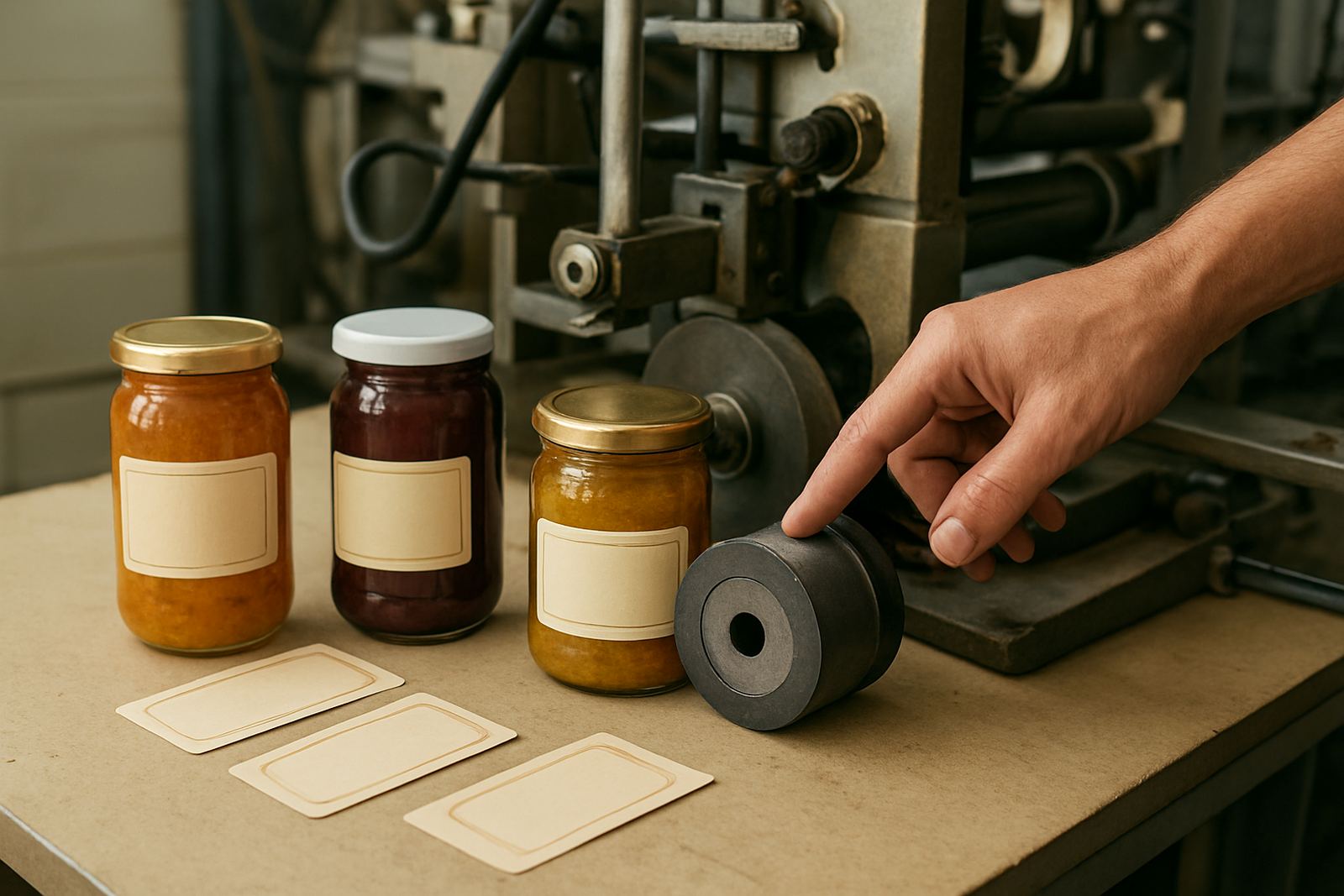
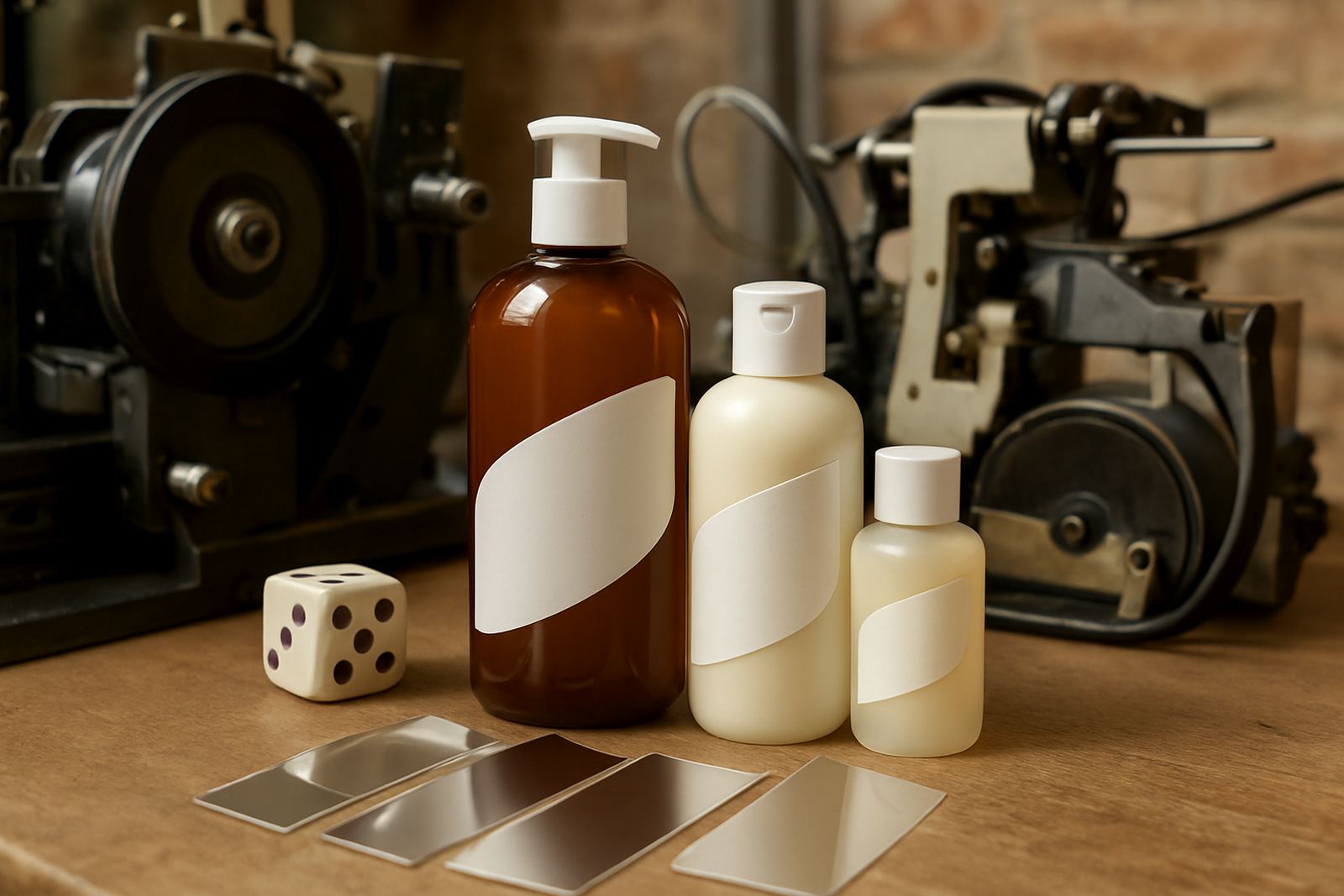
Beauty labels are unforgiving because customers notice every offset curve, uneven edge and sloppy finish line. A lip balm jar, hand cream tube or shampoo bottle can look expensive on the shelf but a slight burr, nick or misregister on the label immediately pulls the grade down. That is why converters in Germiston, Johannesburg, Pretoria, Durban, Cape Town and Gqeberha often ask for tooling that holds fine detail from the first carton to the last.
For this type of work, the client brief usually includes small circles, foil windows, clear-on-clear sections, soft-touch varnish areas and tight die lines around curved packs. We set up the tooling around the label stock, adhesive performance and press setup so the cut does not lift corners or leave waste edges hanging. In beauty work the finish must look neat from arm’s length and close up too, especially on premium skincare and fragrance packs.
Typical equipment set for cosmetic label converting
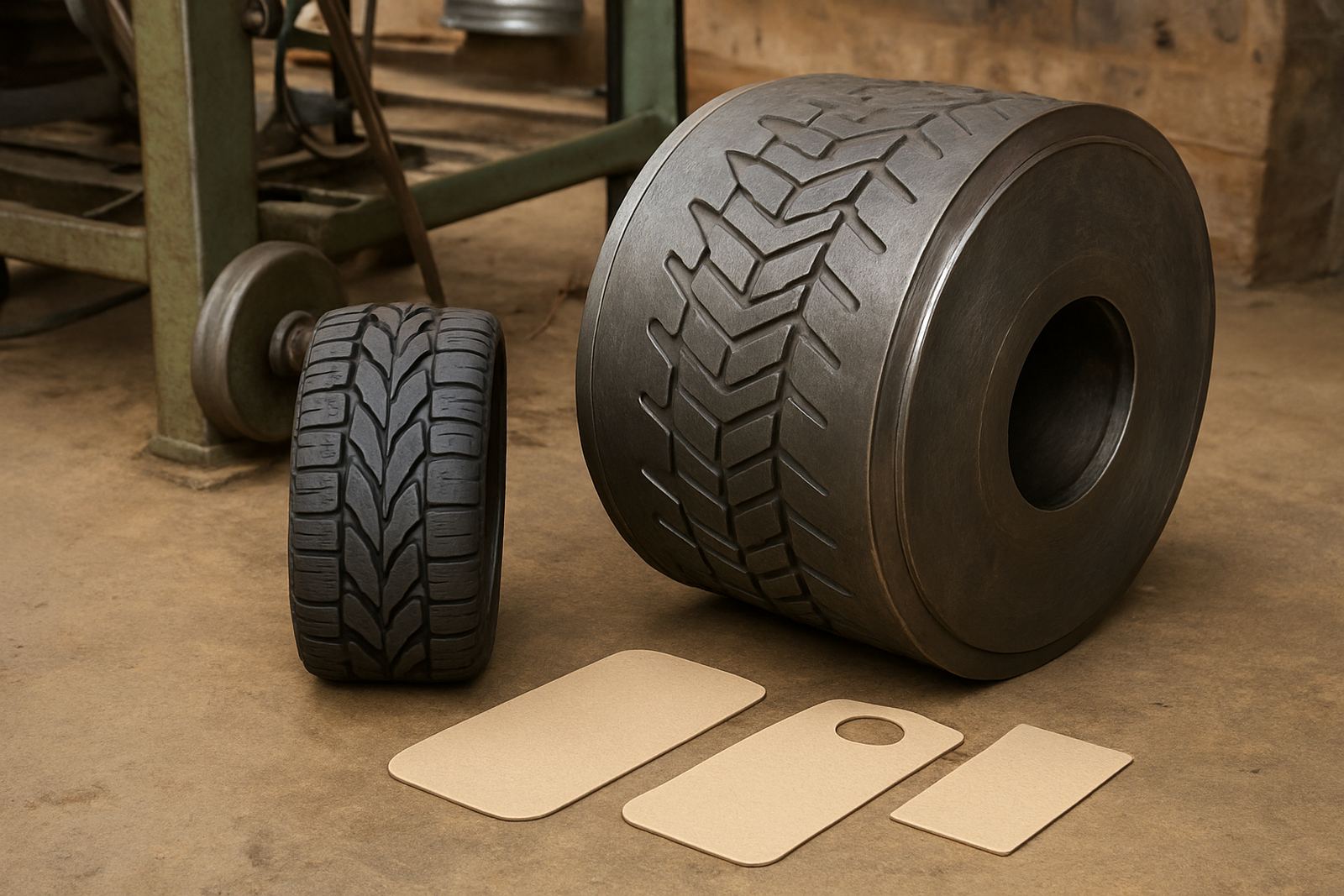
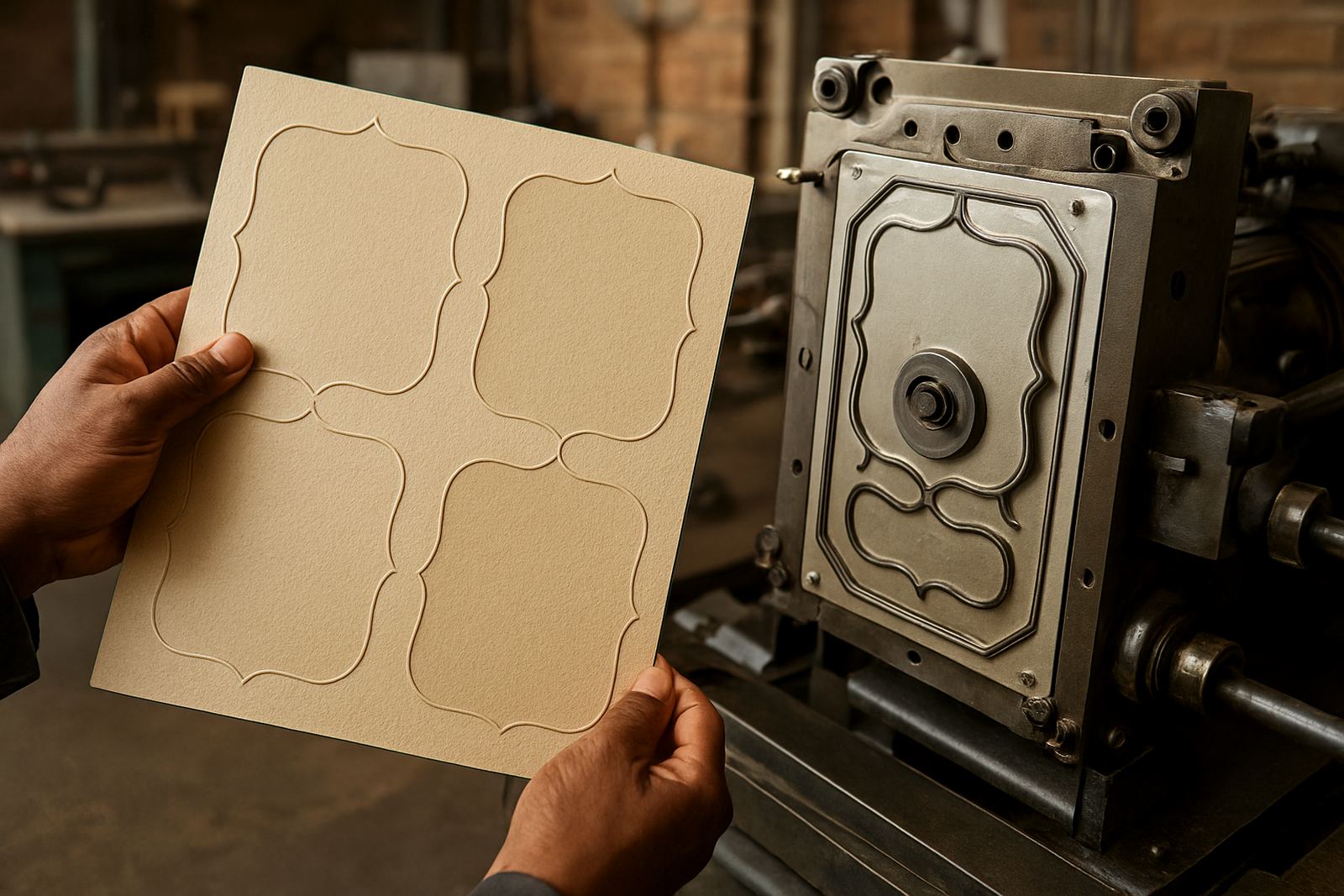
Most beauty label jobs run on narrow web converting equipment with rotary die stations, rewind sections and inspection points. Depending on the line, the set-up may include a solid rotary die for long runs, a flexible magnetic die for repeat work, or a magnetic cylinder where the design changes often but the press format stays the same. Some clients also ask for press trial support when they are moving a label from one substrate to another or adding a new protective varnish.
- Rotary solid dies for longer production runs and steady repeat jobs
- Flexible magnetic dies for faster changeovers and shorter beauty label batches
- Magnetic cylinders where the press specification stays fixed across repeat orders
- Bearer setting and magnet checks to keep cut depth consistent
- CAD proofing for fine arcs, register marks and neat peel points
- Die regrind and urgent remakes when a line is down and time is tight
In coastal areas like Durban and Cape Town, humidity can affect label stock and die performance more than clients expect. A die that works well in dry inland conditions may need careful adjustment when the adhesive softens or the face stock picks up moisture. Our team checks for these practical issues before dispatch, because a beauty label line cannot afford wasted rolls and slow restarts during load-shedding or an overnight shift.
Layout and planning advice for smooth curves and finish alignment
Beauty labels often carry curved bottle wraps, small neck labels and layered decoration with metallic ink or foil. The layout must allow the converter enough control so the cut follows the printed image and leaves a clean edge at the join. If the artwork has a wraparound panel, make sure the seam lands in a hidden or less visible area and not across key text or ingredients. That sounds basic, but it is one of the most common places where a job goes wrong.
Plan the die line together with the print and finishing order. If a label has varnish, laminate or a cold foil effect, the tooling needs to respect those extra layers so the cut stays clean. For very small cosmetics labels, even 0.2 mm can matter, especially around rounded corners and peel-and-stick tabs. We also advise clients to allow for the press reality, not just the artwork file. A neat file that ignores rewind tension, stock stretch or bottle curvature can still make a troublesome run.
- Allow clear space around fine type and ingredient panels
- Keep corner radii practical so the label releases cleanly
- Check whether the label will sit on glass, plastic or coated cartons
- Leave a sensible margin for registration drift on long runs
- Confirm if the job needs a quick changeover or repeat matching later
Common mistakes on beauty label jobs
One common mistake is treating all cosmetic labels the same. A body lotion label on a straight-sided bottle behaves differently from a label on a curved serum bottle or a small balm pot. Another mistake is asking for an ultra-fine die line on stock that is too soft or too thin for the application. The tooling may be accurate, but the material still has to hold up on the press and on the shelf.
Another problem is leaving budget for print and not enough for the die set-up itself. The tooling is not the place to cut corners if the pack is visible in pharmacies, salons or retail chains. A poor cut can cause lifting edges, uneven gaps and rework that costs far more than doing it right first time. We also see jobs delayed by late approvals, especially where the colour proof is signed off before the actual label stock and adhesive are confirmed.
For beauty work, the best results come from giving the converter full detail early: pack shape, label size, substrate, required quantity and whether the line must run through night shifts or around municipal power interruptions. That helps avoid emergency changes when the production date is already close. Small admin errors can become expensive when a batch is needed for a promotion or launch.
Budget ranges for beauty label tooling in Rand
Budgets vary with size, repeat pattern and the type of die system used. A small, straightforward beauty label die for a short production run may start from about R2 500 to R6 500, while more detailed tooling for fine curves, multiple repeats or more complex finish alignment can move into the R7 500 to R15 000 range. Rotary solid dies, magnetic cylinders and repeat-matched sets can sit higher depending on the press spec and the amount of work required.
For converters planning ongoing skincare or personal care work, it often pays to look at the full season rather than a single order. If the same pack will be repeated across different fragrance variants, the right die and cylinder setup can reduce repeat setup time and limit waste. That matters in South African production where every lost metre, every extra stop and every urgent remake affects margin.
We also advise factoring in delivery and support. Clients in Germiston and Johannesburg often need fast turnaround, while Durban, Pinetown, Cape Town, Bellville, Pretoria and Gqeberha may need dispatch coordination to fit their receiving times. If a line cannot wait, urgent remake work can be arranged, but it is always cheaper to get the first tooling right and keep the files clean.
How LabelCutter Dies supports beauty label converters
Our Wadeville, Germiston team handles die design, CAD proofing, repeat matching, bearer setting, magnet checks, die regrind, cylinder refurb and packing and dispatch. Marius Jacobus van der Merwe leads the business, with Thandiwe Nkosi managing production, Ruhan de Beer on technical sales, Nirasha Ramdass on CAD, Anele Mthembu on dispatch and Siyanda Letsoalo in the machine shop. That mix helps when a beauty label job needs both technical accuracy and practical turnaround.
Clients contact us through the enquiry form on our contact page, and we coordinate deliveries across Germiston Supply, Johannesburg Deliveries, Pretoria Deliveries, Durban Deliveries, Pinetown Deliveries, Cape Town Deliveries, Bellville Deliveries and Gqeberha Deliveries. For beauty and personal care work, the goal is simple: clean cut lines, stable repeat performance and tooling that keeps the pack looking right from the first proof to the final pack-out.
When the label has to look refined on shelf, the tooling has to be just as exact as the print. That is where a careful die spec, honest planning and a proper press check make the difference.