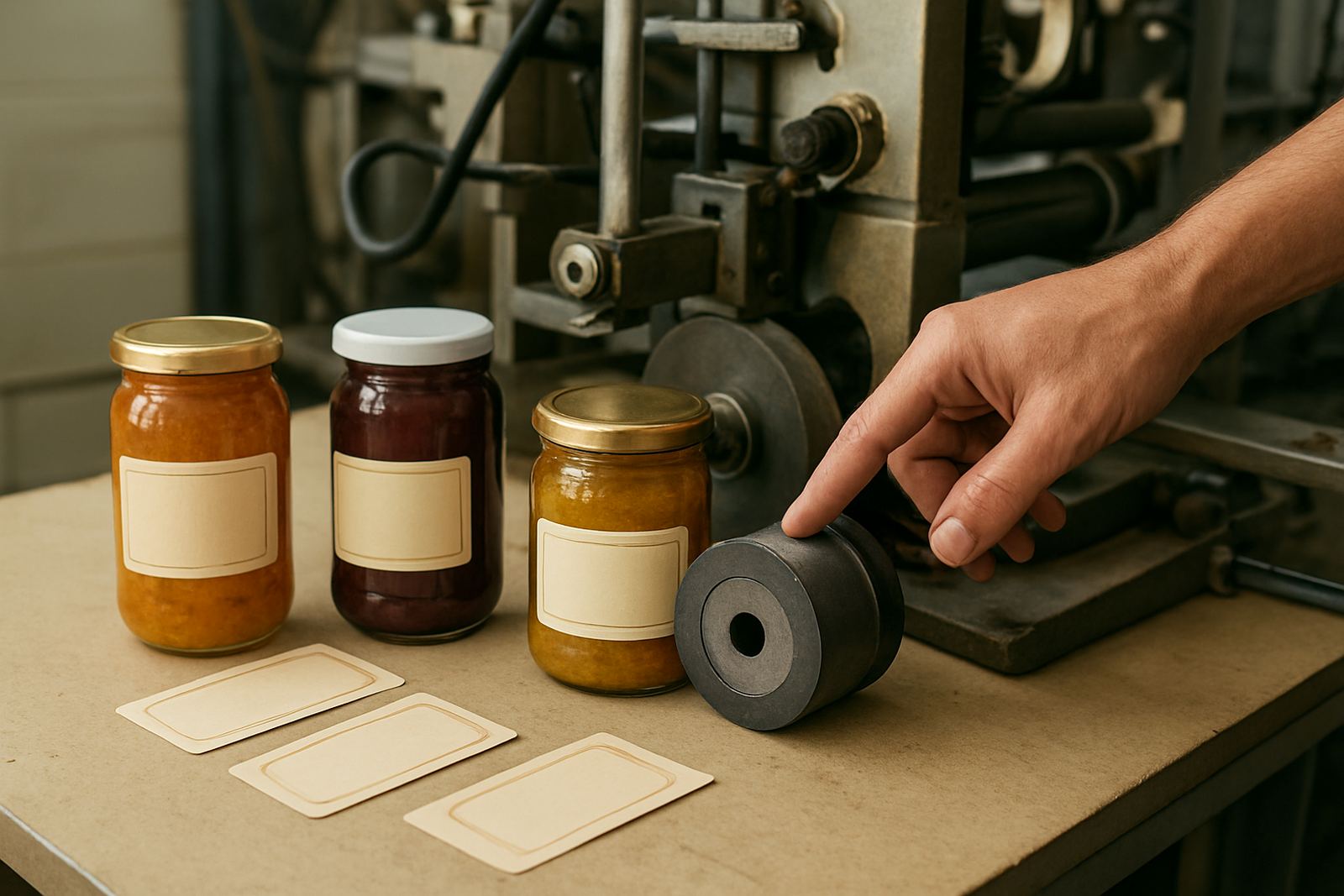
When food jar labels need to look right on every pack
Food labels often do more than identify the product. On glass jars, plastic tubs and stand up pouches they carry the shelf appeal, the product name and the batch information in one small space. If the cut is off, even by a few tenths of a millimetre, the label can look tired, lift at the edge or sit skew on the container. That matters when you are packing sauces, preserves, spices, jams, chutneys or ready meals for retail, wholesale or export.
For South African printers and converters, the usual challenge is not just shape, it is repeatability. A neat die cut on the first 500 labels is useful, but the real test is whether the same cut holds through a full shift, after a stoppage, or on a warmer day in Durban where glue and substrate behaviour can change a bit. We make dies to order with the tolerance needed for steady converting on local presses.
Typical equipment used for jar label converting
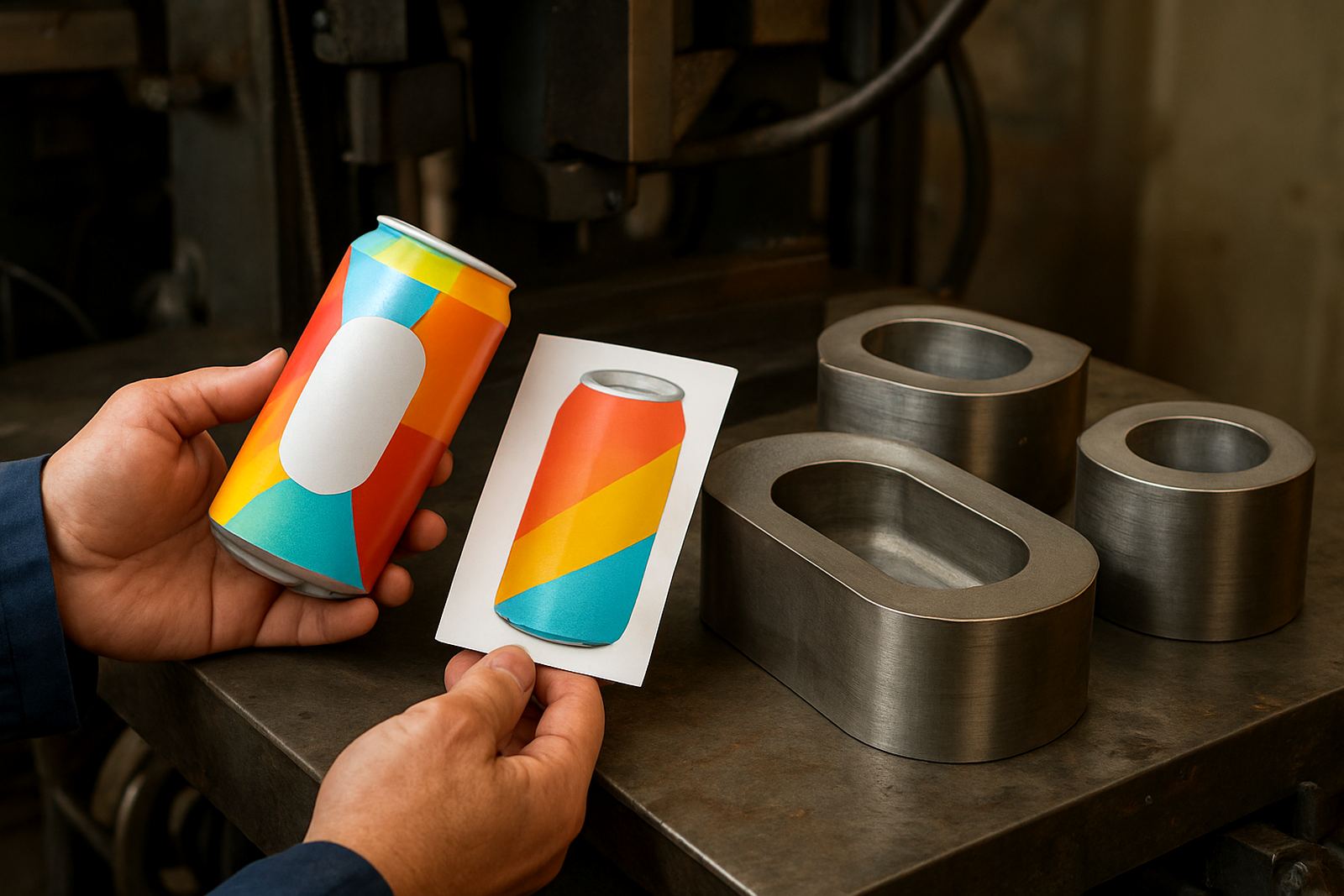
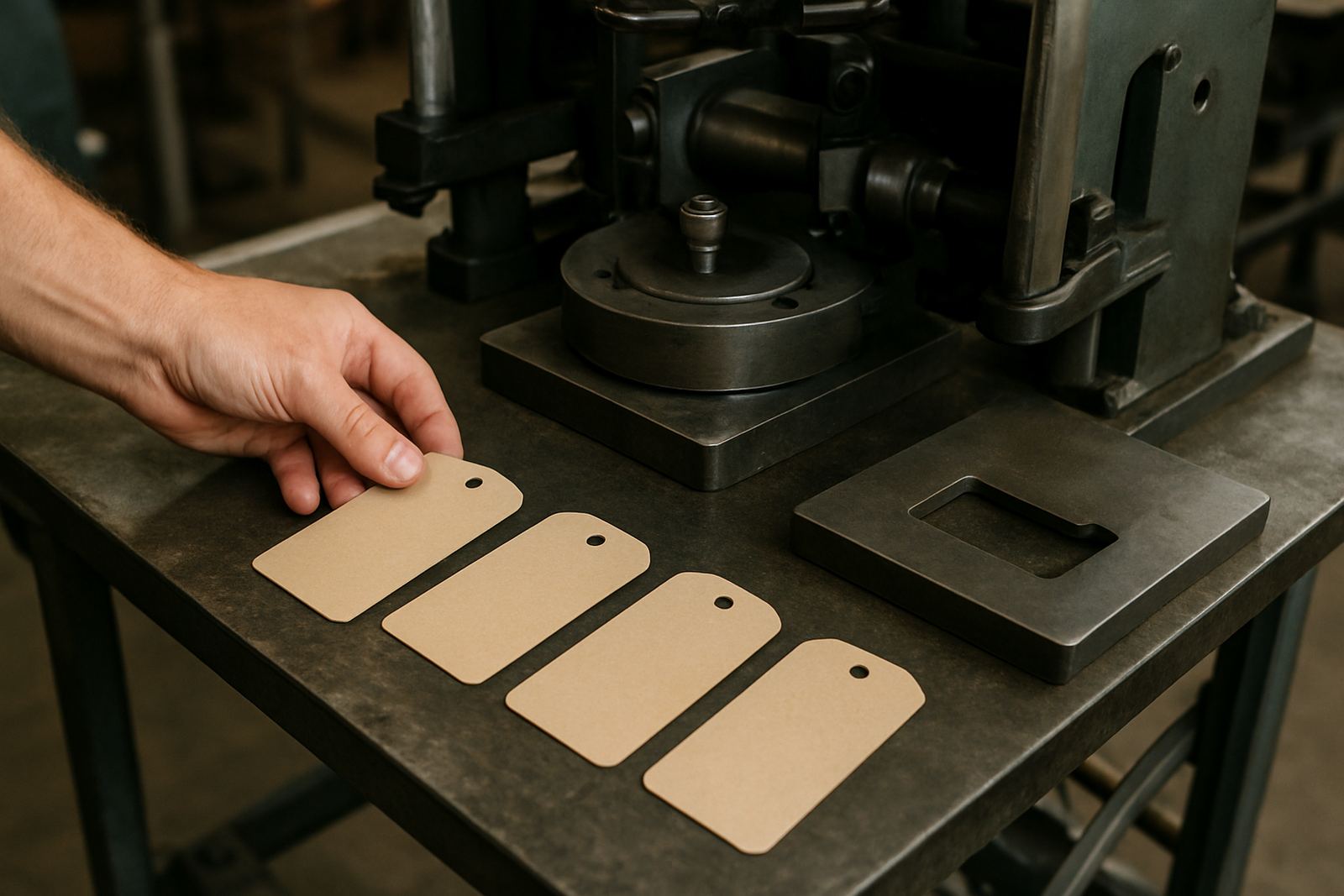
The right die depends on the press, the liner, the adhesive and the label shape. For food jar work, many converters use rotary systems for longer runs and flexible magnetic tooling where quick changeovers are needed. Solid rotary dies are often chosen for repeat jobs with fixed artwork, while magnetic cylinders and flexible dies suit shorter runs or mixed label programmes. If the line includes window patches, tamper labels or wraparound shapes, the cutting method must match the finishing and rewind setup.
- Rotary solid dies for high repeat, steady production
- Flexible magnetic dies for faster changeovers and shorter runs
- Magnetic cylinders for compatible rotary setups
- Bearer setting checks to help maintain clean cutting pressure
- Press trial support when a new label shape is being introduced
In many cases the issue is not the art file, it is the physical set up. A food jar label may look simple, but the finish can be affected by varnish build up, liner stretch, a worn cylinder or a gap in press maintenance. We also handle cylinder refurb and die regrind where that is the better option than remaking from scratch.
Planning label shapes for jars, tubs and pouches
Good planning starts before the die is made. Jar labels with curved shoulders, pale substrates or clear films need careful thought around cut shape, corner radius and placement of the seam. For tubs, the label often needs to avoid moulded ribs or lid overlaps. For pouches, the cut must work with the seal area and any gusset movement. The artwork may be approved, but if the cut line is too close to the edge, problems begin in packing not in design.
We usually advise clients to check a few practical points before ordering the die:
- Container diameter, panel width and any shoulder curve
- Final label size, including bleed and safe area
- Whether the label must wrap fully or stop short of a seam
- Substrate type, especially for chilled or damp packs
- Run volume and whether repeat orders are likely
If the food is stored in cold rooms or shipped through coastal humidity, the label stock and adhesive need to suit the conditions. A cut that is perfect in the workshop can still fail at pack out if the material choice was too light for the job.
Common mistakes that cause waste and rework
Most waste on jar label jobs comes from avoidable set up issues. The cut may be too tight, the bearer setting may be off, or the label stock may not match the press conditions. Another common problem is ordering a die before the container drawing has been checked against the actual jar or tub. Samples can vary slightly from batch to batch, and that small change can throw out the final fit.
Other mistakes we see include poor repeat matching on reorders, ignoring press wear, and trying to force one die to suit several container sizes. That usually ends in slower production and more trim waste. If the labels are for food products with short promotions or seasonal packs, a rushed remake can become expensive very quickly, especially when the press is already booked.
- Do not size the cut from artwork alone
- Do not assume every jar from the same supplier is identical
- Do not overlook humidity, especially on coastal jobs
- Do not run a worn die for too long
- Do not skip a trial if the label is a new shape or material
We also see issues where dispatch timing is left too late. If a converter in Germiston or Johannesburg needs an urgent remake, the gap between approval and delivery can matter just as much as the die itself. Our packing and dispatch process is set up for that reality.
Budget ranges for food jar label dies in Rand
Budget depends on the tooling type, size, complexity and whether the job is a one off or a repeat order. As a working guide, flexible magnetic dies for simpler food jar labels can start from around R3 500 to R7 500, while more detailed rotary tooling can range from about R9 000 to R22 000 or more depending on size and finishing requirements. Magnetic cylinders and refurb work are priced separately because the base tooling and machining time vary from job to job.
For repeat matching, die regrind or cylinder refurb, the spend is often lower than a full remake, but that depends on wear, damage and the condition of the tooling. If a label line is running weekly, the lower upfront option is not always the cheapest over time. A die that holds its cut properly and reduces setup waste can pay back faster than a cheaper tool that keeps drifting out of spec.
We work with printers and converters across South Africa, including Johannesburg, Pretoria, Durban, Cape Town, Pinetown, Bellville and Gqeberha. Local delivery coordination helps keep projects moving, whether the job is headed to a small food packer or a high volume label line.
How we support food label jobs from Wadeville
Our Germiston base in Wadeville is set up for practical production support rather than guesswork. Marius Jacobus van der Merwe oversees the business as Managing Director, with Thandiwe Nkosi handling production, Ruhan de Beer on technical sales, Anele Mthembu coordinating dispatch, Nirasha Ramdass doing CAD proofing and Siyanda Letsoalo leading the machine shop. That mix matters when a label needs a quick check, a repeat from an old spec or a new die for a fresh product line.
Clients usually come through the enquiry form on our contact page. From there we can discuss the container, the label size, the press type and the timing. If the job needs urgent remakes, stock advice, press trial support or delivery coordination to Johannesburg, Pretoria, Durban, Pinetown, Cape Town, Bellville or Gqeberha, we handle it in a direct way that keeps the work moving. It is straightforward, and it helps keep the finished pack looking right on shelf.
Food jar labels should not be a fight every time the press starts up. With the right cut and a proper set up, the process becomes easier to repeat and easier to trust.