When a wine label run needs to look premium on the press
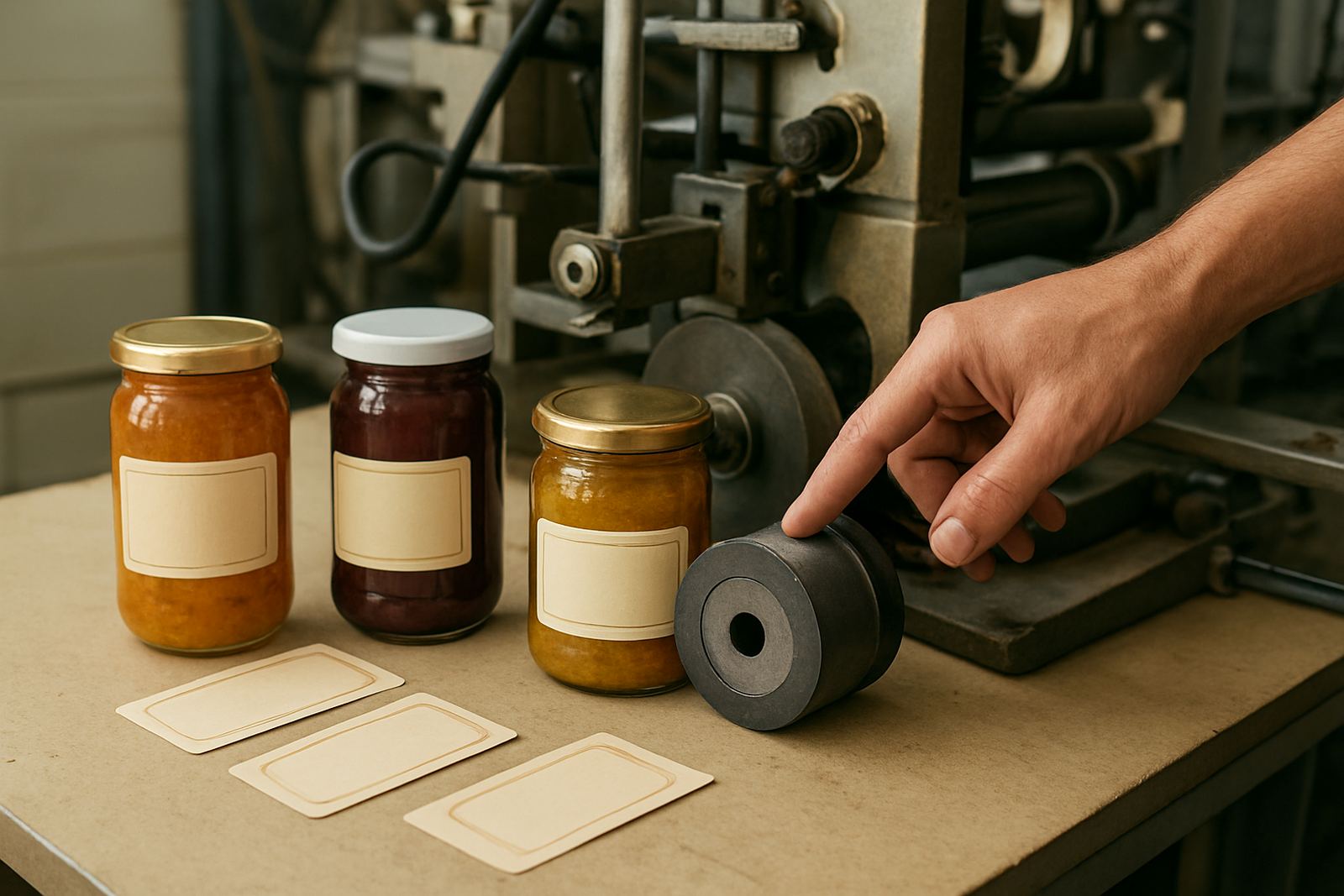
Wine labels often have a harder job than they first appear. The artwork may be small, the stock may be textured or lightly embossed, and the finish still has to look neat on the bottle under bright cellar lighting or in a retail fridge. If the cut is even slightly off, you will see ragged corners, lifting edges or a label that sits skew on the bottle. That is why many South African printers ask for dies that are made to order with tight tolerances rather than trying to force a standard size to work.
For premium wine work, the client usually wants the label to feel crisp in the hand and sit cleanly on glass. That means careful planning from the first proof. We look at the shape, the bottle curve, the glue area, the label gap and whether the job needs any apertures for foil blocks, batch codes or special features. On jobs for Stellenbosch, Paarl, Franschhoek and even bottling lines in Gauteng, the small details matter just as much as the print itself.
Typical equipment for rotary and magnetic die work
Wine label converting normally uses rotary solid dies for high volume work and flexible magnetic dies where quick changeovers or shorter runs are needed. The choice depends on the press setup, the substrate and the amount of repeat work you expect. In many cases a converter will run the same label across several vintages, so repeat matching becomes important and the cut has to come back the same way each time.
- Rotary solid dies for long runs and steady repeat production
- Flexible magnetic dies for shorter runs and faster setup
- Magnetic cylinders where the press set-up calls for a matched cylinder and die system
- Bearer setting and magnet checks to keep pressure even across the web
- Die regrind and cylinder refurb for worn tooling that still has value
We also assist with press trial support when a label is being tested on a new line or a new stock. If the release is too tight, the corners can lift. If it is too loose, the label may shift during delivery or application. Small changes in pressure, bearer setup and magnet condition can make a real difference.
Planning advice for textured stocks and bottle shapes
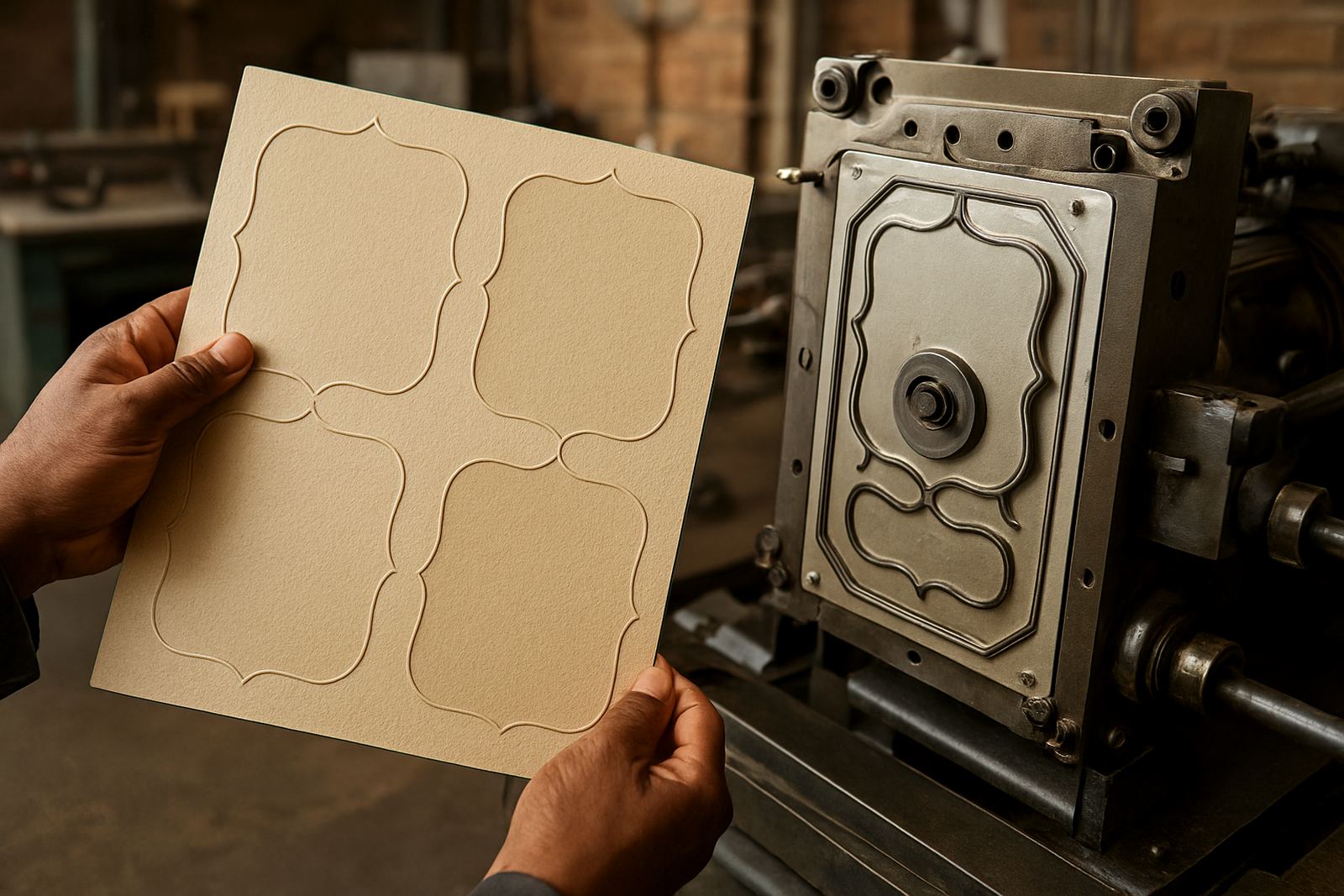
Wine label design is not only about appearance. It has to suit the stock, the glue, the die line and the way the label is applied. Textured papers, soft-touch laminates and lightly embossed stocks can all behave differently on press. If the blade pressure is too heavy you can crush the surface or cause tear-out at the corners. If it is too light, the cut does not release cleanly and the pressman ends up fighting the job.
For labels that wrap near a bottle shoulder or need to land on a curve, the cut line should be planned with the bottle in mind. Allow enough space for handling marks, but keep the shape balanced so it looks sharp once applied. We often advise clients to check aperture size, corner radius and label gap before sign-off. One small mistake in the layout can mean a full remake later, so it is worth checking the job properly at proof stage rather than on press.
- Confirm the final label size against the bottle drawing, not only the artwork file
- Keep apertures and fine cut-outs large enough for clean tool release
- Allow for substrate stretch, especially on coated or textured stocks
- Check repeat length if the job must match an existing bottle range
Common mistakes that cause spoilage or slow running
We see a few recurring issues on wine label jobs. A design may look good on screen but leave too little margin for the die. The printer may inherit an old repeat and assume it still matches, when in fact the bottle or press setup has changed. Sometimes the biggest problem is a worn cylinder that still runs but no longer holds the same accuracy. That is where magnet checks, cylinder refurb and repeat matching save time and Rand.
Another common issue is over-complex artwork. Very fine corners, tiny internal cut-outs and narrow bridges can look elegant on a proof but become difficult on the press. If the stock is thick or fibrous, those details may snag or lift. We can usually suggest a practical adjustment without changing the look too much. In some cases a small change to a corner radius or aperture width will improve running enough to avoid a second production stop.
For urgent remakes, speed matters, but the remake still has to match the original label. Our dispatch team coordinates packing and delivery from Wadeville, Germiston to Johannesburg, Pretoria, Durban, Pinetown, Cape Town, Bellville and Gqeberha. That helps when a winery is waiting on stock for a launch, tasting room run or seasonal release. Coastal humidity in Durban and Cape Town can also affect storage, so good packing and timely delivery are important.
What a wine label die project usually costs
Budgets vary by size, repeat length, die type and how much engineering is needed. A straightforward flexible magnetic die for a small to medium wine label is usually less expensive than a rotary solid die for a high volume line. If the job needs special bearer setting, a cylinder refurb or urgent remake, the cost will move up. The best approach is to quote from the actual label file and final specification, not a rough guess.
As a practical guide, many wine label projects fall into these broad ranges:
- Flexible magnetic dies for standard wine labels: from about R1,800 to R4,500
- More complex magnetic work with apertures or tighter tolerances: from about R4,500 to R8,500
- Rotary solid dies for higher volume production: from about R7,500 to R16,000
- Magnetic cylinder work, refurb or repeat correction: priced according to wear and repeat size
If a client is planning multiple vintages or a full label family, it can be worth setting the tooling up properly from the start. That usually costs a little more at first, but it avoids repeat problems later and keeps the cut stable across future runs. We can also advise on stock choices and whether the job is better suited to one die style over another.
How to brief the job so the first tool is right
The clearest briefs save time on every wine label project. Send the final artwork, the label dimensions, the stock type if known, the press type and any old tooling reference if you are matching an existing job. If there is a bottle profile or application issue, mention that too. We can then check the cut line, advise on bearing pressure and make sure the die is suited to the way the label will actually run.
Our team handles design, CAD proofing, technical sales, production, dispatch and delivery coordination from Wadeville, Germiston. That means the same job can move from concept to cutting, then to packing and delivery without unnecessary back-and-forth. For wine labels that need a neat finish, that practical chain matters. It keeps the job moving and helps prevent avoidable downtime on press.