Why beer and cider work needs careful die control
Beer and cider labels see more handling than many other packs. Bottles sweat in cold rooms, cans run through fast lines and promotional packs often change size mid-campaign. That means the die has to cut cleanly every time, without lifting corners or scuffing the print. In South African plants, especially where humidity rises in Durban or there is dust and heat in inland presses, a poor die starts showing problems very quickly.
For this use case we usually work to tight tolerances and match the die to the exact substrate, adhesive and press setup. Whether the label is gloss paper, textured stock, clear film or metallised material, the cutting edge needs to suit the job and the press speed. A good die saves waste, keeps make-ready short and reduces the number of stop-starts during a shift.
Typical equipment set for beverage label converting
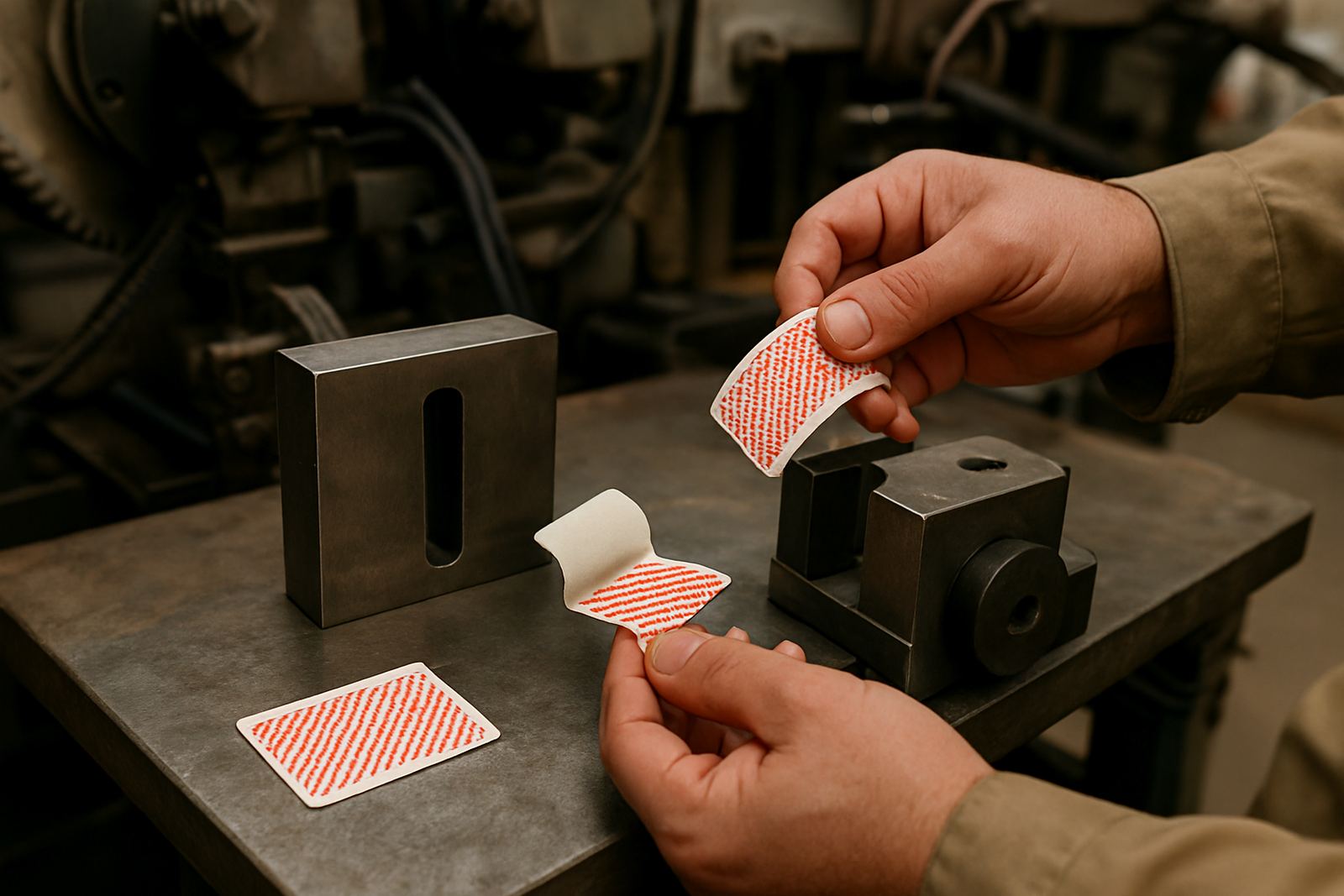
Most beer and cider label jobs run on rotary converting equipment, either with a solid rotary die or a flexible magnetic die on a cylinder. For repeat work, magnetic cylinders are often used so the printer can keep a stable setup between runs. If the job changes often, flexible dies can be a practical choice because they are easier to store, repeat and swap over during a busy week.
- Rotary solid dies for long runs and high repeat consistency
- Flexible magnetic dies for repeat work and shorter changeovers
- Magnetic cylinders for press setups that need accurate mounting
- Bearer setting and magnet checks to reduce vibration and uneven cut depth
- CAD proofing for new artwork, shape changes or label size adjustments
For breweries and cider packers, the die choice often depends on line speed, label count per pack and how often the artwork changes. A simple crown-shaped neck label and a full wrap label may need different tooling even if they look similar on paper. That is where repeat matching and practical pressroom advice matter.
Planning the label layout before the die is made
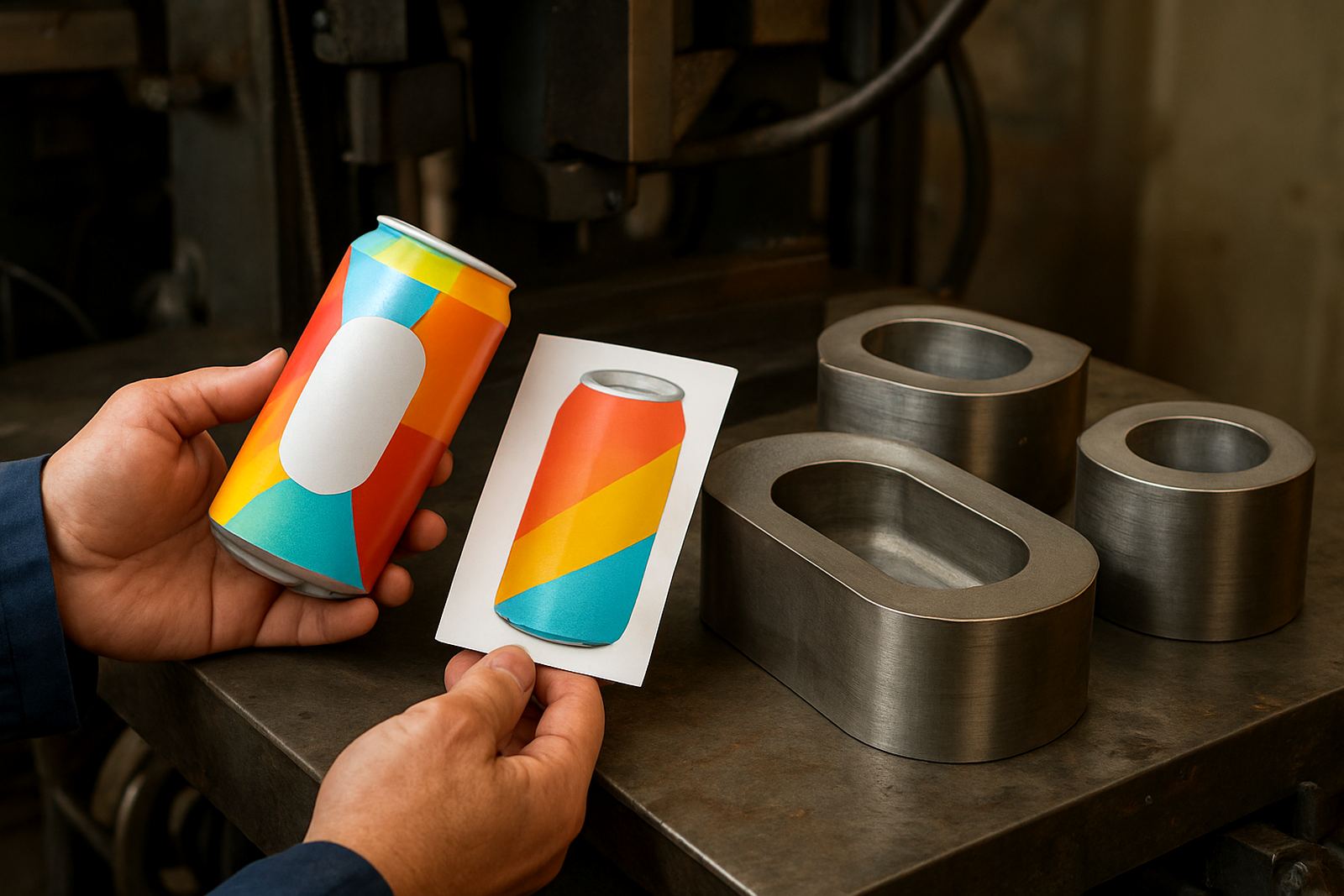
Good planning starts with the carton, bottle or can pack, not the artwork alone. The label has to sit clear of seams, curves, rivets, barcode zones and any place where moisture collects after chilling. On glass bottles, a label too close to the shoulder can lift after cooling. On cans, a film label that is cut too tight can wrinkle when applied at speed.
We usually advise converters to confirm the finished size, corner radius, gap allowance and repeat length before production begins. If the pack is going into cold storage or a wet bar environment, the adhesive and release behaviour should be checked as part of the layout. Small changes in trim can make a big difference to fit, especially when the same label must run on more than one pack size.
- Allow for condensation and wet handling after chilling
- Check the label position against seams, embossed areas and bottle curves
- Confirm repeat length early, especially for multi-up webs
- Leave enough trim for clean stripping but not so much that waste climbs
Common mistakes on beer and cider labels
One of the most common mistakes is specifying a die from artwork measurements only, without checking the actual container. Another is ignoring how the label behaves after cold-room storage. A die that looks perfect in the proof can still cause lifting, fish eyes or poor wrap if the substrate or adhesive has not been matched to the application. We also see jobs where the cut is too fine and the press starts tearing at speed.
Another issue is leaving repeat remakes too late. Beverage campaigns can move fast, and when a pack gets approved late there is little time for trial and correction. In those cases urgent remakes and press trial support can save a line from standing still. It is also worth checking magnet condition and bearer setting before blaming the print or glue. Sometimes the cut is off because the tooling setup itself has drifted, not because the artwork is wrong.
Budget ranges for beverage die tooling
Budgets depend on the die type, label complexity and whether you need a new cylinder, refurbishment or a repeat of an existing profile. Simple rotary solid dies for standard bottle labels usually sit at the lower end, while multi-shape or fine-detail beverage labels need more setup and checking. If a job needs a magnetic cylinder, the total cost rises because the mounting hardware and precision work add to the order.
As a working guide, many beverage label jobs fall into these ranges:
- Simple flexible magnetic dies: from about R2,500 to R4,500
- More detailed or tighter-tolerance flexible dies: about R4,500 to R8,500
- Rotary solid dies for longer runs: about R6,500 to R14,000
- Magnetic cylinders or refurb work: about R3,000 to R12,000 depending on condition and size
Urgent remakes, extra bearer setting and couriered dispatch can add to the total. For converters in Gauteng, KwaZulu-Natal and the Cape, planning a little lead time usually keeps the cost down and the line moving.
When repeat matching makes the difference
Beer and cider brands often keep the same bottle shape but change the artwork for seasonal packs, limited editions or promo bundles. In those cases repeat matching is far more useful than starting from scratch. If the old die or cylinder has been used before, we can work from the prior specification and check wear, magnet condition and cutting edge quality before remaking or regrinding.
This is especially helpful when the label must run again on the same line but with a slightly changed copy block or new barcode. It cuts down the risk of registration problems and keeps the changeover practical for the production team. For printers in Germiston, Johannesburg, Pretoria, Durban, Pinetown, Cape Town, Bellville and Gqeberha, that kind of repeat support helps when orders land close together.
How our team supports beverage converters across South Africa
Our Wadeville, Germiston operation handles die design, CAD proofing, regrind, cylinder refurb, magnet checks, packing and dispatch, plus delivery coordination to major centres. Marius Jacobus van der Merwe oversees the work, with Thandiwe Nkosi leading production, Ruhan de Beer handling technical sales, Nirasha Ramdass on CAD, Anele Mthembu on dispatch and Siyanda Letsoalo in the machine shop. That means a beverage label job can move from drawing to checking to dispatch without losing track of the details.
For breweries and cider packers, the practical value is simple: fewer surprises at press, cleaner cuts on wet packs and a better chance of getting the job out on time. If the brief changes or the line is down, we can advise on the best next step and keep the tooling side moving. It is the sort of support that matters when the order book is full and the cooler room is already stocked.