When drum labels must hold through rough handling
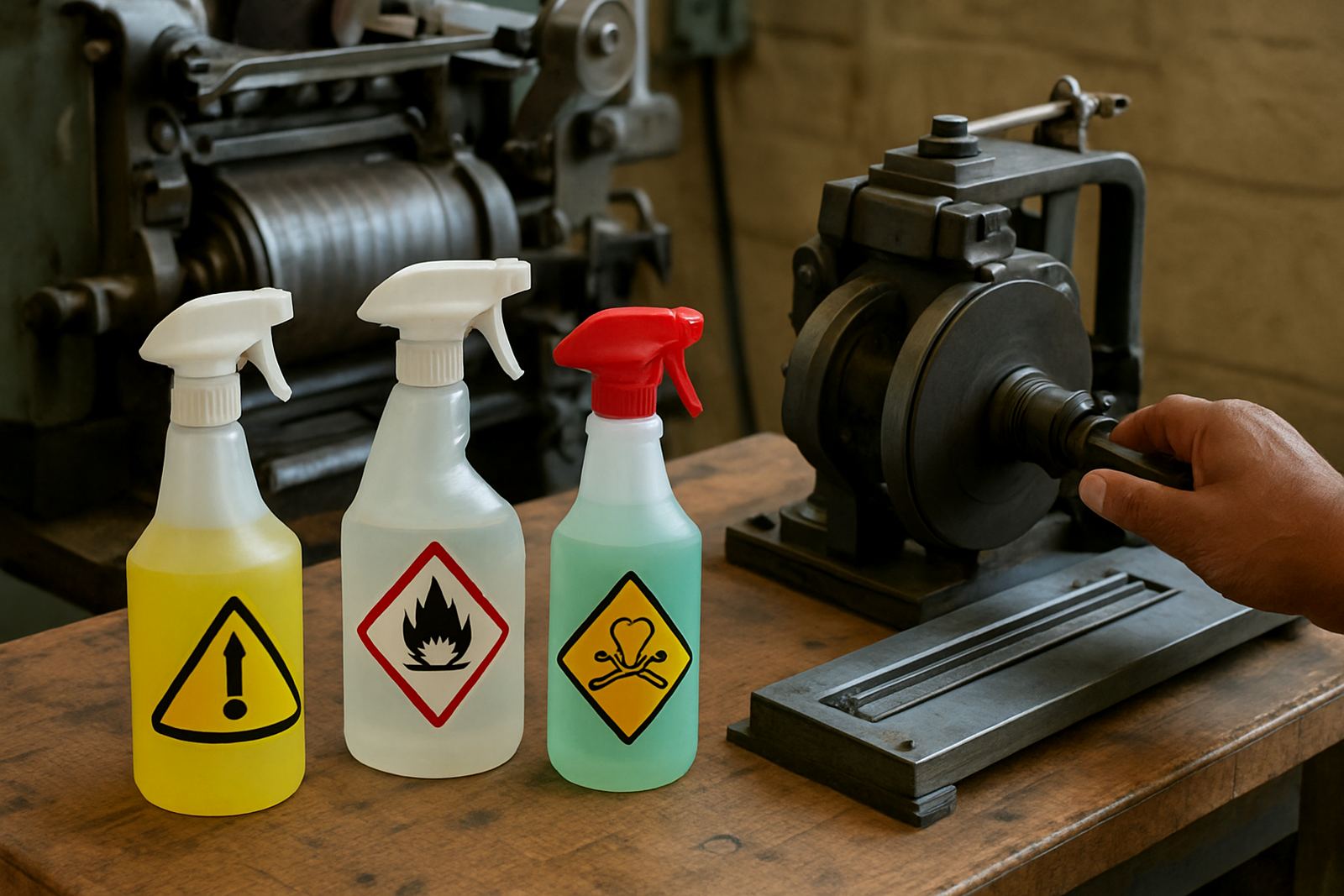
Chemical drums are not friendly to labels. They get moved on forklifts, tilted on trolleys, wiped down, stacked in yards and sometimes stored in humid coastal conditions or hot inland depots. If the cut is off by even a fraction, you start seeing lifting corners, poor registration, crushed edges or labels that do not release cleanly from the liner.
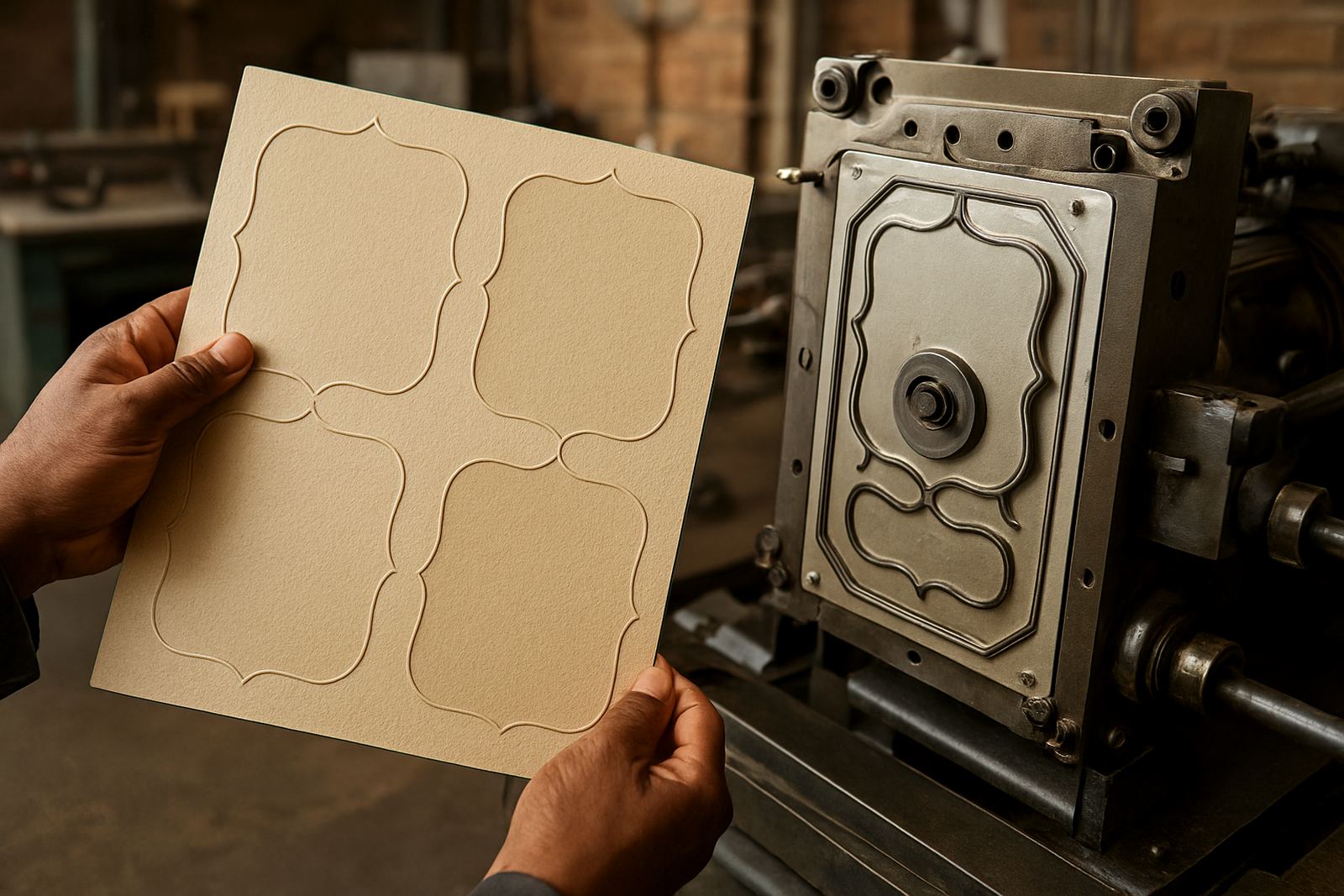
For this type of work, the die has to suit the substrate, adhesive and press setup. We make tooling for printed labels on 20 litre pails, 25 litre and 200 litre drums, intermediate bulk containers and smaller chemical packs where consistency matters. The aim is simple: clean cut, steady repeatability and no time lost on press chasing a bad kiss-cut. That is where proper die tolerances and bearing setup pay for themselves.
Typical tooling for chemical container labels
Most chemical label jobs run on converting lines that need dependable tooling for medium to long runs. The right setup depends on the press, the liner, the label shape and whether the job is self-adhesive, wraparound or a special warning label with rounded corners and high adhesion stock.
- Rotary solid dies for higher volume runs where durability and repeat consistency matter
- Flexible magnetic dies for shorter to medium runs and faster changeovers
- Magnetic cylinders where the press set-up calls for cylinder based mounting
- Bearer setting and technical matching for accurate cut depth and pressure balance
- Die regrind and cylinder refurb for worn tooling that still has life left in it
For labels used on chemical drums, we also check whether the cut needs extra corner strength, tighter web control or better stripping. Some jobs look simple on paper but the combination of heavy ink coverage and aggressive adhesive can make them tricky on press, especially in warmer weather.
Layout and planning advice before you approve the die
Good planning saves money. Before production starts, confirm the exact finished size, corner radius, bleed requirements and the direction of feed on the press. On drum work, a few millimetres can affect how the label wraps around a curved surface or clears a handle, seam or embossing on the container.
If the label carries hazard information, batch space or multilingual content, leave enough room for text legibility and compliance marks. Don’t place key wording too close to the trim line, because handling marks and slight movement on press can make the edge look untidy. We usually recommend a CAD proof before cutting, especially on repeat jobs where the artwork has been updated or the container has changed.
For factories in Germiston, Wadeville, Alrode or around Johannesburg and Pretoria, it also helps to match the die to the actual press speeds and the stock you use most often. A tool that works on coated label stock may behave differently on textured or high tack material. That is worth checking before the full run begins.
Common mistakes on chemical drum label jobs
Most delays on this kind of work come from avoidable errors. The label may be correct visually but not practical for the container, or the die may be built from old artwork that no longer matches the pack size. If the press team has to keep adjusting pressure, the result is waste, slower output and more spoilage.
- Using outdated artwork after the drum size or warning panel has changed
- Allowing cut lines too close to text, barcodes or hazard symbols
- Ignoring the liner type and adhesive strength on cold or humid sites
- Ordering a die without checking repeat length and press direction
- Skipping trial checks for stripping, waste removal and corner lift
Another common issue is assuming all drum labels are the same. A 200 litre chemical drum for industrial use is not the same as a small pail label for cleaning products. The surface, handling and storage conditions change the way the die should be made, and if that is missed the job becomes a problem on the line.
What budget to allow in Rand
Budgets depend on size, complexity, material and whether you need a new tool or a refurb. As a working guide, flexible magnetic dies are often the most economical option for short to medium runs, while rotary solid dies and magnetic cylinders suit heavier production and longer life. If there is worn tooling to repair, a regrind or cylinder refurb may be the better option, provided the base is still sound.
For many South African label converters, it helps to think in bands rather than fixed prices. Smaller and simpler jobs may sit in the low thousands, while larger or more detailed chemical drum tooling can move into higher budgets depending on tolerance and finish. Urgent remakes, special bearer work or repeated adjustments will add to the total. We can advise on stock use too, so you do not overspend on a tool that is too heavy for the run you actually need.
When the job is recurring, it often pays to compare the cost of a new die against the cost of downtime, scrap and repeated press setup. A slightly better made tool can save a great deal over a few production cycles, especially where customer orders come in steadily from Durban, Cape Town, Gqeberha or Pretoria.
How we support converters across South Africa
We work from Wadeville, Germiston and supply customers across Johannesburg, Pretoria, Durban, Pinetown, Cape Town, Bellville and Gqeberha. For chemical drum label work, our team can assist with die design, CAD proofing, repeat matching, magnet checks, press trial support and packing and dispatch. If a job is urgent, we also help with remakes and delivery coordination so the line is not left waiting.
Our production and technical team includes Marius Jacobus van der Merwe, Thandiwe Nkosi, Ruhan de Beer, Anele Mthembu, Nirasha Ramdass and Siyanda Letsoalo. That means the order is handled from drawing through to dispatch by people who understand the practical side of label converting, not just the drawing. If your chemical drum labels need a better cut, steadier repeat or a more suitable tool for the stock you run, we can advise on the next step.
For regular supply, we also help keep useful spares and stock advice in mind so there is less risk of a late stoppage when load-shedding, humidity or a rushed customer order puts pressure on the schedule.