Pharma booklet work starts with the fold, not the artwork
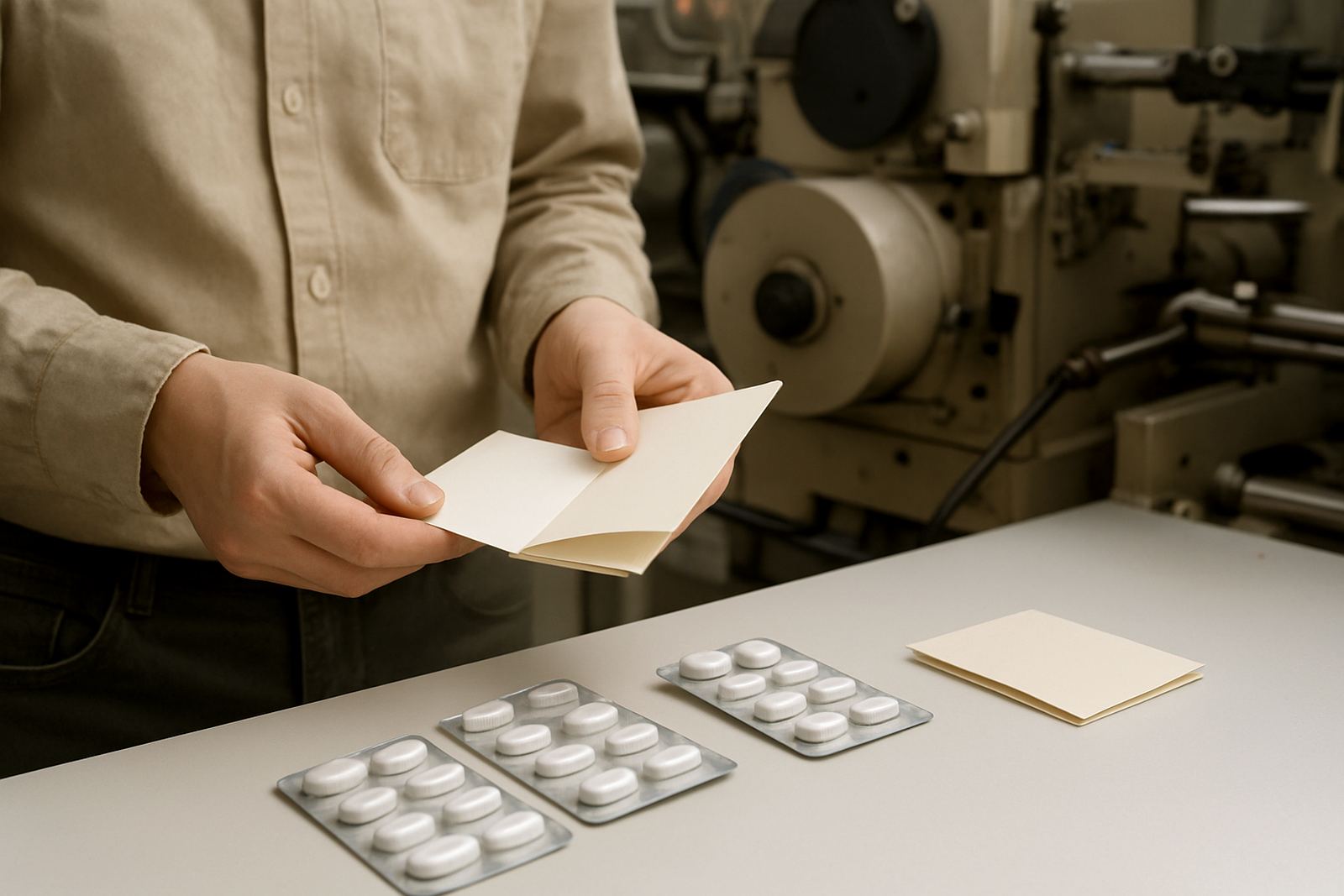
Booklet labels for medicines, patient information, dosage instructions and multilingual inserts leave very little room for error. If the fold lands a millimetre off, the leaflet can buckle in the glue panel, the final trim can wander, or the booklet can open too tight on press. For pharmaceutical work in Germiston, Johannesburg, Pretoria, Durban, Cape Town and Gqeberha, we usually start by checking the finished panel size, the number of pages, the glue area and the label shape before anything else.
The client situation is often the same: the artwork is approved, the substrate is selected, but the die has to work with narrow panels, fine type and strict repeat accuracy. Our team at Wadeville handles die design, CAD proofing and repeat matching so the cut line supports the fold sequence instead of fighting it. That matters on long runs, and it matters just as much on urgent remakes when a medical label is due for packing in a few days.
Typical die and press setup for booklet labels
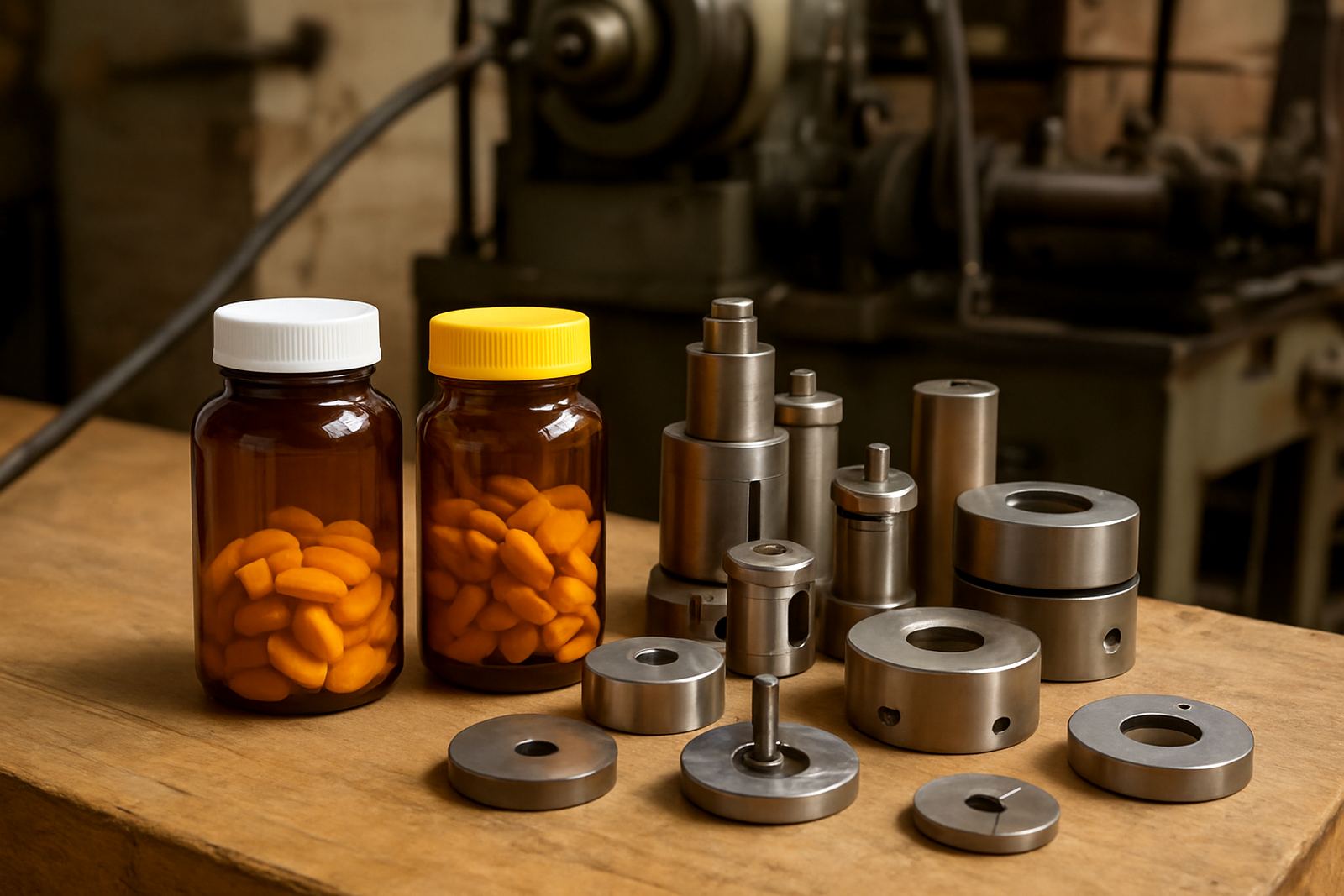
Pharma booklet production is usually run on narrow web or label converting lines, with finishing that may include inline slitting, stripping, folding units and inspection. The die choice depends on the press and the way the booklet will be built. Flexible magnetic dies suit repeat production where changeovers are frequent, while rotary solid dies are often chosen where a more fixed setup, longer life or tighter wear control is needed. Magnetic cylinders are used where the press configuration calls for a stable mounting base and repeatability across multiple jobs.
- Flexible magnetic dies for frequent artwork changes and medium to long runs
- Rotary solid dies for consistent repeat work and higher wear resistance
- Magnetic cylinders where the press uses a cylinder mounted cutting system
- Bearer setting and magnet checks to keep pressure even across the web
- Press trial support when the fold line, glue panel or window position needs tuning
In coastal plants around Durban or Cape Town, humidity can affect paper and adhesive behaviour, so the die has to be set with that in mind. A clean cut is not enough on its own if the material moves during the shift or the glue zone swells in warm conditions. We always factor in the local production environment, especially when jobs need to hold up through load-shedding stops and restarts.
Layout planning that keeps folds true
Good booklet planning starts with panel count, fold direction and the exact order in which the pages will sit after folding. A common mistake is leaving too little allowance for the final fold, which can cause the leaflet to spring open or sit proud inside the label. Another one is placing critical text too close to the crease, where it can distort once the material is folded and trimmed.
Before a die is cut, we recommend checking these points carefully:
- Finished panel size and overall label size
- Glue flap width and where it lands after folding
- Cut line clearance around text, barcodes and regulatory copy
- Grain direction or material memory on paper and film stocks
- Whether the job needs a single fold, multiple folds or a concertina layout
For South African pharma clients, the practical side matters too. If the booklet has to move between Johannesburg and Pinetown, or from Pretoria to Cape Town, the repeat must be stable enough that a second production site can use the same tooling without chasing new settings every time. Repeat matching and CAD proofing help reduce that risk, and they save time when a seasonal pack changes only one panel of text.
Common mistakes that cause rejected booklet runs
We see a few errors over and over. The first is underestimating the force needed to cut through layered stock without damaging the fold panel. The second is accepting a die that is technically sharp but not matched to the press, so it cuts one side well and crushes the other. The third is missing small registration shifts between the artwork and the actual press setup, which can throw out the entire booklet on a narrow label.
Another issue is poor maintenance. If a die is left with adhesive build-up or the magnets are not checked, the next run can show drag marks, uneven pressure or premature wear. For converters handling urgent remakes, that can cost more than the die itself. Our die regrind, cylinder refurb and magnet checks are there to keep tooling in service rather than replacing it too soon.
We also advise against treating every pharma booklet as a standard label job. The folding sequence, the paper thickness and the finish all affect the outcome. A job that looks simple on screen can become expensive if the die maker is not told about the glue strip, tear-off tab or the exact place where the booklet has to open.
Budget ranges for pharma booklet dies in Rand
Budget depends on size, construction and how much engineering the job needs. A small flexible magnetic die for a straightforward booklet label will usually sit in a different range to a precision rotary solid die or a magnetic cylinder for repeated production. For South African buyers, it helps to budget by use, not just by item name, because the same job may need proofing, setting and support before the first live run.
- Simple flexible magnetic dies: often from about R2 500 to R6 500
- More detailed booklet dies with tighter tolerances: about R6 500 to R12 000
- Rotary solid dies for repeat work: often from about R12 000 to R28 000
- Magnetic cylinders and heavier tooling: about R18 000 to R45 000 and up, depending on size
Those are working ranges, not fixed quotes. A compact pharma label in Pretoria with a standard panel count may sit near the lower end, while a multi-language booklet for a Durban pack house with exacting fold registration may sit higher. Delivery coordination to Germiston, Johannesburg, Pretoria, Durban, Pinetown, Cape Town, Bellville and Gqeberha can also affect timing if a press change is urgent.
What our Wadeville team does from quote to dispatch
Our team in Wadeville, Germiston handles the process from the first enquiry through to packing and dispatch. Marius Jacobus van der Merwe oversees the operation, Thandiwe Nkosi manages production, Ruhan de Beer supports technical sales, Nirasha Ramdass prepares CAD work, Siyanda Letsoalo leads the machine shop and Anele Mthembu coordinates dispatch. That structure helps when a job needs a quick decision on a die remake, a bearer adjustment or a repeat match from an earlier run.
Clients usually send the artwork and specifications through the enquiry form on the contact page. From there, we look at the layout, material and press requirements, then advise whether a rotary solid die, flexible magnetic die or magnetic cylinder is the best fit. If the job is headed for an urgent pharma packout, we can discuss urgent remakes, stock advice and delivery coordination so the press team is not left waiting.
For booklet labels, the difference between a pass and a reject can be a fraction of a millimetre. That is why we keep the focus on precision, repeatability and practical support, especially for converters working to tight schedules and municipal delivery windows across Gauteng and the coast.